 David Bridges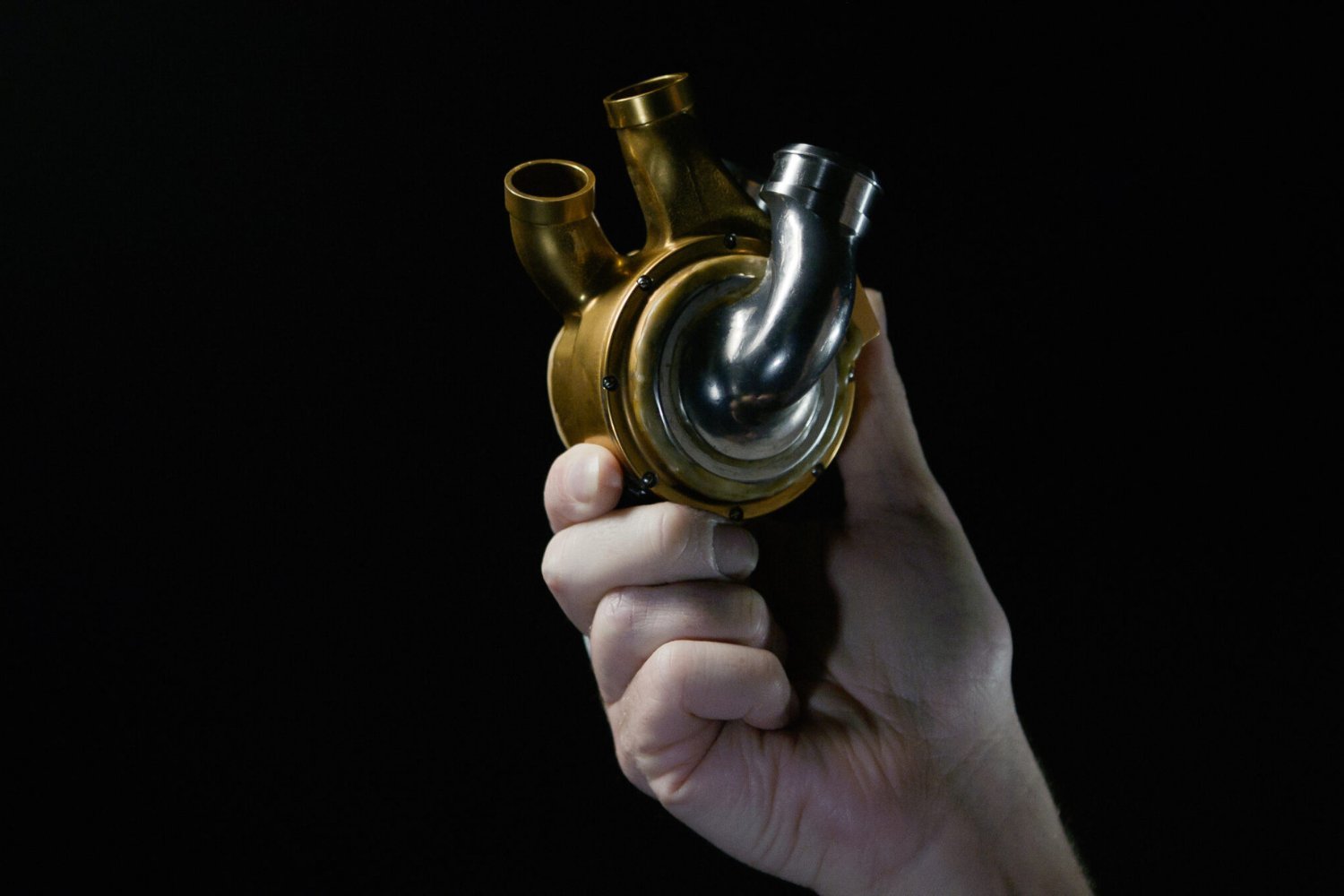
Australian Breakthrough: Man Discharged with Revolutionary Artificial Heart
An Australian man has achieved a remarkable milestone in the realm of medical science thanks to his pioneering artificial heart. This week, his healthcare team announced that he became the first individual globally to be discharged from a hospital with an innovative implant specifically designed to fully replace the heart’s essential functions. This groundbreaking achievement not only highlights the advancements in cardiac technology but also offers hope to those suffering from severe heart conditions.

Innovative Procedure at St Vincent’s Hospital: A New Era in Heart Treatment
Last November, medical professionals at St Vincent’s Hospital in Sydney conducted an experimental procedure that involved the installation of the BiVACOR Total Artificial Heart into a patient grappling with severe heart failure. Although he was not the first recipient of this technology, he distinguished himself by being the first to survive long enough—over 100 days—to be discharged from the hospital. The implant served as a vital bridge to a conventional heart transplant, which the patient successfully received earlier this March, marking significant progress in the treatment of advanced heart disease.
Understanding the BiVACOR Heart: A Comprehensive Solution for Heart Failure
While there are existing heart implants that can sustain some functions of a failing heart temporarily, the BiVACOR heart—developed by Australian biomedical engineer Daniel Timms—is uniquely designed to completely take over the heart’s crucial operations. This device specifically caters to individuals suffering from end-stage heart failure and is equipped with an external rechargeable battery that connects via a wire. Although this battery currently lasts only four hours, the developers aim to introduce a more convenient wireless charging option in future versions, enhancing the overall patient experience and usability of this life-saving technology.
Clinical Trials and Remarkable Achievements: A New Hope for Heart Patients
The BiVACOR heart has entered early clinical trials, with its sixth patient being a man in his 40s from New South Wales. The initial five patients, all from the U.S., had the implant for only a short duration before receiving heart transplants, which prevented them from being discharged from the hospital. Consequently, the recent discharge of this Australian patient, along with his impressive 100-plus days of survival with the implant, represents record-breaking milestones in the field of cardiac care. According to his healthcare team, he is now recovering well from his heart transplant, showcasing the potential success of this new technology.
Expert Insights: Celebrating a Milestone in Cardiac Surgery
“We’ve worked towards this moment for years and we’re enormously proud to have been the first team in Australia to carry out this procedure,” stated Paul Jansz, a cardiothoracic and transplant surgeon at St Vincent’s, in an interview with The Guardian. His words reflect not only the dedication of the medical team but also the significance of this advancement in heart surgery, which may pave the way for future innovations in cardiac treatment.
The Future of Heart Replacement: A Vision Beyond Transplants
Although the BiVACOR heart is currently undergoing trials as a means to extend patients’ survival until they can receive a donor heart, Timms and his team aspire for this device to eventually serve as a long-term solution for heart replacement and a viable alternative to traditional heart transplants. Achieving this goal poses challenges, especially considering that patients with donated hearts typically survive for a median of 12 to 13 years. Nevertheless, the encouraging progress witnessed thus far provides hope for a future where artificial hearts could become a standard option for patients in need. More patients are anticipated to receive their implants this year through a collaborative initiative led by researchers at Monash University in Australia.
Transforming Heart Transplantation: The Potential of Artificial Hearts
According to Chris Hayward, a cardiologist at St Vincent’s who monitored the patient’s health, “The BiVACOR Total Artificial Heart ushers in a whole new ball game for heart transplants, both in Australia and internationally.” He predicts that within the next decade, artificial hearts will become a practical alternative for patients unable to wait for a donor heart or when suitable donor options are unavailable. This transformative technology could redefine how we approach heart failure treatment and improve the quality of life for countless individuals.
Moreover, the BiVACOR heart is just one of many innovative technologies on the horizon aimed at addressing the critical shortage of donor organs. In parallel, researchers are exploring the potential of genetically modified pig organs, which could be safely integrated into the human body, further expanding the possibilities for organ transplantation and significantly enhancing patient outcomes in the future.


 Daniel Mercer
 Ethan Carter