 David Bridges

As Meta and X intensify their focus on artificial intelligence (AI), and as other social media platforms strive to adopt innovative AI functionalities, it raises important questions about the future landscape of social media and its broader effects on how we interact online.
Social media has become an indispensable aspect of contemporary communication. With Facebook boasting nearly 3 billion active users who log in regularly, the platform has become a primary source for staying connected with friends and family. To put this into perspective, 3 billion users represent approximately 37% of the global population. Furthermore, considering that billions more lack access due to restrictions in countries like China or due to inadequate internet connectivity, the level of global interaction facilitated by Facebook is truly unprecedented.
With these statistics in mind, it is crucial to consider how Meta’s potential integration of AI-generated profiles within its applications will influence user experience. As the company explores this avenue, it is essential to understand the implications such changes may bring.
While enhanced engagement is undoubtedly beneficial for Meta, we must also question the experience of the real users interacting with these AI-generated entities. How will the presence of artificial profiles affect genuine human interactions on the platform?
This consideration is just one among many regarding the seismic shift towards generative AI in social media and its wide-ranging consequences.
Let’s explore five critical factors to consider regarding the ongoing AI revolution in social media.
1. Embracing AI Characters in Social Media
Recently, a Meta executive indicated that the company plans to incorporate AI characters into its platforms—entities designed to post and interact as if they were human users. This announcement understandably raised concerns among many existing users, who worry about the authenticity of their online interactions.
This concept is not entirely new, as bot profiles have been engaging with users for years. Moreover, entirely AI-generated characters are already making appearances in certain contexts, such as live shopping streams.
Therefore, the idea of integrating AI profiles into social media is not outlandish, especially considering that Meta hinted at this direction as early as last year when it re-hired Michael Sayman, who previously launched a social app featuring numerous AI characters.
Integrating these AI profiles could potentially provide users with the dopamine boost associated with likes and interactions, ultimately leading to a significant increase in follower counts. This aligns with the desires of many social media users who seek attention and popularity, despite being aware that a portion of this engagement may lack authenticity.
Many users may choose to overlook the reality of their followers’ humanity as long as their engagement metrics continue to rise. For Meta, this could translate into a substantial benefit, particularly if they have already experimented with AI bot profiles to gauge their perceived legitimacy among users. Some individuals have indeed uncovered older AI-generated profiles, although Meta claims these were part of a previous test.
Ultimately, the integration of AI profiles is likely to enhance Meta’s engagement statistics, encouraging users to return and share more frequently. The perception of a responsive audience, bolstered by AI-generated profiles, may create an environment where more real users feel compelled to join the conversation, despite acknowledging that not all profiles are genuine.
In my view, this strategy will likely benefit Meta, as the presence of more “people” engaging with content may provide a positive experience for users, regardless of the authenticity of those interactions.
However, deeper mental health implications arise regarding the development of relationships with AI characters and the potential dependency on these simulations for companionship. Various academic studies have highlighted both positive and negative outcomes, including a tendency to exacerbate feelings of social isolation and diminish real human interactions.
Such significant concerns warrant thorough exploration before Meta advances any plans in this direction.
Yet, it is widely accepted that thorough evaluations may not occur.
2. The Rise of AI Misinformation and Its Consequences
Another pressing concern arising from the heightened emphasis on AI is the potential proliferation of AI-generated misinformation, which may depict fabricated events to manipulate audiences.
Currently, it’s challenging to determine the extent of this issue. During the most recent U.S. election, for instance, Meta reported that the contribution of AI to misinformation was minimal, comprising “less than 1% of all fact-checked misinformation.”
Despite predictions that the election would be inundated with false images and narratives, the anticipated surge did not materialize. This likely stems from the subpar quality of AI-generated content and the proactive measures taken by social media platforms to detect and mitigate such misinformation.
However, as AI generators continue to improve, deepfakes will become increasingly sophisticated and more challenging to identify. While currently, there is no substantial evidence indicating an impending flood of misleading content, the potential for misuse remains a legitimate concern.
Moreover, we have observed an uptick in individuals deflecting blame onto AI for their actions, alongside instances of absurd AI-generated images achieving significant engagement on certain social media platforms.

While such tools may not currently be utilized in the ways misinformation experts anticipated, their potential to subtly shape public opinion remains a concern, albeit perhaps not at the scale originally feared.
Nonetheless, this may merely represent the initial wave of increasingly credible AI-generated images. The general rise in digital literacy has likely raised awareness and curtailed the spread of misinformation, but as technology improves, more avenues for manipulation through AI-generated content could emerge, especially in the context of elections.
Bot profiles could further complicate matters, as these digital entities may influence voter opinions by expressing support (or lack thereof) for certain policies. AI providers might also manipulate responses through their chatbots, increasing the potential for information distortion as we filter more data through AI tools.
Ultimately, the major concern may not revolve solely around deceptive images and videos, but rather the subtle manipulation of ideas through AI-generated responses.
Such issues could escalate, particularly if our information consumption becomes more homogenized, as anticipated.
3. Democratization of Creative Expression through AI
Simultaneously, AI is revolutionizing the creative landscape by providing new tools that empower individuals to express themselves artistically in ways previously unimaginable.
Many successful artists are already incorporating AI elements into their creative processes, thus expanding their ability to translate concepts from imagination into shareable formats.
AI-driven music generators are set to usher in a new wave of artists, enabling creativity without necessitating years of traditional musical training. Likewise, AI video tools will facilitate innovative cinematic expressions at a fraction of the usual cost, while AI writing platforms will assist authors in realizing and honing their ideas.
While these developments present immense opportunities, they also raise concerns that bypassing traditional learning processes might result in a proliferation of lower-quality content.
This predicament often arises when individuals declare that “Hollywood is over” in favor of AI-generated content that resembles major productions.
Such creations frequently lack the essential human touch—a compelling story and artistic elements that resonate with a shared vision. These qualities are what transform a collection of visuals into genuine art.
Mastering this craft is no easy feat; it demands years of dedication to scripting, painting, or composing music that evokes the intended emotion and connects with audiences on a profound level. Art serves as a medium for human connection, and generative AI has yet to replicate this essence, and I remain skeptical of its ability to do so in the future.
Therefore, while more individuals may gain the ability to create, it does not signal the end of traditional art, as truly resonant and meaningful creations necessitate a journey through the learning process that informs artistic choices.
Though you might be able to produce something visually similar to established art forms, very few genuine artists will possess the skill to wield this technology effectively.
4. The Emergence of AI Agents in Digital Interaction
The next significant advancement for generative AI providers is the development of “AI Agents,” which are essentially bots designed to perform various tasks on behalf of users.
OpenAI has previewed its upcoming AI Agent system, known as “Operator,” capable of executing web-based tasks such as booking vacations based on user preferences.
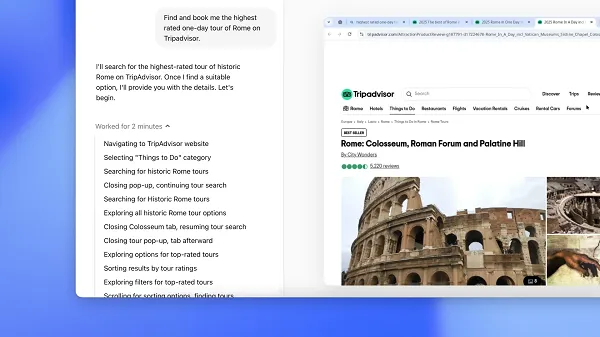
These systems represent the evolution of generative AI assistants, progressing from merely providing answers to simplifying users’ lives by taking on mundane tasks.
LinkedIn is also on a similar path, transitioning towards what it describes as the “Agentic Era.”
According to LinkedIn:
“Whether that’s helping a recruiter hire for the right role, a marketer be more successful or a learner building the right skill. We will put you, the professional, in the driver’s seat giving the agent directions for the tasks you need completed and providing oversight on actions so that it can learn your preferences and make interactions more personalized to how you work. This will give you more time and space to focus on what you love about your job, increasing your access to opportunity. We see this as giving our members and customers agency in the agentic era.”
This evolution could significantly transform digital interactions, with widespread implications for marketing strategies. As users increasingly rely on machines to perform tasks related to discovery, brands will need to reconsider how they present themselves to potential customers.
For instance, if AI agents are tailored to individual preferences, brands must ensure they align with those preferences to attract business. If users establish rules for their AI agents and are satisfied with the results, changing those preferences could become increasingly difficult.
This represents a crucial consideration for the next phase of digital interaction, necessitating fresh strategies to maximize opportunities.
Given these developments, I foresee a heightened emphasis on customer experience and satisfaction, as businesses strive to maintain their positions within user preferences.
5. Harnessing AI to Enhance Advertising Performance
Lastly, the advancement of AI and machine learning technologies is set to optimize advertising performance by leveraging systematic insights into what resonates on various platforms, thereby maximizing engagement and responses.
This trend is prompting marketers to reevaluate their understanding of customer behavior, as AI systems begin to yield superior results compared to traditional human-targeting methods.
Eventually, the integration of generative AI and machine learning will reduce the need for human input in ad creation. Users will simply need to provide the URL of their product, and the system will generate a campaign that resonates with the intended audience based on its comprehensive understanding of each individual.
Competing with this level of sophistication will challenge marketers, although the most impactful advertising campaigns will still rely on creativity and emotional resonance to connect with audiences beyond mere necessity.
As a result, creativity will remain a cornerstone of advertising, emphasizing the importance of conveying a brand’s values in innovative ways. While basic direct-to-consumer (DTC) ads may become simpler to produce through automated processes, industry expertise will evolve towards maximizing AI-driven matching rather than relying solely on audience targeting knowledge.
However, with the advent of AI agents, branding will become increasingly paramount, as storytelling remains central to successful branding efforts. Thus, while certain aspects of marketing may undergo transformation, the foundation of building a strong brand—rooted in fostering authentic human connections—will remain irreplaceable, as AI cannot replicate this experience.
In summary, AI is poised to reshape numerous facets of digital marketing, and savvy marketers should begin exploring the capabilities and limitations of AI tools to optimize their strategies. However, the essence of human connection is irreplaceable and will not be easily replaced by machines.
While simplistic ads and promotions may be overtaken by AI, as we transition into an era characterized by more AI-driven tasks, the significance of branding and the quality of customer experience will remain vital to distinguishing offerings in the marketplace.



 Mason Thompson
 Sophie Langley