 David Bridges

Meta has unveiled a comprehensive overview of the innovative AI back-end that powers its sophisticated ad targeting processes. This initiative aims to offer deeper insights into the evolution of its advertising systems, demonstrating how they are continuously enhancing performance for ad partners and driving superior results.
In this new informative explainer, Meta elaborates that its ad system now employs three distinct AI-powered functions to effectively deliver advertisements to the most receptive audiences across its various applications. This strategic approach ensures that ads are not only seen but also engaged with, maximizing impact.
These three advanced systems have been meticulously trained on Meta’s extensive ad database, which includes comprehensive user response data. Consequently, they possess a refined understanding of individual user preferences, allowing them to present content that aligns closely with what users want to see, thus enhancing engagement rates across each app.
The three cutting-edge systems are as follows:
- Meta GEM – GEM meticulously analyzes overall user responses to ads across Meta’s platforms, determining correlating factors that drive user engagement and activity. “With GEM, Meta’s recommendation system processes vast amounts of data, detecting subtle patterns, and delivering the most pertinent ads to the right audience at just the right moment, minimizing latency.”
- Meta Lattice – Lattice oversees the array of ads available on Meta, ensuring that a diverse range of ad types and promotions are effectively showcased to each user. This comprehensive management guarantees broader exposure and increased opportunities across Meta’s extensive ad inventory.
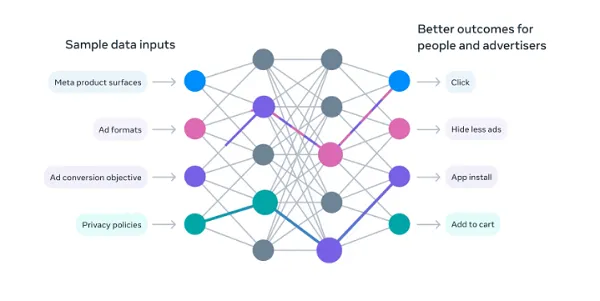
- Meta Andromeda – Lastly, Andromeda learns individual user preferences, ensuring that Meta’s ad system can present promotions that are not only relevant but also captivating to each user.
These advanced systems are further enhanced by improved ad sequencing, designed to guarantee that users encounter the most relevant advertisements throughout their experience on Meta’s applications.
“For instance, previously with traditional aggregated data models, if a user engaged with a ski resort ad, they might continue to see similar ads. However, with the latest enhancements in our ad learning model, a user who books a ski resort room will now be served ads for ski gear, lift tickets, or ski luggage, ensuring a more tailored advertising experience aligned with their purchasing journey.”
Collectively, these AI-powered innovations have significantly improved ad engagement and response rates, ensuring that the most relevant promotions are displayed within each user’s feed, leading to a more personalized experience.
This means that Meta’s automated ad solutions, such as Advantage+, are becoming increasingly effective at generating positive outcomes for advertisers, making them a powerful tool in any marketing strategy.
Given these advancements, it is indeed worthwhile to consider utilizing Meta’s AI-driven advertising solutions. Numerous advertising professionals have been praising the benefits of Meta’s AI-enhanced ads, suggesting that experimenting with these tools could yield significant advantages for your marketing campaigns, leveraging Meta’s continually evolving targeting capabilities to connect your ads with the ideal audience.
This perspective may seem somewhat contrary to traditional beliefs, which emphasize leveraging your understanding of the audience to achieve better results rather than relying solely on advertising targeting algorithms. However, these AI components are being trained on real ad responses across Meta’s platforms, allowing them to identify various commonalities and traits that enhance targeting effectiveness.
It’s definitely worth exploring.
For more information on Meta’s evolving AI ad serving systems, you can read further here.


 Tessa Everly
 Sophie Langley