 Cameron Steel

In a candid moment, Victoria Beckham finally articulated her feelings publicly. During her first television interview following her son Brooklyn Beckham‘s harsh public remarks, she described the past year as “challenging.” Victoria emphasized her commitment to her family, stating that she will “always protect” her children, showcasing her deep maternal instincts.
The discussion on social media quickly polarized opinions. Camp Victoria argues that Brooklyn is an ungrateful son who has allowed his new wife to alter the family dynamics completely. In contrast, Camp Brooklyn insists that Victoria is a controlling mother who struggles to let her son mature into his own life. There’s even a dedicated subreddit for Camp Nicola, reflecting the fervor surrounding this family drama.
The search for a villain in this narrative continues, but the harsh reality is that there isn’t one present. The complexities of family relationships often defy simple categorization, revealing a more nuanced emotional landscape.
As a trained couples therapist, I specialize in helping families that may appear polished on the outside while struggling with internal chaos. What resonates in the Beckham saga is not mere tabloid gossip; it reflects a distressing yet common pattern I encounter regularly in my practice. Unfortunately, few individuals recognize or articulate the underlying issues at play.
Understanding the Protective Instincts in Family Dynamics
When Victoria claims she will “always protect” her children, pay attention to that specific term: Protect. It transcends media jargon; it signifies a fundamental aspect of her role as a parent, deeply tied to her emotional responses.
In therapy, we often refer to this parental instinct as The Bull. This aspect is relentless; it actively pursues, defends, and controls the narrative surrounding family issues, often resorting to interviews or public statements. The Bull represents a parent’s intense fear and refusal to relinquish control, as doing so can evoke feelings of loss and helplessness.
Beneath the surface of The Bull lies a more vulnerable and tender part—a mother stricken with the fear of losing her son. She grapples with the profound questions that arise in every close relationship: Are you there for me? Am I still enough for you? These inquiries reveal the heart of her protective instincts.
As children mature, especially when they fall in love and forge new primary attachments, the original family system often experiences turmoil. This is not a reflection of wrongdoing but rather a biological imperative; humans are wired to need their primary attachment figures throughout life. Any perceived threat to these bonds can trigger profound emotional responses akin to survival instincts.
In such scenarios, the mother pursues connection while the adult son, who is naturally inclined to establish his own life with his partner, may feel like a disappointment to his parents. This feeling of inadequacy often leads him to withdraw further from family interactions.
As she intensifies her efforts to connect, he retreats even more. This cycle continues, with interviews and statements feeding the escalating tensions, creating an ongoing loop of miscommunication and misunderstanding.
This turmoil is not merely a public feud; it represents an emotional attachment panic loop manifesting in an extravagant setting, highlighting the intricate dynamics at play.
Why Simple Communication Strategies Fail in Complex Family Situations
This is the critical element that many gossip commentators overlook.
When families such as the Beckhams come to my therapy sessions, their focus often shifts to litigating the details of their disagreements—the wedding arrangements, the guest list, the dress, social media posts, and media interactions. They genuinely believe that clarifying these facts will alleviate their pain.
I refer to this fixation as the who-did-what-when bucket. The specific events are not the core issue; rather, it is the emotional landscape and the feelings that individuals harbor towards each other that truly matter. It is significantly simpler to argue about logistical details than to confront profound fears, such as, “I am afraid you no longer love me.”
A crucial clinical insight I want to share revolves around the adult child who has distanced himself. Despite appearing to be “fine” through social media, he is often grappling with an overwhelming sense of shame. This shame manifests as a self-perception of being a disappointment, echoing thoughts like, I am bad. I am a failure. I continually let down those who love me.
When an individual’s nervous system is saturated with such intense shame, the limbic system takes control. This part of the brain reacts without fully processing what it perceives; it simply senses threats and responds impulsively.
Consequently, when a loving mother reaches out, brimming with compassion and a protective instinct, her son often interprets this affection as a reminder of his shortcomings. Instead of feeling loved, he may retreat into silence or respond with a defensive statement.
If you find yourself in the position of either reaching out or withdrawing, this is a pivotal moment to examine your relational patterns before placing blame on yourself or others.
Understanding the Absence of Villains in Family Conflicts
The online discourse often craves the portrayal of family members as narcissists, golden children, or toxic parents. Popular media and social channels may echo these sentiments, creating a consensus around blame.
Indulging in such narratives resembles dining on M&Ms for every meal: initially satisfying, but ultimately leaving you feeling unwell and unresolved.
Almost everyone enters therapy convinced they are experts on the faults of their family members. If I were to host a global symposium on the grievances concerning your son or your mother, you would undoubtedly be the featured speaker. We often become fixated on the stories of others, yet this focus rarely leads to personal growth or healing.
Here’s the perspective that rarely surfaces in public discussions: Victoria’s fierce desire to protect and Brooklyn’s instinctive distance are not oppositional forces; they represent two sides of the same coin. Both individuals are grappling with anxious nervous systems that reflect an underlying fear of losing each other.
If they were in my therapy session, I would discourage them from explaining their positions. The more one attempts to justify their actions, the further the other person tends to withdraw. My goal would be to guide them to explore the emotions underlying their statements. I would ask Victoria what fears drive her need to protect, and I would encourage Brooklyn to reflect on what beliefs he holds about himself in relation to his mother’s view of him.
This approach embodies the essence of what we strive to achieve in San Francisco marriage counseling with families like the Beckhams. It also clarifies why patterns of inconsistent communication and vague public messages can hurt so deeply between estranged family members. This phenomenon is similar to how the psychology of breadcrumbing illustrates how an ambiguous message from a loved one can disrupt your emotional stability.
Key Insights to Remember from This Discussion
Disconnection in families is not a flaw; it is a characteristic feature. It signifies that two people hold immense value for each other, so much so that their nervous systems react strongly at the thought of losing their bond. The conflict between Victoria and Brooklyn is not rooted in a lack of love; rather, it emerges from the profound love they share and the absence of tools to navigate those feelings when they become overwhelming.
In this emotional turmoil, one can’t help but feel sympathy for them both; they are simply struggling to find their way amidst the complexities of love and familial bonds.
______________________________________________________________________________________
Figs O’Sullivan, the founder of Empathi, is a renowned couples therapist and relationship expert, serving high-profile clients from both the entertainment industry and Silicon Valley. He is the creator of the Figlet platform, which functions as an AI relationship coach informed by his extensive clinical experience.


 Mason Thompson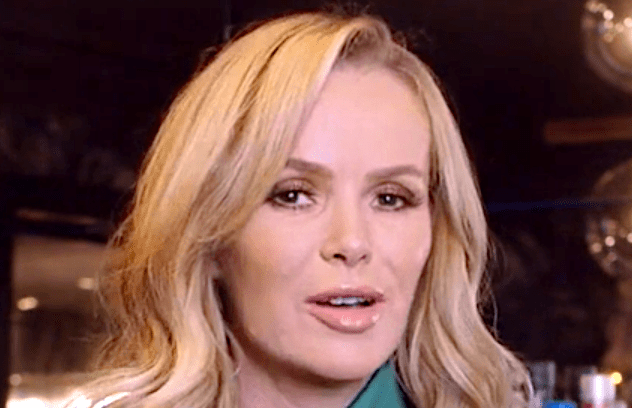
 Ivy Caldwell