David Bridges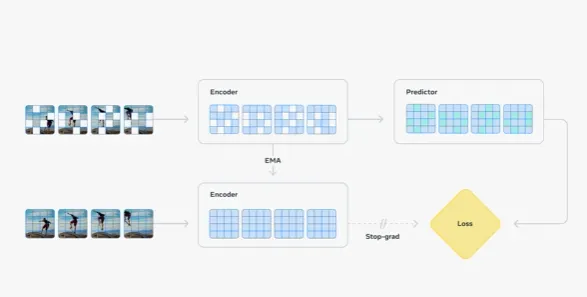

Meta is poised to make significant advancements in artificial intelligence development, a primary focus for CEO Mark Zuckerberg, as he envisions a transformative era of digital interactions where true AI capabilities are realized.
At the forefront of this initiative is the V-JEPA 2 world model, a groundbreaking project designed to enhance computer systems’ understanding of their environments, enabling them to integrate this knowledge into their responses effectively.
As articulated by Meta:
“As humans, we possess the innate ability to forecast how the physical world will change in response to our actions or the behaviors of others. For instance, when you throw a tennis ball upward, you instinctively know that gravity will inevitably bring it back down. Similarly, navigating through a crowded and unfamiliar area involves strategically moving towards your goal while avoiding collisions with other people or obstacles on your path. This physical intuition is developed through our observations of the environment, allowing us to create an internal model that predicts the consequences of hypothetical actions.”
Meta’s V-JEPA 2 model enables AI agents to replicate this human-like understanding of the physical world, facilitating better responses to various elements encountered in their environments.
“We trained V-JEPA 2 using extensive video data, which allowed the model to learn crucial patterns about the physical world, including how individuals interact with objects, the dynamics of object movement, and how different objects interact with one another. When implemented in our laboratory robots, we discovered that these robots could utilize V-JEPA 2 to accomplish tasks such as reaching for, picking up, and placing objects in new locations.”
These developments represent a significant stride towards achieving artificial general intelligence (AGI), enabling computer systems to mimic the functions of the human brain and possess the ability to “think” independently to a certain extent.
This pursuit of AGI is often regarded as the ultimate goal within artificial intelligence research.
Currently, the prevailing wave of generative AI tools excels at imitating human thought processes by generating responses based on accessible data inputs. However, these systems do not genuinely possess “intelligence”; they are not capable of independent thought. Instead, they employ sophisticated predictive models to arrange letters sequentially, referencing previously encountered input examples.
In essence, these AI models function like advanced spreadsheets or mimicry of human behavior without engaging in actual thought processes. They fail to interpret various components and generate novel solutions autonomously.
This is precisely the direction in which Meta aspires to innovate with its new “superintelligence” project, actively recruiting a diverse array of industry experts to bolster their commitment to AGI development.
Is the attainment of AGI even feasible? The answer remains uncertain; however, Meta’s AI chief, Yann Le Cun, a highly regarded expert in the field of AI development, appears to hold a positive outlook.
Nevertheless, we are still far from achieving this goal.
During his address at the Joint Mathematics Meetings conference in March this year, LeCun remarked:
“Many individuals within the AI research and development community are beginning to believe that we might have a viable opportunity within the next decade to develop machines that could potentially achieve human-level intelligence. The estimates regarding the timeline for this are highly variable; some of the most optimistic experts assert that we are already on the brink of this achievement. Others, who are securing substantial funding, claim it will occur next year, but I personally do not share that belief.”
LeCun suggests that, through open-source development and concentrating on pivotal models, we could establish a framework for human-level AI intelligence “within the next decade or half decade,” which would lead to systems capable of genuine planning and reasoning..
However, LeCun does not believe that the current generation of AI models provides the appropriate foundation for developing in this direction.
Perhaps this will be part of Meta’s new initiative, exploring innovative approaches to AI development with the aim of creating a distinct form of intelligence capable of assessing and comprehending various elements.
This latest endeavor marks another advancement in that journey, and with Meta significantly enhancing its computational power, it may well be in a prime position to unlock the secrets of developing genuine systematic intelligence.
Envision a facility akin to the Large Hadron Collider, but specifically tailored for AI development. That is the ambitious direction Meta is likely pursuing with its groundbreaking AI project.



 Maya Kensington
 Sophie Langley