David Bridges

Meta is currently embroiled in a significant legal battle with the FTC, which could potentially compel the company to divest its popular platforms, Instagram and WhatsApp, due to concerns regarding anti-competitive behaviors. Throughout this ongoing trial, Meta has aimed to present a comprehensive array of insights to demonstrate that it does not possess a monopolistic grip on the digital advertising market. Instead, the company argues that there are numerous formidable competitors actively challenging its perceived supremacy within this sector.
Although much of the information shared during this trial may seem circumstantial and lacks broader relevance, there are intriguing data points that have emerged which could provide advertisers with valuable insights into evolving social media usage trends. Such insights can assist marketers in refining and enhancing their advertising strategies to better align with current user behaviors.
Below, we explore a selection of graphs and statistics that have been highlighted during the proceedings, offering a clearer picture of the current landscape.
To begin with, it’s evident that video content is the primary focus on Facebook:
As illustrated in the data, an increasing number of users are dedicating more time to watching video content on Facebook, which has become a central aspect of their experience on the platform.
Specifically, Reels have emerged as a standout feature, gaining substantial popularity over time:

The data indicates that while overall engagement with the Facebook News Feed has declined, and Facebook Stories have struggled to gain traction, Reels continue to see an upward trajectory as Meta increasingly promotes this format to its user base.
This shift in focus is not particularly surprising. Meta has attributed the surge in engagement on both Facebook and Instagram to its transition towards an algorithm-driven feed that prioritizes recommended Reels, leading users to adapt to a continuous flow of video content across both applications.
From a trends perspective, this transformation is crucial, as it reflects the changing reasons why users engage with Facebook and Instagram today.
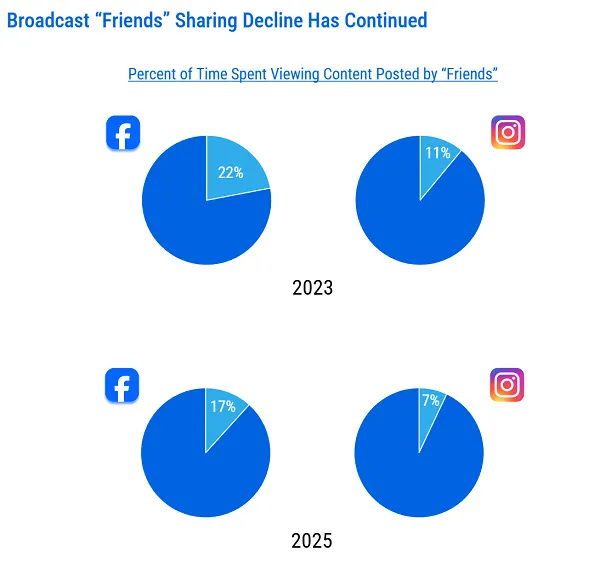
During its opening statement, Meta indicated that users send 63 times more messages within its applications each day compared to public posts. This statistic underscores the growing trend of using video for entertainment and messaging for connection among users.
It appears that public posting has significantly diminished in importance on platforms like Facebook and Instagram.
What implications does this have for marketers?
For marketers, this shift indicates that if users are seeking entertainment within these applications, placing ads in front of them can still yield effective results, similar to when the focus was on sharing content among friends. However, it is essential to recognize that genuine engagement is occurring within Direct Messages (DMs), suggesting that DMs might now provide a more effective avenue for facilitating transactional connections.
This evolution is why Meta’s Click-to-Message ads have gained significant traction recently.
Furthermore, the platforms are increasingly prioritizing content creators, especially since general users are posting less frequently. To ensure user retention and engagement, social media applications must concentrate on what motivates creators to share content, thereby maintaining a steady flow of engaging material.
When considering the type of content that resonates most, it is evident that video content is the prevailing format. If you have not yet begun creating video content, it is high time to consider it as part of your strategy.
Meta also provided insights into the applications that experienced the most significant growth during the temporary ban of TikTok in the U.S.
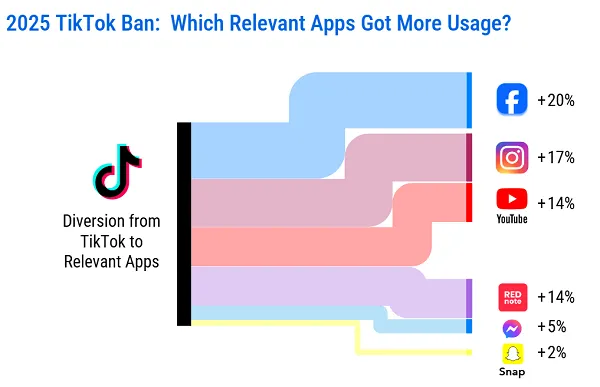
In the event that TikTok is ultimately banned in the United States due to the “Protecting Americans from Foreign Adversary Controlled Applications Act,” it is highly probable that platforms such as Facebook, Instagram, and YouTube will capture a significant share of that traffic.
Meta has also observed a growing trend of feature similarities across various applications, with many platforms adopting similar functionalities.

This trend is not particularly surprising; however, it is noteworthy to observe the gradual merging of features and the diminishing distinctions between different platforms as a result.
These insights represent just a fraction of the revelations from the Meta FTC trial, offering a unique glimpse into the operational data sourced from within Meta’s headquarters.
If you are seeking to deepen your understanding of broader social media trends, these insights will certainly provide valuable information.


 Maya Kensington
 Troy Sanders