Daniel Mercer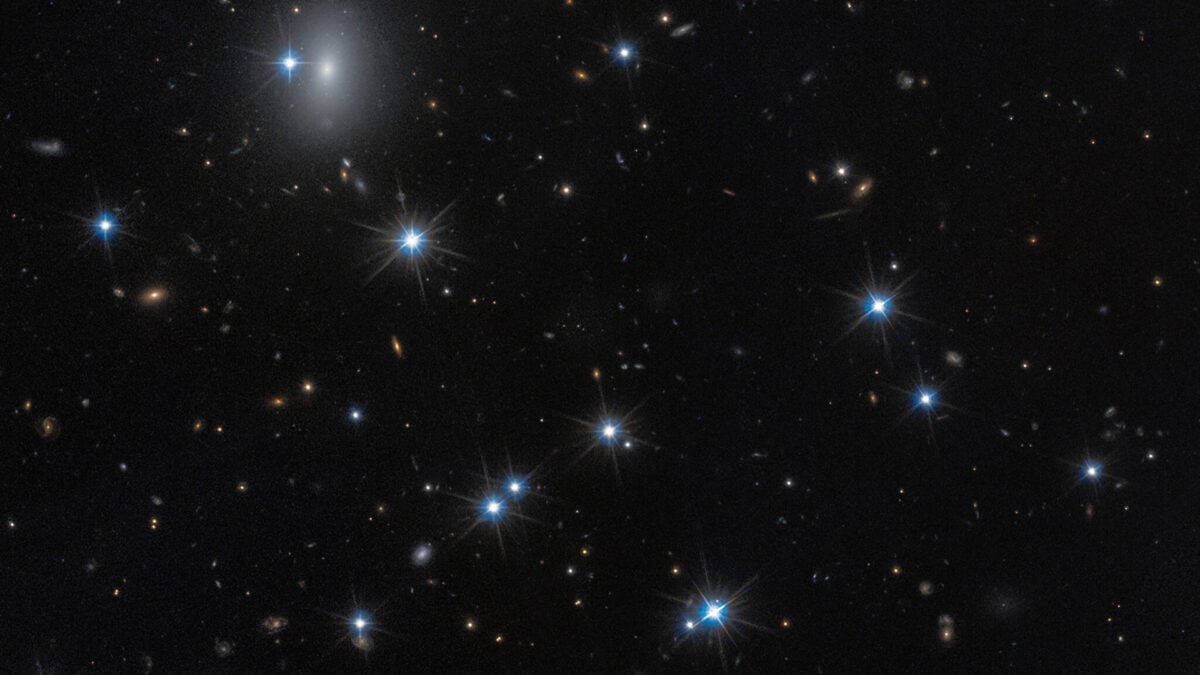
Dark matter is a cosmic phenomenon because it constitutes approximately 85% of the universe’s mass, which matters for understanding the structure and evolution of the cosmos.

At SocialSchmuck, we specialize in Social media, Entertainment, and Technology news, helping enthusiasts achieve deeper insights into the universe and its mysteries.
This guide covers the following key attributes: the nature of dark matter, the discovery of dark galaxies, the significance of CDG-2, and the implications for astrophysics.
- The concept of dark matter and its properties.
- Details on the discovery of CDG-2 and its significance.
- Insights into the Perseus galaxy cluster.
What is dark matter and why is it important?
Dark matter does not emit, absorb, or reflect light. It is inferred through its gravitational effects on visible matter. This phenomenon is crucial for the integrity of current astrophysical models.
Without dark matter, many scientific models would collapse. As of 2026, scientists have yet to detect dark matter directly. However, the prevailing consensus supports its existence due to the absence of better explanations.
How was CDG-2 identified?
CDG-2 is located within the Perseus galaxy cluster, which is rich in globular clusters. These clusters contain millions of stars tightly bound together.
NASA’s Hubble Space Telescope, along with ESA’s Euclid and the Subaru Telescope, discovered a faint glow in the area, suggesting the presence of a dark galaxy.
- CDG-2 is part of a larger study on dark galaxies.
- It was identified through statistical analysis of globular clusters.
What are the characteristics of CDG-2?
CDG-2 has a luminosity equivalent to approximately 6 million Sun-like stars. Notably, around 99% of its mass is attributed to dark matter.
The remaining 1% consists of normal matter, primarily hydrogen gas. This gas was likely stripped away due to gravitational interactions within the Perseus cluster.
What makes CDG-2 unique?
CDG-2 is the first galaxy detected solely through its globular cluster population. This finding was highlighted by lead author David Li from the University of Toronto.
Researchers believe that even if CDG-2 is not a conventional dark galaxy, it remains an intriguing subject for studying star formation theories.
What are the implications of dark matter studies?
As of 2026, astronomers are counting on dark matter to explain various cosmic phenomena. The ongoing research into galaxies like CDG-2 may unlock further mysteries of the universe.
| Attribute | CDG-2 | Typical Galaxy |
|---|---|---|
| Luminosity | 6 million Sun-like stars | Varies widely |
| Dark Matter Percentage | 99% | 10-30% |
| Normal Matter | 1% | 70-90% |
How does dark matter influence galaxy formation?
Dark matter plays a pivotal role in galaxy formation and evolution. It provides the necessary gravitational scaffolding for galaxies to form and cluster.
Understanding dark matter is essential for refining models of cosmic evolution and structure. The study of galaxies like CDG-2 offers valuable insights into these processes.
- Dark matter influences the gravitational dynamics of galaxies.
- It shapes the large-scale structure of the universe.
For more information on dark matter and its implications, check out the original article here.


 Ethan Carter