 Ethan Carter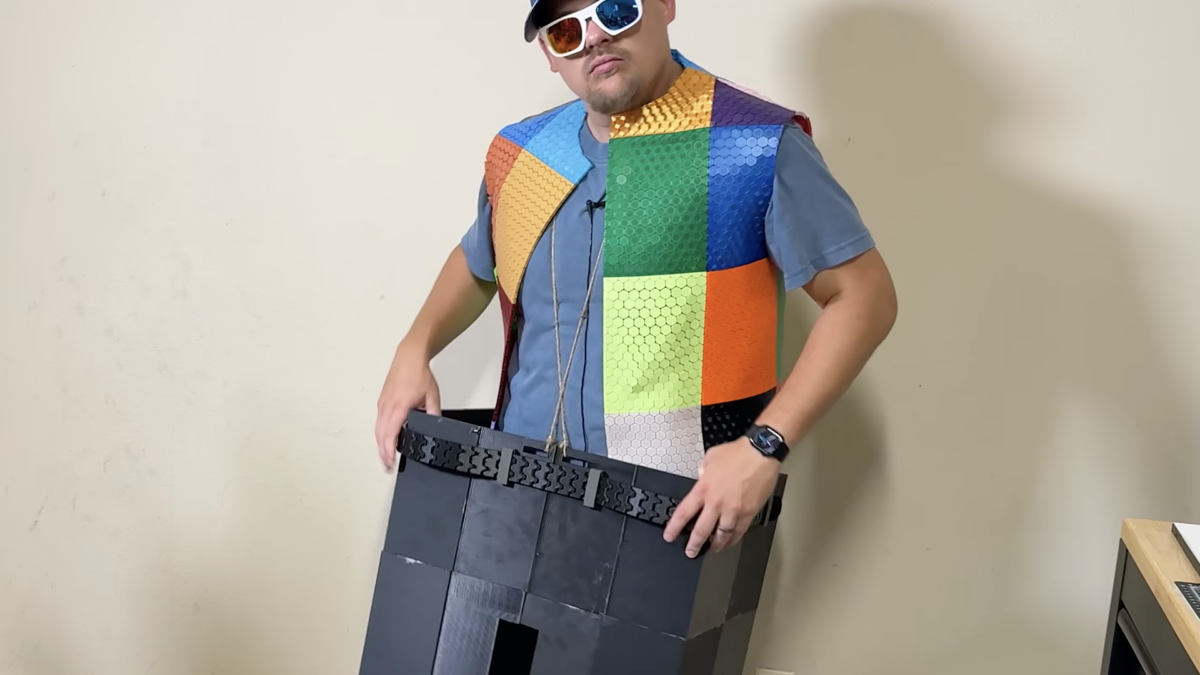

YouTuber Matthew Trahan has established himself as a pioneer in the realm of 3D printing, exploring a wide range of creative projects. His previous videos showcase his talent for 3D printing various musical instruments, unique home décor, and even his own likeness. In his latest endeavor, Trahan takes a bold leap into the fashion industry, aiming to “[take] on Gucci and Louis Vuitton” by crafting an entire outfit using 3D printing technology. This raises an intriguing question: Could DIY fashion become a budget-friendly alternative in the future?
For this ambitious project, Trahan has compiled an extensive checklist that includes a shirt, shorts, shoes, socks, a belt, a hat, a wallet, a bag, a tie, and glasses. Completing such a list is no small feat, and viewers can expect varying levels of success throughout the video. The video thumbnail suggests a lighthearted approach to this creative venture:
…and that’s just the beginning when it comes to the shorts:
Despite the playful nature of Trahan’s video, some of his printed creations are surprisingly impressive. For example, the shoe design resembles a futuristic Nike concept, capturing attention in a positive light:
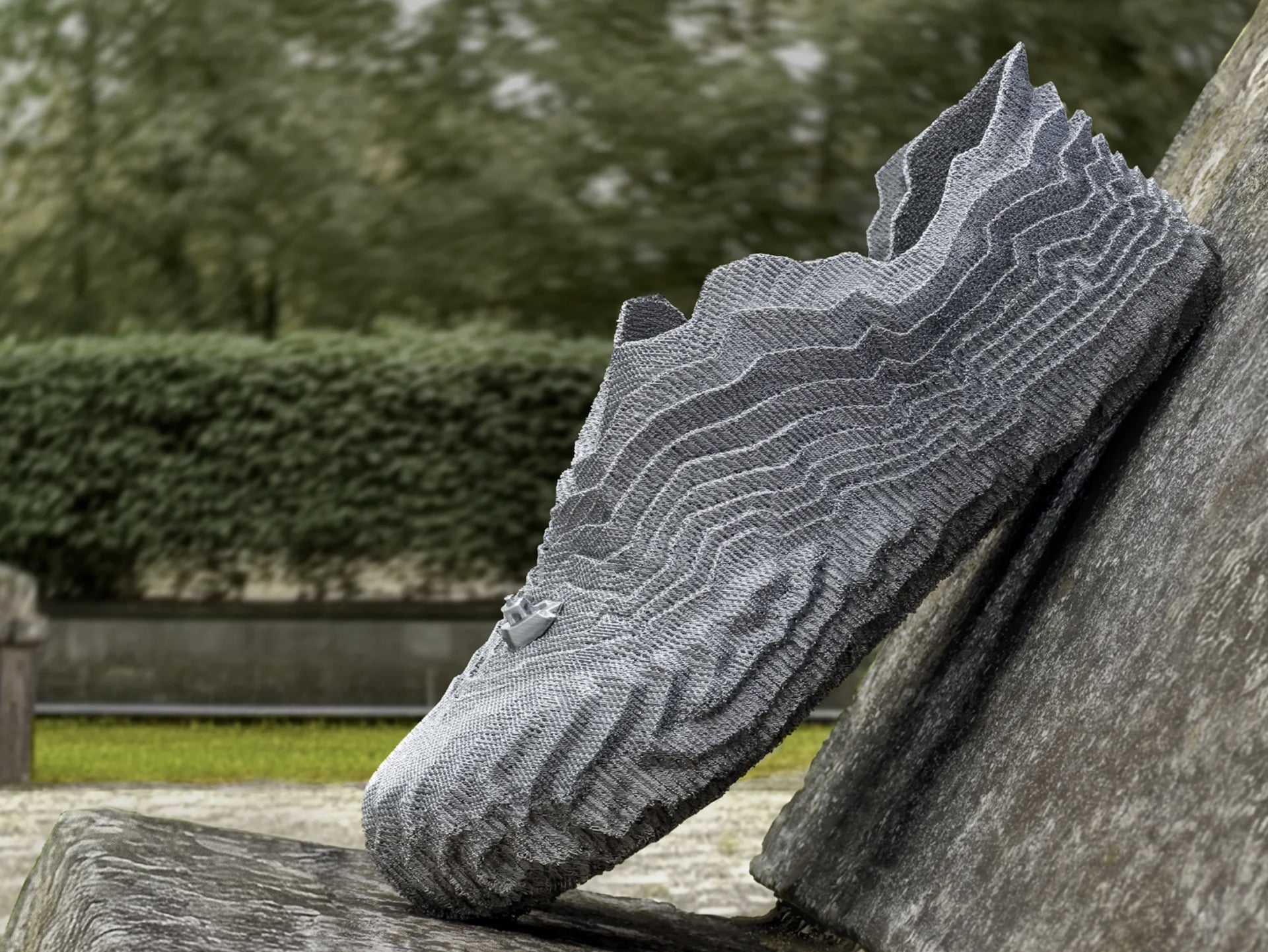
If you find yourself drawn to these designs or any other creations featured in the video, you’ll be pleased to know that all the patterns are available for download online.
While Trahan’s vibrant vest may not be the most practical choice, the less said about the shorts, the better. The primary challenge lies not in the 3D printing medium, but rather in Trahan’s admission of his lack of expertise in crafting clothing patterns. It’s fascinating to consider how the hexagonal design he employs could be better utilized by a skilled designer. The reality TV show Project Runway has been exploring the integration of 3D printing into fashion since 2015. The advancements in this technology over the past decade have been remarkable, far surpassing the capabilities the contestants faced with basic printers back then.
In that earlier episode, contestants struggled to leverage the limited capabilities of their printers. The rigid and brittle filament restricted their outputs to mere embellishments and design accents, rather than complete garments. Fast forward to 2026, and Trahan, despite his playful attire, is successfully crafting actual clothing. Well, sort of. It’s an exciting time for innovation.
Now, let’s address an intriguing query: What was the total cost of this entire project?
The answer varies significantly based on how you interpret the cost of the necessary equipment. In terms of materials, the outfit is relatively inexpensive, requiring only about $100 in filament. this filament is useless without a functioning printer. In his video, Trahan utilizes multiple machines but ultimately relies on a Prusa Core 1L to print the shorts. This particular model retails for $1,999, which shifts the project from a simple creative exercise to a serious investment.
Time is another factor to consider, along with associated power costs. At the beginning of his video, Trahan mentions spending “33 hours modeling [and] and 560 hours printing.” The value you assign to your own time is subjective, but 560 hours of printing is considerable. This extensive printing time could significantly impact Trahan’s electricity bill. Fortunately, there’s a website that estimates power consumption costs for various 3D printers. it doesn’t include the Core 1L yet. It does feature the Core 1, its smaller counterpart, and another older Prusa model (the XL) that shares a similar volume. The site uses an average U.S. energy cost of $0.16 per kilowatt-hour, estimating that a 24-hour print with the Core 1 costs about $0.46, and with the XL, it’s around $0.69.
By averaging these figures, we arrive at approximately $0.57 for a 24-hour print. This translates to a total of about $13.30 for 560 hours of printing, which is relatively modest. Keep in mind, however, that the latest data from the EIA indicates that as of April 2026, the average cost of electricity in the U.S. is slightly higher, just below $0.19 per kWh. Actual costs can vary dramatically by state. For example, Californians face an average rate of just under $0.38 per kWh, while Oregonians enjoy rates around $0.16.
Ultimately, the main considerations here are a) the cost of the printer and b) your ability to create clothing designs that are more appealing than the shorts. If you already possess a high-end 3D printer and have a vision for an avant-garde fashion piece, go for it! if you only have the vision, you may still need to learn how to use a sewing machine. Sorry to say, if you’re simply looking for an affordable t-shirt, Uniqlo remains a solid option.


 Daniel Mercer
 David Bridges