Ivy Caldwell


YouTube’s advertising revenue experienced a slowdown in the third quarter of 2026, with its parent company, Alphabet, reporting that YouTube generated $11.2 billion in ad revenue during this period. Despite this dip, YouTube is seeing a rise in subscription revenue, and the platform is actively exploring additional avenues to enhance creator monetization and increase user subscriptions.
In the third quarter, YouTube’s ad revenue grew by 9% compared to the previous year. This is a notable decrease from the 13% growth reported in the second quarter, indicating a trend that deserves attention.
Alongside its advertising income, YouTube has contributed to an 11% rise in Google’s overall subscription revenue, with YouTube Music and Premium now boasting 150 million subscribers. This marks a significant increase from the 100 million subscriber milestone that was reached in early 2024.
During Alphabet’s second-quarter earnings call held in July, the company emphasized that YouTube experienced substantial growth in Premium subscriptions, particularly among connected TV users. This shift indicates that more viewers are choosing YouTube content as an alternative to traditional television.
YouTube has now emerged as the leading streaming service in the United States, as highlighted by Nielsen’s The Gauge report from August 2026, which analyzes U.S. TV viewing habits.
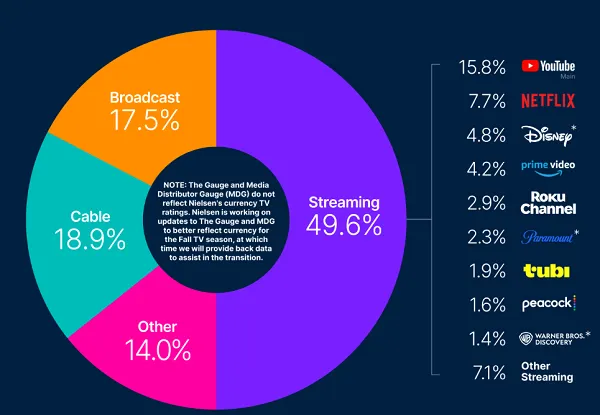
In the accompanying Q3 earnings call, Google’s Chief Business Officer, Philipp Schindler, noted that YouTube’s Living Room experience on connected TVs is becoming increasingly significant for revenue generation, contributing to over one-third of total ad revenue on the platform.
Schindler also highlighted the growing interest from small and medium-sized businesses in YouTube’s Demand Generation products. Currently, more than three million creators are part of YouTube’s partnership program, further expanding the platform’s reach.
Schindler pointed out YouTube’s rising momentum in e-commerce, with over 1.3 million channels participating in YouTube’s shopping program. Recently, YouTube announced a new affiliate partnership with Amazon, allowing U.S.-based creators to tag Amazon products in their videos, Shorts, and livestreams. This initiative significantly enhances promotional and monetization opportunities for creators.
Lastly, Alphabet discussed the increasing implementation of artificial intelligence to refine YouTube ad targeting and enhance creative output among users.
“Every day, over 20 million videos are uploaded,” Schindler stated. “We’re simplifying content creation with innovative generative AI tools in YouTube Studio, along with a conversational editing assistant for Shorts and YouTube Create.”
In March, YouTube introduced an AI-powered reimagine option for Shorts, enabling viewers to create alternative videos based on existing clips from other creators. The platform also tested an Extend with AI feature, allowing creators to generate different endings for their videos.
This trend appears to be driving the adoption of AI tools. Last week, YouTube published a report revealing that 61% of users who uploaded videos in the past year expressed interest in using AI to integrate themselves into video content.
As with any platform, YouTube must navigate the challenges posed by AI-generated content, but data indicates that its AI-driven creative enhancements are resonating positively with users.


 Troy Sanders