David Bridges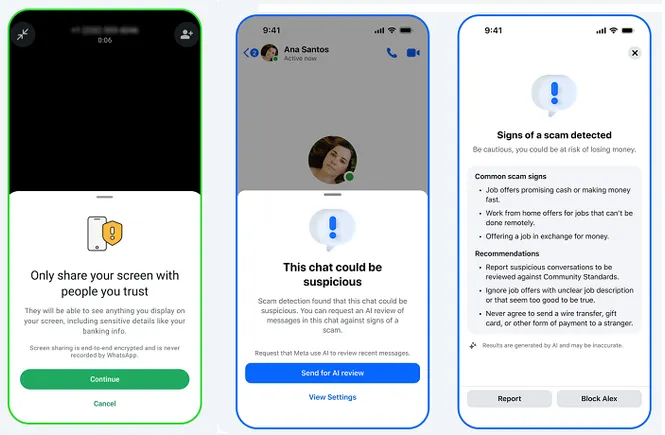

Essential Points
- Scam Impact: Older users are particularly vulnerable to online scams, with significant financial losses reported.
- New Features: Meta is introducing warnings on WhatsApp and Messenger to alert users about potential scams.
- Common Scams: Familiarize yourself with prevalent scams targeting seniors, such as fake home improvement services.
- Collaboration: Meta is partnering with organizations like the NEFCC to combat fraud against older adults.
Meta’s looking to help older users avoid online scams, because we all know that it’s older web users who always fall for the latest Nigerian inheritance, Amazon custom service, Facebook password scams.
And before you get riled up, old timer, that’s not an opinion, this is established fact.
According to the FBI’s Internet Crime Report, internet users over the age of 60 submitted the most complaints, and suffered the most losses in 2024, with a combined $4.8 billion lost to scams in this age group alone.
Online scams are a massive problem, and knowledge gaps are a key vector that enable these schemers to operate. As such, Meta’s looking to provide new prompts to alert older users to potential scams, while it’s also shared some advice that you can pass on to your uncles and aunts who spend too much of their time scrolling through Facebook.
First off, Meta’s adding new warnings on WhatsApp and Messenger that will alert users to common scams.
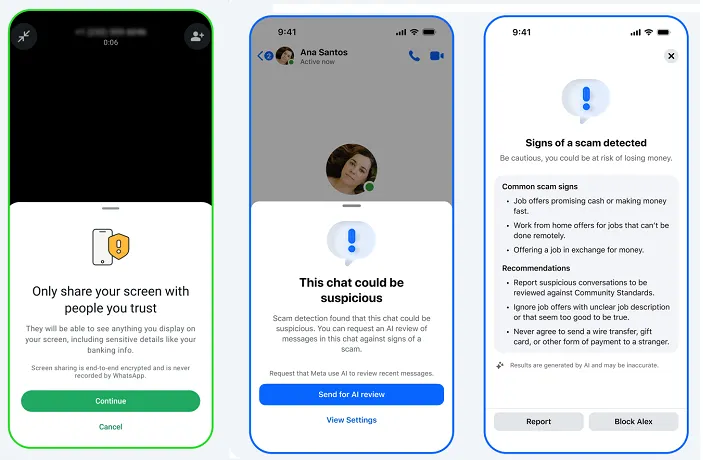
As you can see in these example screens, on WhatsApp, Meta’s adding warnings about screen sharing, and the potential vulnerabilities of enabling such, while on Messenger, it’s testing more advanced scam detection in chats.
As per Meta:
“When this is enabled and a new contact sends a potentially scammy message, we warn you and give you an option to send recent chat messages for AI scam review. If a potential scam is detected, you will get more information on common scams, and we will suggest actions including blocking or reporting the suspicious account.”
That’ll help to highlight common scam vectors, and raise awareness of potential vulnerabilities that are regularly exploited by such schemes.
Meta’s also shared some tips on how you can help your loved ones avoid potential scams online:

While Meta’s also outlined some common scams that older users tend to go for, to help raise awareness of what to watch:
- Fake home remodeling services and debt relief: Scammers created websites designed to solicit personal information under the pretense of providing fictitious government benefits for senior citizens, including debt relief and low- or no-cost home renovations. They attempted to drive people to these websites using online ads, including on Facebook and Google.
- Fraudulent money recovery services: Scammers created websites impersonating the FBI’s Internet Crime Complaint Center’s (IC3) official site under the pretense of helping people recover funds, including from crypto scams. They also ran inauthentic accounts across many services, including Facebook, Instagram, Telegram, Threads, TikTok, YouTube, and X, posing as officials who can help fraud victims recover their money.
- Fake customer service support: Scammers created online accounts and Facebook Pages posing as customer service representatives for airlines, travel agencies, banks, and others. They responded to comments under the official brands’ posts in an attempt to redirect people to DMs or Google Forms under the pretense of processing the refund.
Some helpful pointers, which could help you educate the elders in your life about common concerns, while Meta’s also joining the National Elder Fraud Coordination Center (NEFCC), a nonprofit that brings together law enforcement, and companies like AARP, Amazon, Capital One, Google, Microsoft, and Walmart to combat fraud targeting older adults.
“We will be working alongside NEFCC members to combat fraud at the local, state, and national levels, focused on protecting older adults by sharing resources and supporting investigations into large-scale fraud operations.”
Meta also undertakes regular reviews of scam networks, and has participated in various projects aimed at addressing scam activity, including romance scams, in its apps.
These are good initiatives, and some good pointers to help educate all users, not just the oldies, about potential risks online.
Yet, at the same time, it’s interesting to note the contradiction, as Meta is also pushing people to post AI-generated images at every turn, which is another vector that can lead to confusion.
Go on Facebook right now and you’ll be able to find a heap of clearly AI-generated posts that have garnered thousands of likes, with scammers using this as a means to increase their distribution, and potentially amplify their scams, or sell off these Pages.
That’s a growing element of concerns, and it’s interesting that Meta’s all about saving old people from themselves on one hand, yet it’s encouraging the use of a rising tool that enables the same on another.
But Meta wants to be the AI company, and clearly, commercial interests are on a similar bar as protecting users.
Either way, these are some good tips to pass on to the Generation Xers in your life.


 Clara Hastings
 Tessa Everly