 Clara Hastings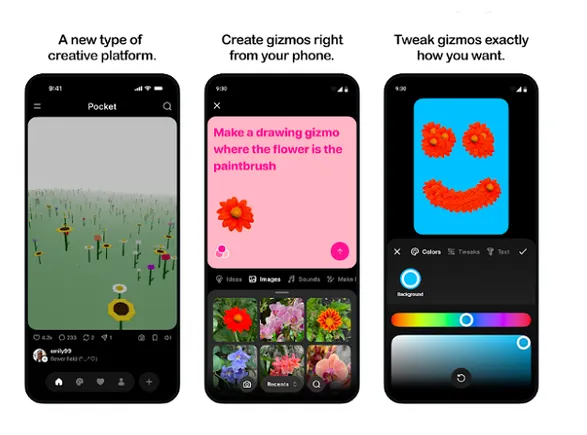

Following its recent launch in Brazil, Meta is now broadening the reach of Pocket, an innovative platform that empowers users to create basic applications and games through artificial intelligence prompts.
As reported by TechCrunch, Meta is rolling out the Pocket app to all users in the United States, reinforcing its commitment to advancing AI technologies.
Through Pocket, users can vibe code straightforward applications, referred to as gizmos, which can be shared within their networks.
The app’s Google Play Store description states: “Pocket is a creative platform for making and sharing gizmos. A gizmo is a small interactive experience you can tap and touch… and you can make a gizmo just by describing it.”
This tool primarily facilitates the creation of games generated from conversational prompts, utilizing simple formatting and structures.
Users of Pocket can explore a feed showcasing gizmos created by others, enabling them to like and comment on these projects. This social aspect fosters a community that elevates the most innovative creations.
The introduction of this AI-driven app is a result of Meta’s acquisition of Gizmo in March. According to Business Insider, Gizmo was initially launched in 2024 and allowed users to vibe code applications and games into existence, utilizing AI tools to establish the foundational structure for others to test and expand upon.
Essentially, Gizmo aimed to harness the vibe coding trend with a dedicated application designed to simplify the process of voicing any game or interaction into creation.
This concept is intriguing, and it’s evident that Meta views it as another chance to generate excitement around its AI tools and encourage more individuals to experiment with app creation.
Like all AI creation tools, the challenge still lies in the ideation process. While the act of creation may be more accessible, generating a compelling concept remains a significant hurdle.
Pocket provides an avenue for experimentation, making it a valuable resource for those eager to bring their ideas to fruition and explore what Meta’s AI capabilities can deliver.


 Mason Thompson