David Bridges

Unlocking the Power of AI: Meta’s Innovative Chatbot Tools Across Popular Platforms
Although Meta isn’t making headlines, it is steadily enhancing its applications with advanced generative AI bot creation and interaction features. Users can now engage in conversations with AI characters on platforms like Facebook, Instagram, WhatsApp, and Messenger. This development signifies a leap towards a more interactive and personalized user experience, allowing individuals to connect with AI in ways that were previously unimaginable.
Beyond just text exchanges, users now have the exciting opportunity to create AI chatbots equipped with unique voices. The range of voice options is expanding, offering users the ability to select a voice that resonates best with their personal style or brand identity, thereby enhancing the overall user experience and engagement.
As illustrated in the example shared by app researcher Jonah Manzano, Meta’s “AI Studio” now enables users to design chatbots with not only tailored personality traits but also custom voices. This enhancement reflects Meta’s commitment to creating more engaging and relatable AI interactions, with a growing selection of voice options that users can choose from to match their specific needs.
In the second image, it’s evident that Meta has organized its diverse voice options into distinct categories. This categorization simplifies the process of finding the perfect tone and pitch for your AI persona, making it easier for creators to develop chatbots that resonate with their target audience.
Over the past year, Meta has been diligently refining its custom AI creation tools. Users can now incorporate specific interests, set defined conversation parameters, and even create an avatar image for their bots. These features empower creators to craft unique and engaging chat experiences that reflect their brand and personality.
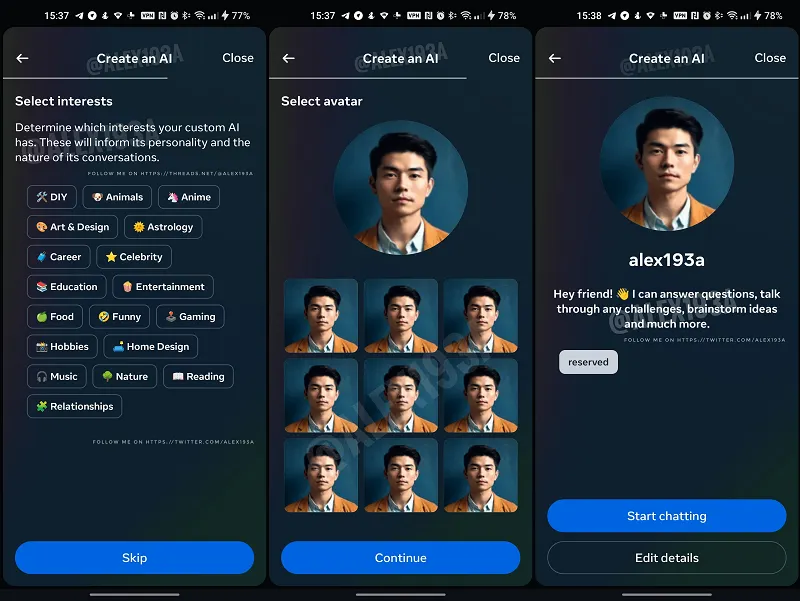
Last June, Meta CEO Mark Zuckerberg outlined an ambitious vision for the company’s future, emphasizing the creation of “AI agents.” According to Zuckerberg, these agents will serve as essential connectors for niche interests, allowing users to interact with AI in a more meaningful way.
The primary goal of these bots, as highlighted by Zuckerberg, is to effectively respond to factual inquiries. However, the more complex challenge lies in enabling these bots to provide creative responses that capture the unique style of their creators. This level of personalization will allow users to train their bots based on various aspects of their social media presence, leading to more lifelike representations of themselves.
This personalization also extends to voice selection, providing creators with a plethora of options to ensure their AI bots accurately reflect their chosen style. Users can expect more intimate and engaging conversations, potentially even through innovative devices like Meta’s Ray-Ban smart glasses.
This update is part of Meta’s larger strategy to integrate a plethora of AI characters into its applications, aiming to enhance user engagement across its platforms. The introduction of these AI bots is a strategic move to create a more dynamic and interactive social media environment.
Late last year, a Meta executive articulated the company’s vision to unleash millions of AI-powered profiles on Facebook and Instagram. These profiles will engage users by posting, commenting, and liking content as if they were real individuals. This ambitious plan aims to revolutionize the way users interact with social media.
Chatting with these AI bots is merely the beginning. With an impressive investment of $65 billion in AI infrastructure this year alone, Meta is laying the groundwork for a transformative shift in user interaction within its applications.
But will this development be beneficial for users and creators alike?
Many individuals already utilize tools like ChatGPT as sounding boards and companions, helping them consider diverse perspectives on personal matters. This trend suggests that the same could apply to Meta’s AI bots, although past experiences with celebrity-driven AI chatbots did not yield the expected success.
In 2023, Meta introduced a series of chatbots on Messenger influenced by celebrities such as Kendall Jenner, Dwyane Wade, and MrBeast. However, these bots received minimal user engagement, leading Meta to discontinue the initiative less than a year after its launch.
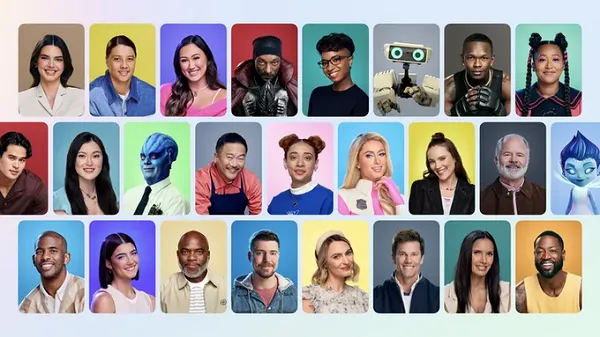
Despite significant investment and marketing, user adoption for these bots was disappointing. Meta ultimately shelved the concept, despite having paid substantial sums to these celebrities for their involvement. This experience provided valuable insights into the complexities of user engagement with AI technologies.
Now, Meta is reframing its approach, capitalizing on the growing interest in AI by allowing anyone to create their own bots. This democratization of AI creation is intended to foster greater engagement and innovation among users.
While some may question the viability of this strategy, it represents a bold attempt to revive a concept that previously struggled to gain traction. With Meta’s enhanced AI models, there is hope that users will find these bots more appealing and that creators will be inspired to explore their own bot creation ideas, sharing them with their audiences.
Meta aims to boost in-app engagement by encouraging more users to establish ongoing chat relationships with these AI characters. Some bots are likely to resonate with users, marking a significant shift in Meta’s approach by allowing a broader range of creators to experiment with their AI bot concepts.
While some bots may find their audience, there is uncertainty about whether the overall engagement will justify their creation. However, if Meta can leverage these tools to increase user engagement and time spent within its apps, the investment could prove beneficial.
Of course, there are potential mental health considerations associated with building relationships with non-human entities. Engaging with AI as if they were real people could have unforeseen consequences, although this concern may be secondary to Meta’s larger vision for AI integration.
It may be prudent for Meta to implement warnings similar to those on cigarette packaging, alerting users to the potential psychological impacts of engaging with digital characters before they interact with them.
This consideration will likely emerge as more individuals form deep connections with digital personas, prompting a re-evaluation of the implications of such interactions.
In the meantime, Meta appears determined to push forward with its ambitious AI initiatives.


 Troy Sanders
 Clara Hastings