David Bridges

LinkedIn is taking a significant step forward by allowing third-party platforms to display its ID verification markers. This initiative aims to broaden the scope of identity verification across various web elements, enhancing user trust and security.
This development could serve as a powerful tool for strengthening professional connections and relationships, adding an essential layer of assurance within networking processes. By implementing verified identities, LinkedIn is paving the way for more authentic interactions among professionals.
Initially launched in 2023, LinkedIn’s complimentary ID confirmation process employs third-party providers to authenticate users’ identities. This verification enables users to showcase a confirmation tick within the app, providing a visual cue of their verified status.
This feature ensures that all users can validate their identities effectively, distinguishing them from celebrity or paid verification checkmarks that are prevalent in other applications. The emphasis here is on authenticity and credibility.
LinkedIn is actively expanding its ID verification capabilities into more regions, collaborating with local ID verification providers to enhance accessibility. This new direction also allows partner platforms to showcase LinkedIn’s verification within their applications, broadening its reach.
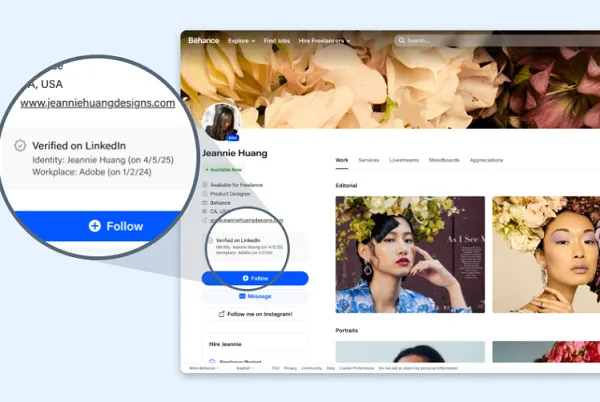
In this illustration, Adobe is integrating LinkedIn ID verification into its listings, significantly enhancing the value of LinkedIn’s verification process. This collaboration eliminates the necessity for Adobe to create its own verification system, streamlining the user experience.
According to a report by The Verge:
“Adobe is incorporating LinkedIn verification into its new Content Authenticity app and the existing Behance portfolio platform, enabling verified creators to display a “Verified on LinkedIn” badge on their profiles. When these verified creators utilize Adobe’s digital Content Credentials tools, their identity will accompany their work whenever it’s shared on LinkedIn.”
This integration could represent a highly valuable update for users and creators alike.
LinkedIn reports that over 80 million members have voluntarily engaged in its ID confirmation process. This expanding network of verified and ID-checked profiles could significantly enhance the connection between online identities and real individuals, effectively combating issues like spam, bot farming, and impersonation.
There has been a long-standing demand for universal verification across social applications to enforce behavioral standards, encouraging users to take responsibility for their communications. However, the aspect of anonymity remains a critical concern for many, leading to limited progress in implementing laws necessitating user identification.
Nonetheless, initiatives like this provide an alternative solution. Given LinkedIn’s professional focus, it’s evident that members would be more inclined to demonstrate their authenticity to foster secure business relationships.
Moreover, this progression illustrates that universal ID verification can be achieved through collaboration with third-party partners.
This could serve as a potential avenue for regulators to explore, which might eventually lead to a requirement for a form of ID for all social media accounts.
In a similar vein, LinkedIn is also planning to enhance its support for Adobe’s Content Credentials, which enable creators to assert ownership of content by embedding metadata into it.
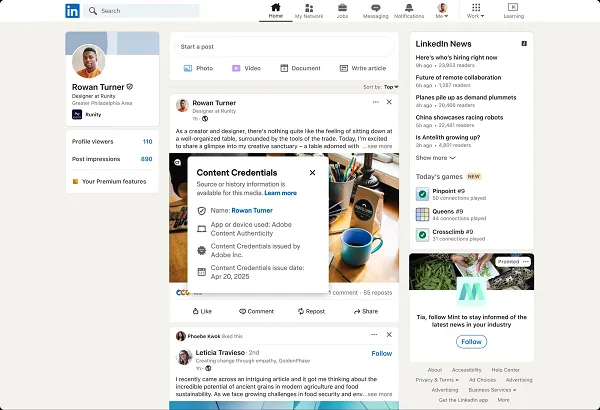
Collectively, these innovative forms of ID verification and digital ownership have the potential to introduce an additional layer of security to the broader web ecosystem.
As we navigate through an era increasingly marked by AI-generated fakes, this topic is poised to gain significant attention moving forward.



 Maya Kensington
 Cameron Steel