 Daniel Mercer

What matters most about the Anker Solix S5000?
- Portable design: The 5kWh Anker Solix S5000 weighs 97 pounds and has wheels and a telescoping handle.
- Home backup: The battery delivers up to 4,500W of steady output, but it is not enough for whole-home backup.
- Expandable capacity: Anker Solix BP5000 batteries can expand the S5000’s capacity to 12kWh.
- Best fit: The S5000 suits people who want portable, high-capacity backup for selected household appliances.
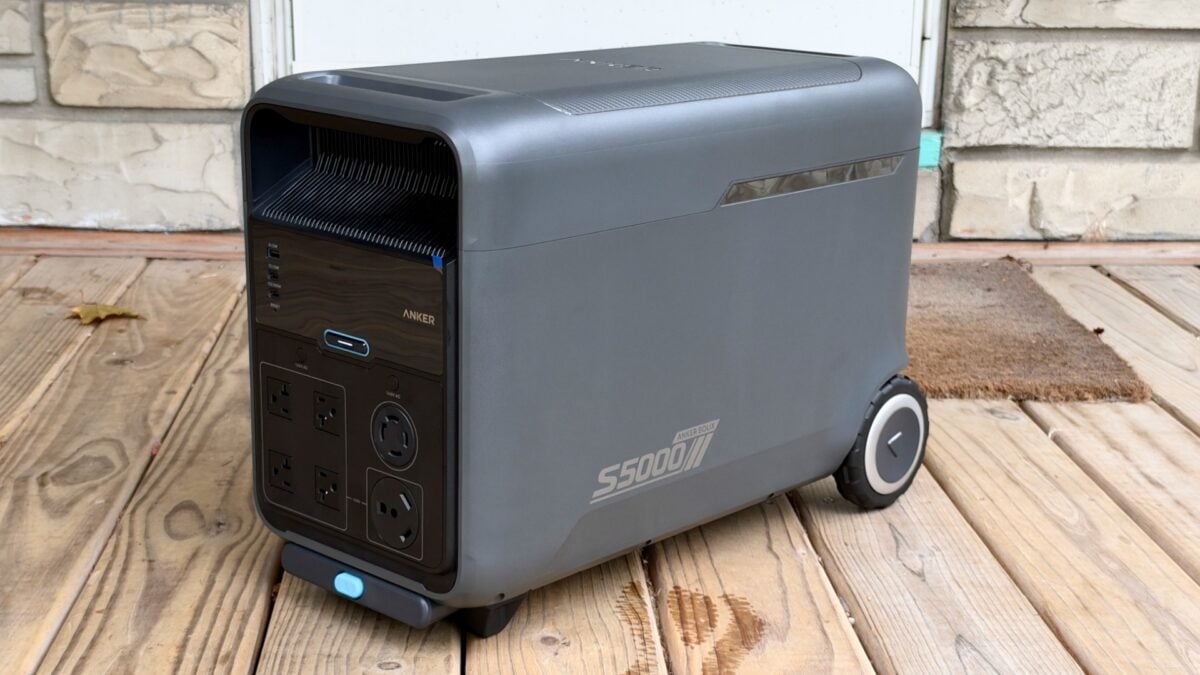
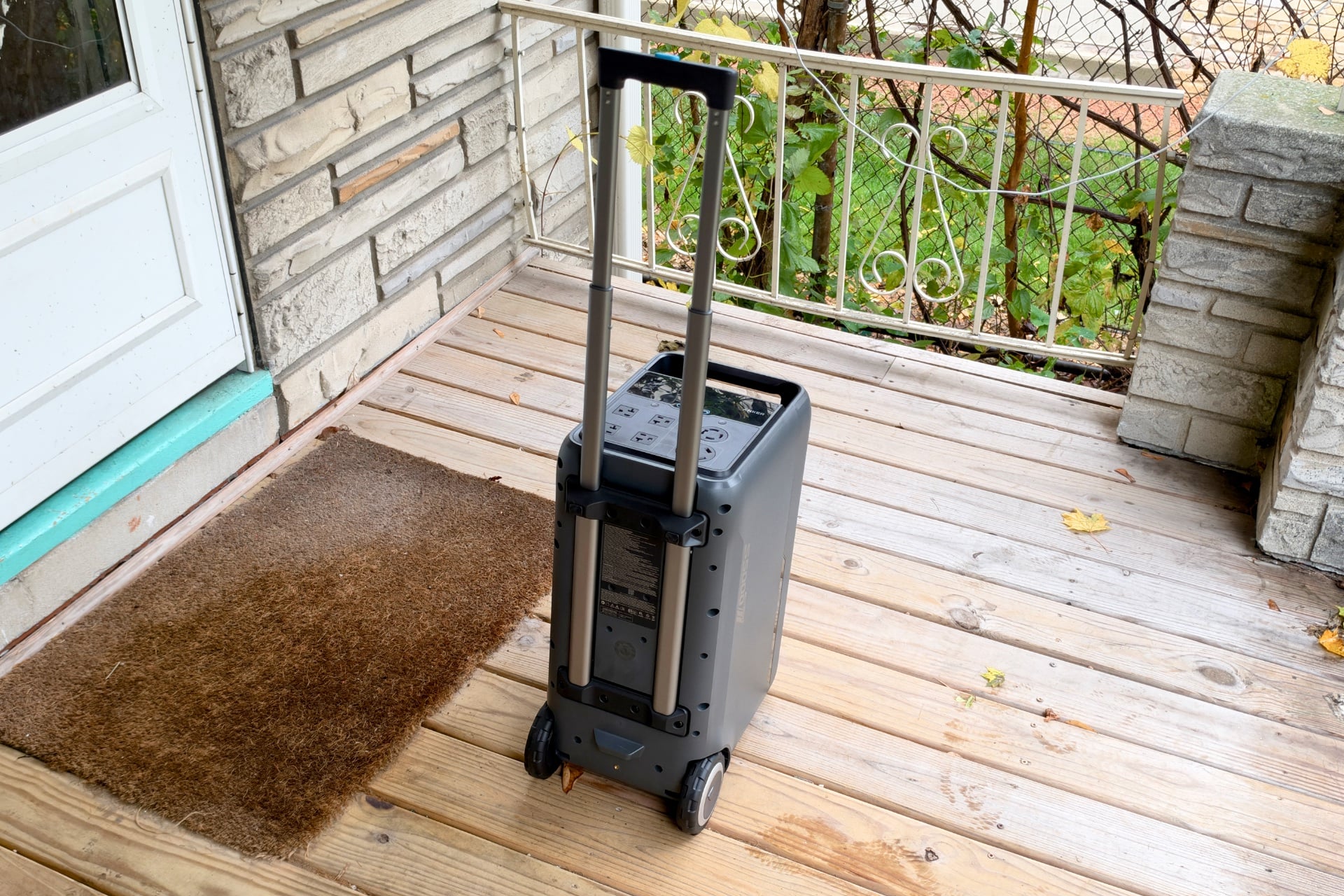
The Anker Solix S5000 is small and light for a large, heavy battery. This 5kWh portable power station weighs 97 pounds and measures 22 inches on its longest side, making it slightly bigger than most carry-on luggage. It also has wheels and a telescoping handle like those on a rolling suitcase.
The S5000’s size and weight are central to its appeal. Anker presents it primarily as a home backup battery for running appliances and other equipment during an outage, rather than as a rugged option for RV trips and camping. It can be used for those purposes if kept clean and dry. Anker’s claim that the S5000 can “power your home for 48 hours” overstates what a battery of this capacity can guarantee, since runtime depends on the equipment connected and its power draw.
Anker Solix S5000
A capable battery that is easier to move than many competing options.
- Lightweight for its category
- Easy to move around
- Expandable to 12kWh
- Low idle wattage
- Many useful settings
- 240V outlet requires an adapter for appliances
- Still a large, heavy battery
- More than basic home backup requires
- Not enough capacity for whole-home backup
The key question in this review is whether a battery with more than twice the capacity of the 2kWh Solix S2000 is practical despite its additional weight. The S2000 ran a refrigerator for nearly two days in an earlier test, longer than many power outages the reviewer had experienced. The S5000 may therefore be more capacity than some households need, while offering added reassurance to people who want a high-capacity portable power station.
How does the Anker Solix S5000’s design affect portability?
The S5000 combines a 5kWh capacity with a wheeled chassis, a telescoping handle and top handles for lifting. Its long body has ports on the front and back, with a different port layout from the Solix S2000.
The Anker Solix S5000 uses wheels and a telescoping handle to make its 97-pound body easier to move.
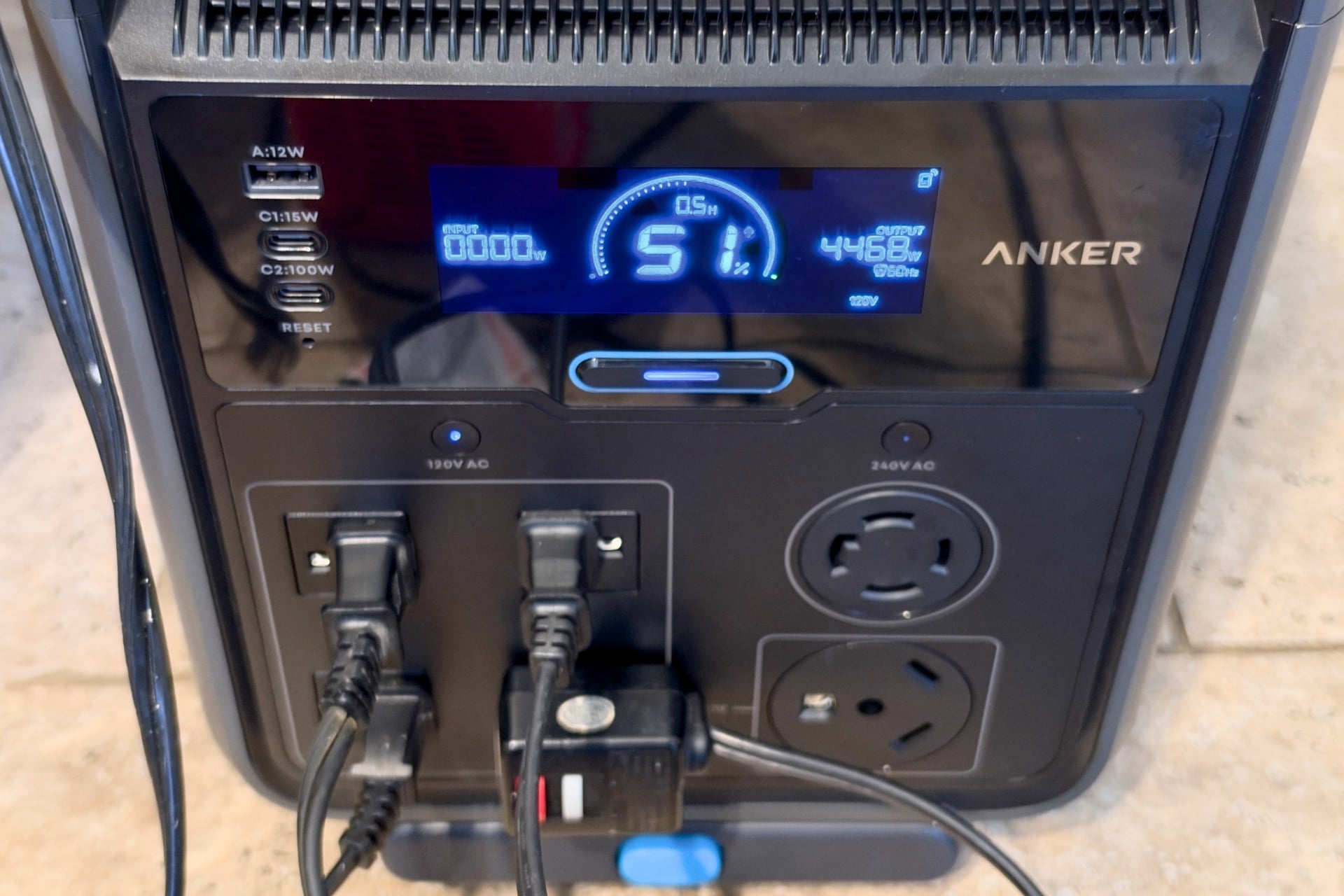
The S5000 is essentially a larger Solix S2000, with a different number and arrangement of ports and more than twice the capacity. Its front has four 120V three-prong AC outlets, one fewer than the five outlets on the S2000, which are split between the front and back.
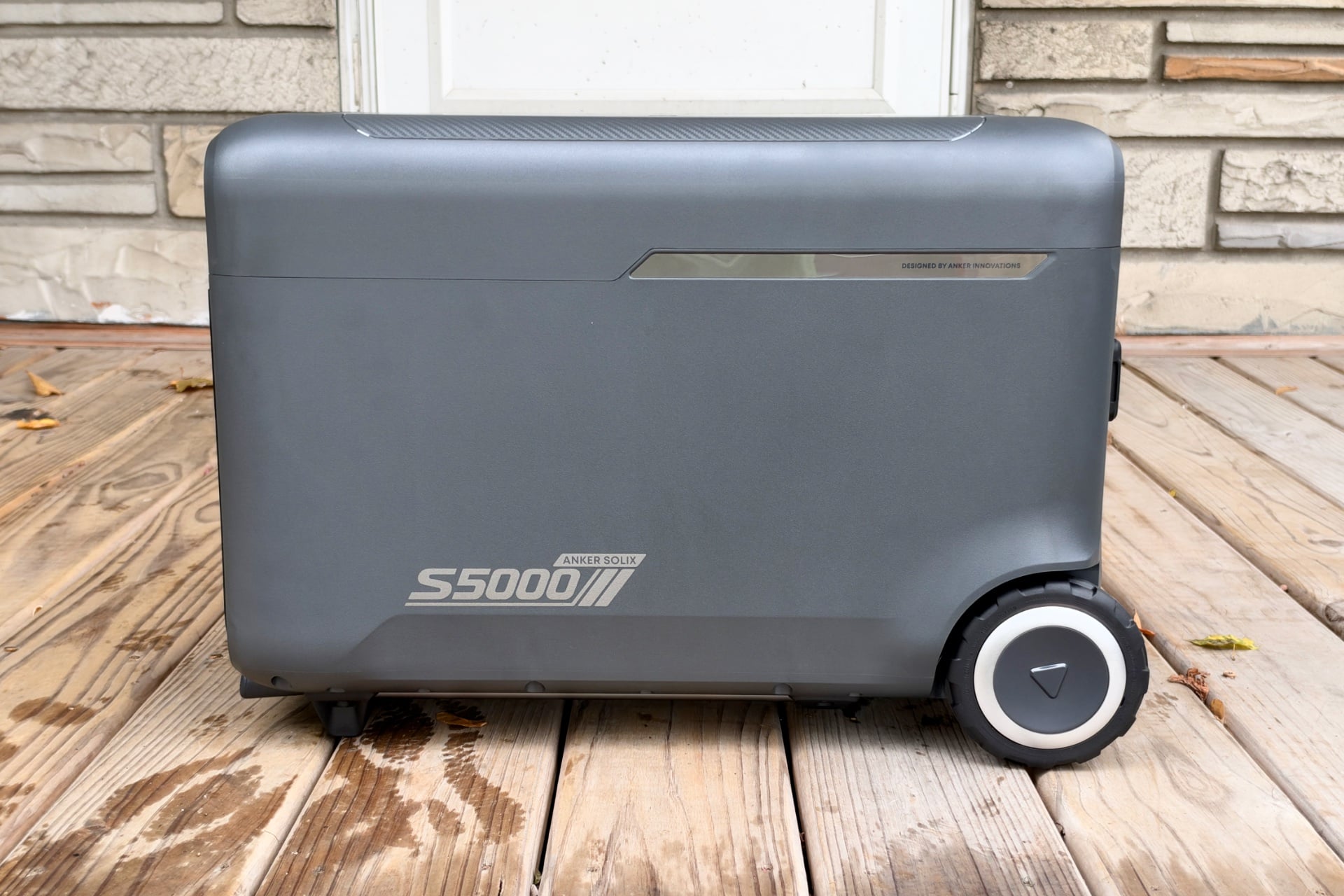
The front also includes a 120V TT-30 outlet, typically used with RVs, and a 30A, 240V NEMA L14-30 receptacle. The S2000 has neither. The L14-30 port can connect to a backup power transfer switch, though running a home through that connection requires limiting electricity use if the battery needs to last more than a few hours.
Two USB-C ports sit on the front: one rated at 100W and one at 15W, alongside a 12W USB-A port. The LCD displays battery charge, input and output wattage, estimated charging or discharging time and other information.
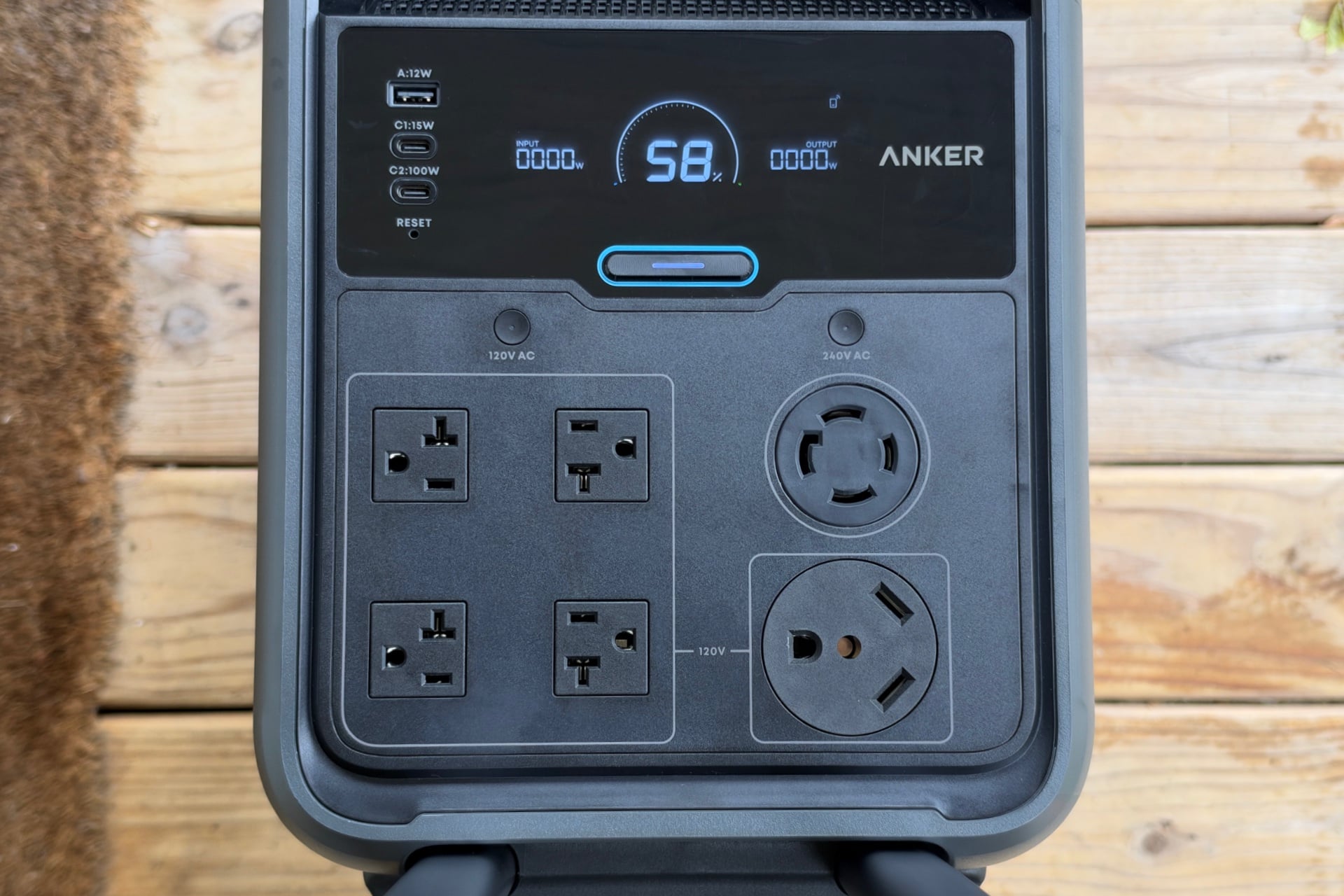
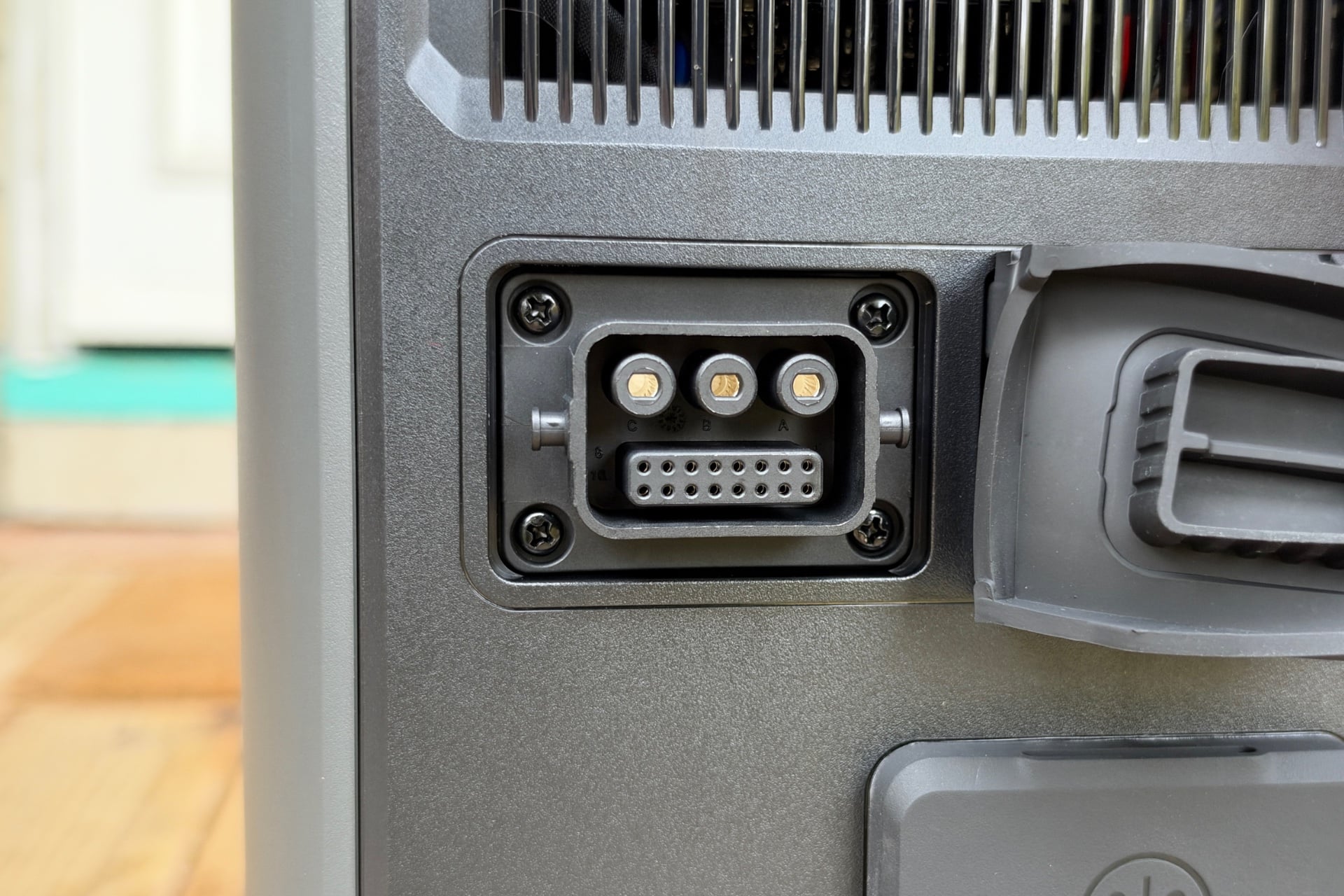
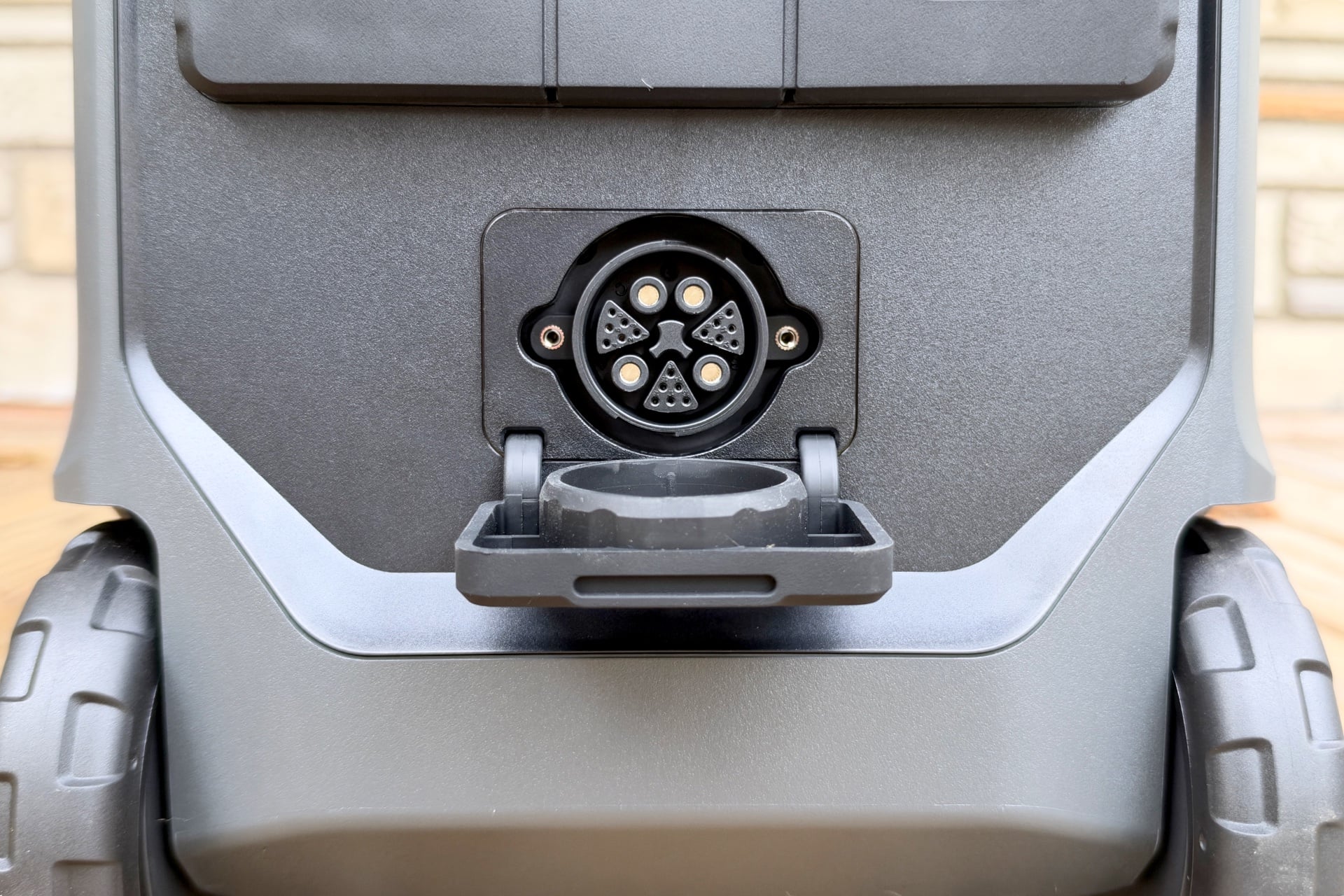
The back holds the charging connections, including a DC port for Anker Solix BP5000 batteries, a proprietary 2,000W Anker solar charging port and a standard XT-60 solar port that accepts up to 1,000W. The S5000’s four-prong charging port is also on the back. Connecting expansion batteries can increase the S5000’s capacity to 12kWh.
The telescoping handle extends when its center button is pressed. The reviewer found the handle sturdy and useful for tilting the battery onto its wheels. At 15 inches high, the unit was also easier to carry without bumping knees and shins than taller models such as the 25-inch Jackery Explorer 5000 Plus, which weighs 135 pounds.
Which settings and controls does the S5000 provide?
The S5000 works without a smartphone, but the Anker Power app provides access to operating settings and power-use information. The app displays charge, temperature, connected ports, power draw and estimated runtime.
The Anker Power app lets users monitor the S5000 and change its charging, display and outlet settings.
To pair the battery, turn it on, tap the “+” button on the app’s home screen, select the S5000 when it appears, enter Wi-Fi information and tap “Start.” The app then provides access to power statistics and settings.
The home screen shows charge percentage and temperature, with a choice of Fahrenheit or Celsius. It also lists active ports, their power draw, voltage and current, plus estimated runtime at the current load. Users can turn the AC ports or LCD off, schedule when AC ports are active and view charge and discharge history across days, weeks, months and years.
A mode button opens the “Power Usage Scenario” screen. The default UPS mode keeps the battery charged while powering connected equipment, then switches to battery power during an outage. Anker says the switchover takes 10 milliseconds; during a lamp test, the reviewer observed only a brief flicker but did not independently verify the precise timing.
Time of Use Mode schedules charging when electricity costs less and discharging when costs more. The feature may help users with a time-of-use electricity plan, although the reviewer expected limited savings without expansion batteries.
The app also offers silent mode, which reduces fan noise by lowering charging power, and power-saving settings such as automatic screen or AC-port timeouts. Charging wattage can be set between 100W and 1,800W, which can help users with older home wiring limit the load. The reviewer found the software robust but noted that the S5000 cannot turn off or prioritize specific groups of AC ports; Anker’s outlets are either all on or all off.
See Anker SOLIX S5000 at Amazon
How much power can the S5000 provide for home backup?
Anker rates the S5000 for 4,500W of continuous output and surges up to 8,000W. Tests with several heating appliances produced fluctuating loads between 2,000W and 4,500W over about ten minutes.
The S5000’s 4,500W continuous output supports selected household appliances but does not make it a whole-home backup system.
Anker specifies up to 8,000W of surge output, but the reviewer could not test that peak. In a steady-output test using a space heater, waffle iron, hair dryer and toaster oven, the load varied between 2,000W and 4,500W as the heating elements switched on and off. The battery maintained output during the roughly ten-minute test, and its fan was quieter than those on other portable power stations the reviewer had tested.
The Jackery Explorer 5000 Plus is another 5kWh power station and is rated for 7,200W continuous output and 14,400W surge output. Many users may not need that much power from a portable backup battery, but the difference matters for appliances with high demands.
The S5000 also has low idle power consumption, the energy its internal systems use while the battery is on but not powering external equipment. Anker rates idle draw at 8.8W. With the AC ports active and nothing connected, the reviewer measured 1,256Wh over 144 hours, or about 8.7W per hour.
In a separate test, the S5000 powered a chest freezer for about 114 hours, ending at 6% charge. The reviewer estimated that the battery used about 4,722Wh of its 5,024Wh capacity: 3,520Wh went to the freezer, which averaged 30W per hour, while about 1,202Wh was lost as waste heat. The freezer test indicates that runtime depends on the appliance’s average draw, not just the battery’s capacity.
Testing revealed a few charging inconsistencies. During the first two days, the 100W USB-C port supplied about 60W to an Anker Prime 300W power bank, then later reached 97W. The S5000 charged itself at about 1.65kW rather than the advertised 1.8kW, taking 3.5 hours to go from 6% to full instead of Anker’s claimed 3.1 hours. Anker said the review unit was receiving slightly less than 120V, which reduced its charging rate.
Is the S5000 a good fit for portable home backup?
The S5000 combines a 5kWh capacity with 4,500W continuous output in a comparatively compact, wheeled design. It can power appliances such as a refrigerator or dishwasher, but its output and 240V connection limit which larger appliances it can support.
The S5000 is best suited to targeted backup when portability and a 5kWh capacity matter more than maximum output.
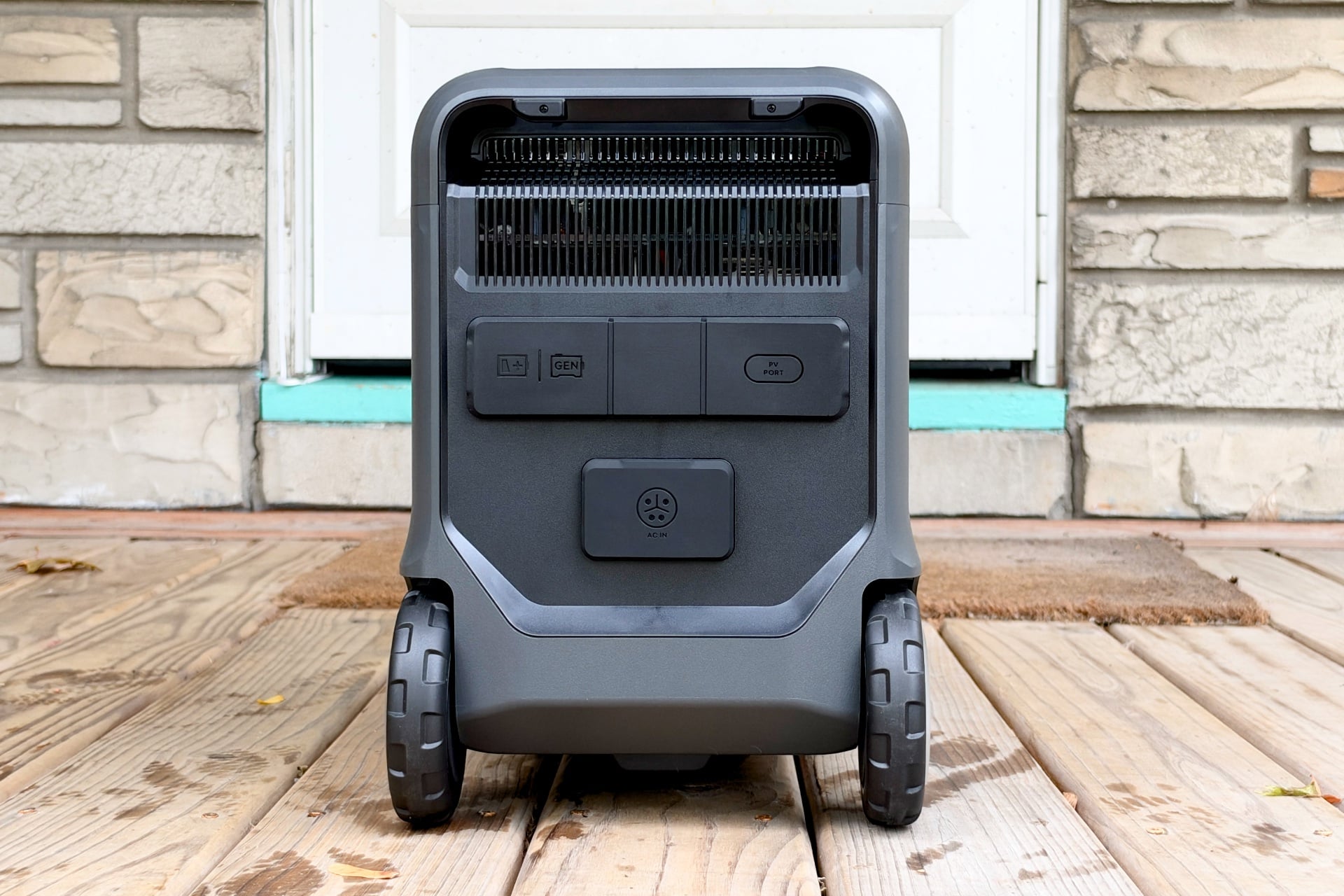
The reviewer would consider the S5000 when choosing a 5kWh battery. Its 4,500W continuous output is below some competitors, but the compact body, wheels and handle make it easier to move and store. At 97 pounds, it weighs less than some other 5kWh power stations and even some 4kWh models.
The S5000 can run appliances such as a refrigerator or dishwasher, but 4,500W is not enough for many electric dryers. Its 240V AC outlet also requires an adapter for appliances that need a different outlet type. Even a compatible battery may not last through a full dryer cycle, depending on the load.
Choosing a high-capacity battery also depends on how long outages typically last and which appliances need power. In the reviewer’s test, the S5000 ran a chest freezer for almost five days. That experience may not match every household’s needs; people who regularly face extended outages may value the added backup capacity, while others may find a smaller battery sufficient. If a 5kWh capacity is the priority and 7,200W output is unnecessary, the S5000 is one option to consider.
See Anker SOLIX S5000 at Amazon
What appliances can the Anker Solix S5000 run?
The S5000 can power appliances such as a refrigerator or dishwasher, subject to the 4,500W continuous-output limit and the appliance’s requirements. Many electric dryers may exceed that output or require a suitable 240V connection.
Appliance compatibility depends on both power demand and outlet type.
How long can the S5000 run a refrigerator or freezer?
Runtime depends on the appliance’s power draw and the battery’s available capacity. In one test, the S5000 powered a chest freezer for about 114 hours and ended at 6% charge.
A tested freezer ran for about 114 hours on the S5000 under the conditions described.
Can the S5000 expand beyond 5kWh?
Yes. The S5000 can connect to Anker Solix BP5000 expansion batteries, increasing total capacity to 12kWh.
Anker lists 12kWh as the S5000’s expanded capacity.
Does the S5000 provide whole-home backup?
The S5000 is intended for selected equipment and appliances, not whole-home backup. Its 5kWh capacity and 4,500W continuous output require users to prioritize which loads receive power.
The S5000 does not provide unlimited whole-home backup.