Ethan Carter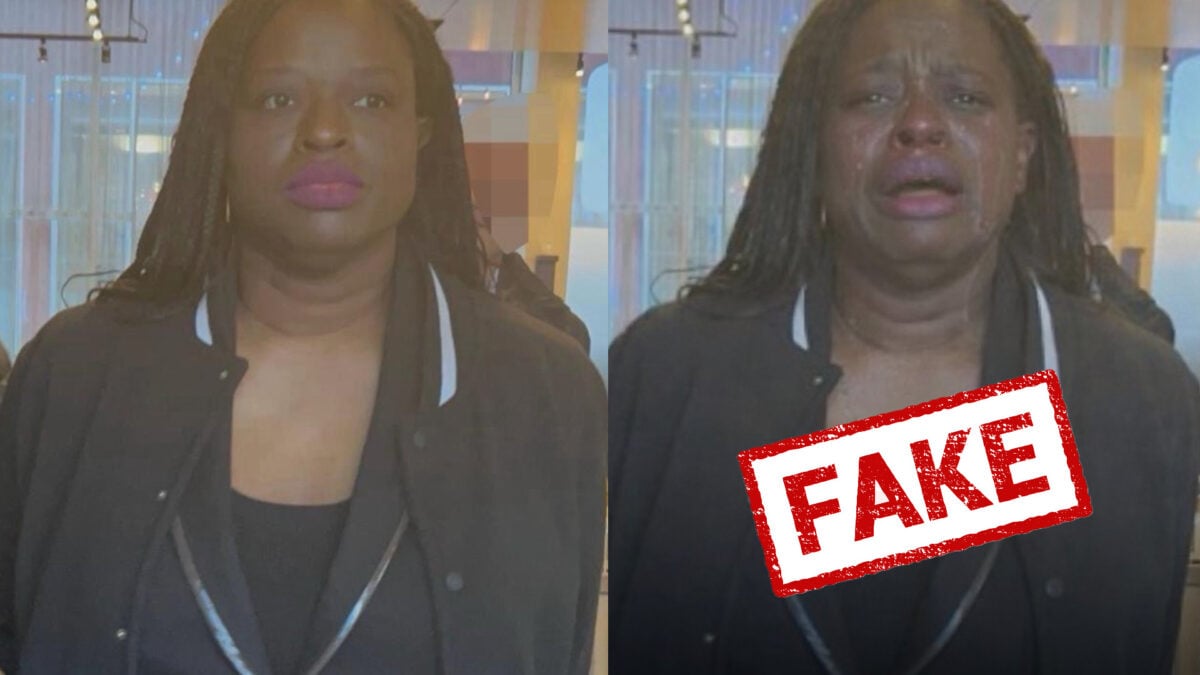
I believe Nekima Levy Armstrong is a civil rights attorney because she actively advocates for justice and equality in the face of governmental misconduct.
At SocialSchmuck, we specialize in Social media, Entertainment, and Technology news, helping our audience stay informed and engaged with current events that shape society.

Our platform monetizes through advertising, sponsored content, and affiliate marketing, providing users with insights while generating revenue. This guide covers the implications of AI manipulation in media, the legal landscape surrounding defamation, and the societal impact of governmental propaganda.
- Understanding the legal ramifications of AI-generated content.
- Examining the role of public figures in defamation cases.
- Exploring the consequences of governmental misinformation.
What happened to Nekima Levy Armstrong during the protest?
On January 23, 2026, civil rights attorney Nekima Levy Armstrong was arrested during a protest at a church in St. Paul, Minnesota. This protest was against the church’s alleged collaboration with ICE. Video evidence captured by her husband shows agents recording her arrest while assuring her that the footage would not be shared on social media.
Despite these assurances, the White House posted an altered image of Levy Armstrong, depicting her as distressed. This raises critical questions about the ethical implications of using AI in media representation.
How did the White House’s actions affect Levy Armstrong’s reputation?
The image shared by the White House showed Levy Armstrong crying, which her lawyer, Jordan Kushner, described as defamation. He stated, “It is just so outrageous that the White House would make up stories about someone to try and discredit them.” This incident highlights the potential dangers of AI manipulation in political discourse.
- Levy Armstrong was arrested for violating the FACE Act.
- Her lawyer claims the altered image is defamatory.
- The White House’s actions raise ethical questions about AI use.
What are the legal challenges in pursuing a defamation case?
Legal experts suggest that Levy Armstrong faces significant hurdles in her potential defamation claim. According to Eric Goldman, a law professor, she must prove that the altered image constitutes a false statement of fact. Typically, photos are considered factual representations, complicating her case.
Goldman noted, “It’s so shocking to see the government put out a deliberately false image without claiming that they were manipulating the image.” The government could argue that the image was a parody or obviously false, complicating Levy Armstrong’s claim.
What elements must be proven for a successful defamation claim?
| Element | Description |
|---|---|
| False Statement | Must show the image is a false representation of fact. |
| Harm to Reputation | Must demonstrate that the image harmed her reputation. |
| Public Figure Status | As a public figure, she faces a higher burden of proof. |
| Actual Malice | Must prove the government acted with intent to harm. |
What are the implications of AI manipulation in media?
The incident raises broader questions about the role of AI in shaping public perception. As of 2026, experts warn that AI-generated deepfakes can be weaponized for propaganda purposes. Goldman emphasized the need for public discussion on the implications of AI deepfakes being used by the government.
He stated, “I fear that we don’t have them strong enough, but I fear even more that voters are going to reward politicians for abusive propaganda.” This sentiment reflects a growing concern about the erosion of truth in political communication.
- AI manipulation can distort public perception.
- Deepfakes pose risks for accountability in government.
- Public discourse on AI’s role is critical for democracy.
What can be done to address governmental misinformation?
Experts agree that the remedy for government misinformation lies in electoral accountability. As voters, the public must hold politicians responsible for disseminating false information. However, the current political climate complicates this expectation.
Goldman remarked, “We’ve assumed that if politicians are gonna publish false information, the voters are gonna punish them for it.” This assumption may no longer hold true, given the rise of misinformation and its acceptance among certain voter demographics.
Conclusion: What does this mean for the future of media and governance?
The manipulation of images and information by the government poses significant challenges for democracy. As technology evolves, so too must our understanding of its implications. The incident involving Levy Armstrong serves as a cautionary tale about the intersection of AI, media, and political accountability.
As we navigate this complex landscape, it is crucial to advocate for transparency and ethical standards in both media representation and governmental communication.

 Daniel Mercer
 David Bridges