 Mason Thompson


Meta is enhancing parental controls by introducing new supervision features for its AI chatbots starting today.
With growing concerns surrounding AI as both an advisor and companion, these features aim to provide parents with reassurance and safety measures.
As described by Meta: “By enabling supervision, parents and guardians will gain visibility into the topics their teens have inquired about over the last seven days, though they will not see the actual conversations.”
This functionality will allow parents to monitor if their children are exploring potentially concerning subjects. It may also encourage parents to engage in discussions about their children’s interactions with AI.
“For parents seeking a more controlled AI experience for their teens, switching from the default 13+ setting to the Limited Content option will restrict the types of conversations their child can engage in within the Meta AI app,” Meta stated.
This update expands upon the parental oversight tools that Meta introduced in April, which offered insights into queries made within AI functionalities of Meta’s applications.
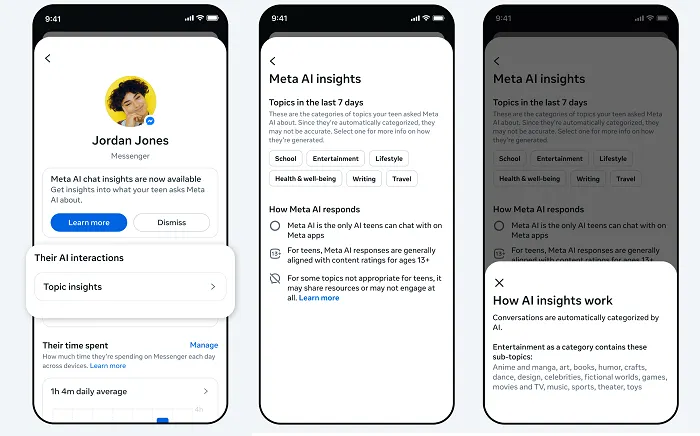
This update is designed to ensure that the dedicated Meta AI app falls under parental monitoring controls. This oversight may also encompass the use of Meta’s Muse agents, should Meta choose to make these available to users under 18.
Lowering age limits seems to align with Meta’s broader objectives for Muse, reflecting the company’s mission to democratize personal superintelligence. By implementing parental supervision, the company could facilitate this initiative, although even with added controls, managing AI chatbots’ impact on teenagers’ decision-making may remain challenging.
Reports from The Conversation indicate that many adolescents are already seeking companionship, emotional support, and mental health guidance from AI bots. Pew Research findings reveal that 57% of U.S. teens have utilized AI chatbots for information retrieval, while 54% have relied on AI for academic assistance.
The increasing dependence on AI may lead to various issues, including misinformation, confirmation bias, and academic dishonesty.
While gaining insights into discussion topics can be beneficial for parents, it may not suffice to counteract the potential negative effects AI can have on young, developing minds.



 Sophie Langley