 David Bridges

X is making significant strides in transforming its messaging capabilities within the app. Currently, select users have access to the initial beta phase of X’s revamped “Chat” feature, which promises to enhance user interaction and communication.
As highlighted by app researcher Jonah Manzano, X is fundamentally reconstructing its direct messaging (DM) infrastructure, prioritizing user privacy and security. A key feature of this new approach is the implementation of advanced encryption, which serves as a cornerstone of the revamped messaging experience.
To establish your new chat profile, users will be required to generate a four-digit code, adding an additional layer of protection. This step ensures that users can engage with confidence, knowing their conversations are safeguarded from unauthorized access.
The enhanced security measures associated with DMs are crucial as X plans to introduce in-stream payments. This development aims to provide users with peace of mind when sharing funds within the app, making transactions more secure and reliable.
It appears that direct messages will serve as a primary utility for monetary exchanges. Additionally, X is exploring the possibility of allowing users to load funds into their accounts within the app, thereby facilitating a seamless savings experience all in one platform.
The specifics of how this integrated financial system will operate remain somewhat ambiguous. However, X’s owner, Elon Musk, has recently reiterated his commitment to pursuing this initiative, emphasizing the importance of careful management when it comes to users’ savings.
“When people’s savings are involved, extreme care must be taken.”
This focus on messaging as a financial tool aligns with Elon Musk’s broader vision of creating a Western counterpart to WeChat, the all-encompassing messaging app that plays a vital role in many daily transactions in China. Such a transformation could redefine how users interact with both social media and financial services.
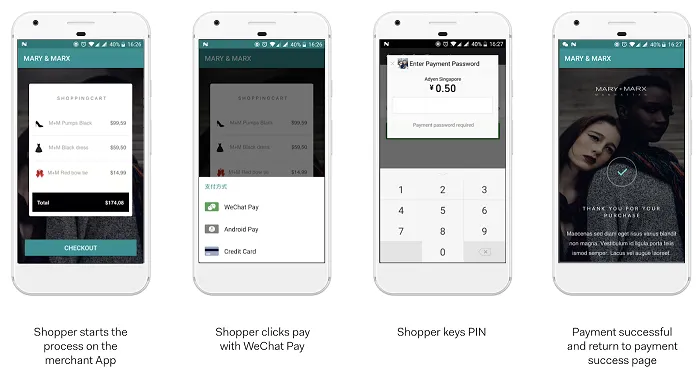
Elon Musk’s vision for an “everything app” is heavily influenced by the functionalities of WeChat, while also drawing inspiration from Musk’s early aspirations for PayPal, a venture he was involved with before his departure from the company in 2000. His ideas for integrating multiple services into one platform have been a long time in the making.
For years, Musk has been nurturing the concept of a unified platform for payments, banking, and shopping. The current overhaul of direct messages represents a crucial first step towards achieving that ambitious goal.
The question remains: will this ambitious plan succeed?
It’s challenging to predict, as the idea of an integrated social and payments application appears compelling. Such a model has proven transformative for users in China; however, similar attempts in Western markets have faltered without gaining traction. Various platforms have attempted to replicate this model, but none have achieved lasting success.
Meta is a prominent example, having cited WeChat as a key inspiration for its extensive revamp of Messenger back in 2016. This initiative aimed to incorporate payment functionalities via Facebook Pay and eventually its Libra payments system. Unfortunately, only Facebook Pay remains operational from this effort, as regulatory obstacles and limited consumer acceptance ultimately hindered Meta’s ambition to create a Western version of WeChat.
Even Facebook Pay has had difficulty gaining significant traction in the market. This struggle is largely tied to persistent concerns regarding Meta’s historical data privacy issues and the industry’s efforts to curtail Meta’s expansion into critical areas.
Meanwhile, TikTok has been actively pursuing in-stream sales for years and is gradually making headway. In contrast, Twitter has attempted in-app shopping with limited success. Pinterest is developing direct payment features, and platforms like Instagram and YouTube are eager to explore similar functionalities.
All these major platforms would eagerly implement streamlined, one-tap, in-stream payment options if they could. If there were substantial consumer demand for such features, they might be able to bring them to fruition. However, Western users generally appear more inclined to keep their social media and shopping experiences distinct. They tend to prefer the security and reliability of established providers like Amazon for their transactions.
While conceptually, merging social interactions with payments into a unified platform seems logical, practical attempts have not yielded successful outcomes in the past.
It is therefore difficult to envision X breaking through this barrier and achieving widespread acceptance for a combined social and payments experience.
Despite X’s capacity to introduce payment functionalities, it has encountered significant challenges throughout this process. The platform has struggled to secure payment processor licenses in the U.S., with key states rejecting its applications due to concerns regarding its ownership structure.
For example, New York denied X’s initial payment processing request, citing its deep connections with the Kingdom of Saudi Arabia, primarily due to Saudi Crown Prince Mohammed bin Salman being an investor in Musk’s venture. NY assessors have raised alarms about the Kingdom’s history of brutality and repression, claiming that it has been “fueled and enabled” by the platform itself.
This is just one of several significant challenges X has faced in obtaining initial approval for payments within the app. It’s important to note that this pertains solely to payments, separate from transaction licenses required in each region. Moreover, X has yet to express any intentions to expand its operations into international markets.
Initially, Musk expressed optimism about having payment capabilities integrated into the app by the end of last year, stating that “it would blow my mind” if that timeline wasn’t met.
However, as we approach the midpoint of 2025, payment functionalities remain inactive.
While it is possible that these features are forthcoming as part of the messaging overhaul, X still has a considerable journey ahead in securing the necessary regulatory approvals and winning over consumers to establish the app as an essential utility.
Moreover, gaining user acceptance may prove to be the most formidable challenge, as X has been experiencing a decline in its user base over time.
Thus, even if X manages to obtain all necessary approvals (a feat no other app has accomplished) and successfully integrates simplified in-stream payments (which has eluded all other platforms), its diminishing audience share may render these efforts insignificant.
This is not to suggest that success is impossible. Elon Musk has a reputation for overcoming seemingly insurmountable challenges, and there may be a strategy in place that could elevate the significance of X payments in the future.
However, at this moment, that potential is not entirely visible.
Nevertheless, we are on the brink of discovering how this will unfold, with the initial phase being the gradual rollout of the new X Chat functionality.
X Payments are expected to follow this development shortly thereafter.



 Mason Thompson
 Tessa Everly