 Troy Sanders


In the first half of 2026, LinkedIn experienced a notable increase in active users within the European Union, alongside a marked enhancement in its efforts to combat inauthentic activity. The platform is actively working to eliminate automated and AI-generated comments and profiles.
The details are highlighted in the latest EU DSA disclosure report, which reveals that LinkedIn has added 1.4 million active users in the EU compared to the second half of 2025, bringing the total to 56.5 million active users in the region.
This statistic is particularly significant as it represents the only insight LinkedIn provides regarding active users, as opposed to the total membership figures, which LinkedIn often emphasizes.
Typically, LinkedIn shares an overview of its global member base in its official reports.
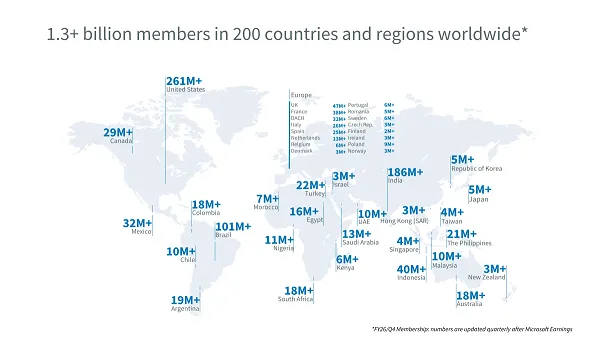
While boasting a total of 1.3 billion members is impressive, it’s important to differentiate between members and users, as LinkedIn’s actual active engagement is considerably lower than this figure.
Insights from LinkedIn’s EU active user statistics provide clarity on this distinction.
According to LinkedIn’s reported statistics, only about 30% of its member base actively engages with the platform.
If this trend holds true across other regions, it indicates that LinkedIn’s active user base is approximately 433 million monthly active users.
This number is substantial; however, it is also noteworthy that while LinkedIn’s user base has gradually increased in the EU in recent years, the percentage of active users has remained relatively stable.
In March 2025, LinkedIn’s DSA report indicated that 28% of its EU member base actively used the application. Similarly, in October 2024, the active user percentage was also recorded at 28%.
The data reveals that despite LinkedIn reporting increased user engagement over time, the platform has not significantly attracted a higher number of active users.
Recently, LinkedIn CEO Daniel Shapero highlighted that the platform experienced double-digit member growth in Q2 2026 as part of parent company Microsoft’s latest update, while content consumption rose by 10% year-over-year.
These statistics, coupled with LinkedIn’s headline member figures, give the impression of robust engagement growth. the statistics on active users suggest that the same individuals frequently interact within the app, indicating challenges in driving substantial growth in user activity.
Is this significant? It largely depends on your target audience and their level of activity on the app. It is intriguing to observe the disparity between LinkedIn’s overall member data and its actual active user statistics, indicating modest growth in its audience over time.
Regarding content trends, LinkedIn reported a 46% increase in identified cases of inauthentic activity in the app during the first half of 2026 compared to the second half of 2025.
LinkedIn is addressing issues related to inauthentic comments from engagement pods and external applications that provide automated posting services. Concurrently, the platform is also tackling what it terms “AI slop,” and AI-generated engagement that fails to enhance user experience.
The new DSA data implies that LinkedIn is intensifying its efforts against these issues, with a notable increase in actions taken against inauthentic profiles and user accounts.


 Mason Thompson

 Maya Kensington