Ivy Caldwell


As Meta’s CEO Mark Zuckerberg promotes his ambitious vision for artificial intelligence, evidence suggests that gaining public support will be a significant challenge for him and his company.
Zuckerberg proposes that individuals will eventually have access to their personal AI superintelligence, designed to assist with various aspects of their daily lives, including health and financial choices. this vision hinges on Meta being granted access to a considerable amount of personal information. Given Zuckerberg’s current reputation, convincing users to share this data poses a substantial hurdle.
Recent findings from a new survey conducted by UMass Lowell’s Center for Public Opinion in collaboration with YouGov reveal that Zuckerberg is perceived as the least-liked public figure in the United States, across both political parties.
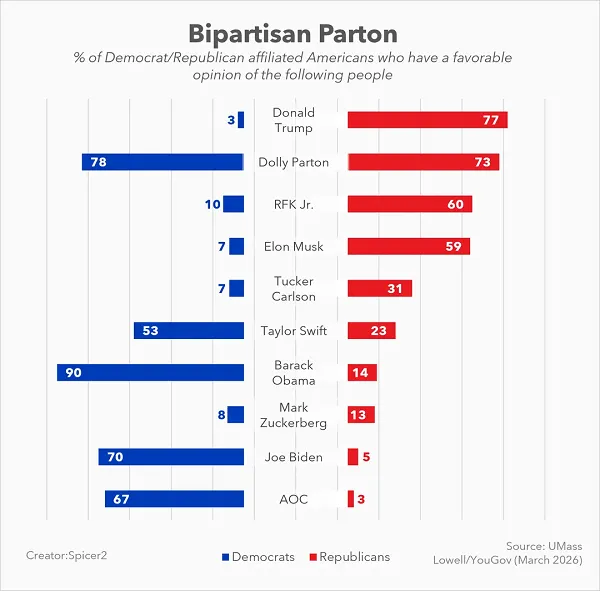
The accompanying image, shared on r/DataisBeautiful on Reddit following the passing of singer Dolly Parton, illustrates the low favorability ratings Zuckerberg receives from both sides of the political aisle.
This widespread unpopularity could present a significant obstacle for Zuckerberg’s ambitions in the AI sector.
Earlier this month, Zuckerberg released a comprehensive 6,500-word manifesto outlining his vision for a future dominated by AI, where every individual can rely on an always-on AI assistant.
According to Zuckerberg: “Everyone will have an exceptionally capable personal agent that understands you, your goals, and everything you care about. Your agent will work 24/7 on your behalf to improve your relationships, health, career, finances, home management, hobbies, and more. It will free up time for the things you enjoy and help you accomplish more than you could otherwise.”
For many, this vision represents a promising and advantageous future, where individuals can make informed decisions, minimize mistakes, and lead an enhanced life.
Yet, for this vision to materialize, Meta requires significantly more personal data from users.
To deliver this level of personalized guidance, Meta’s AI tools must access a wide range of sensitive information.
Consequently, the erosion of trust in Zuckerberg and, by extension, Meta—stemming from the company’s previous missteps—may now play a crucial role in determining the future trajectory of the organization.
This survey highlights the deep-seated trust issues facing the company. Although Meta is striving to improve its image by launching a significant new initiative to limit teenage social media usage, challenges persist in other areas.
For instance, its AI-driven, camera-equipped glasses have been controversially labeled “perve glasses” due to users recording individuals without their consent.
It remains uncertain whether Meta and Zuckerberg can successfully navigate these obstacles and persuade the public that the company is genuinely focused on serving the public good rather than merely pursuing profit.


 Clara Hastings
 Tessa Everly