Ivy Caldwell


LinkedIn has recently provided valuable insights into its ongoing efforts to combat the proliferation of AI-generated content, often referred to as “AI slop.” This initiative aims to address the challenges posed by repetitive and low-quality posts that diminish the user experience on the platform.
In August, LinkedIn introduced a feature allowing users to report suspected instances of AI-generated content directly within their feeds. This tool specifically targets what LinkedIn defines as AI slop—generic or repetitive posts that fail to contribute meaningful insights to discussions.
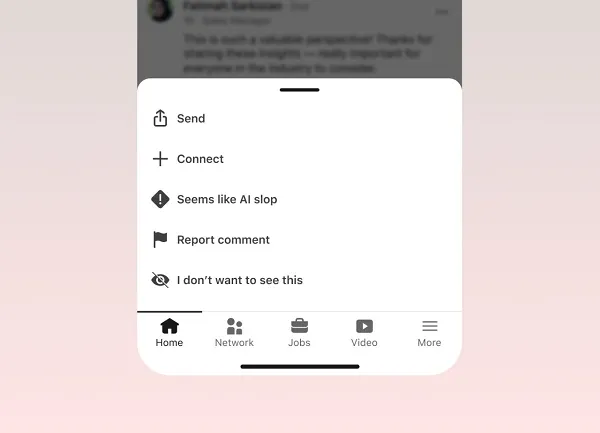
This reporting option quickly gained traction, with LinkedIn reporting that within just three weeks of its launch, over one million users had utilized the feature to remove AI-generated clutter from their feeds.
On October 8, Tim Jurka, LinkedIn’s Vice President of Engineering, shared insights into the internal mechanisms behind AI slop detection, detailing the platform’s commitment to enhancing its capabilities in identifying and filtering this type of content.
Jurka elaborated on LinkedIn’s AI slop identification strategy, which incorporates user feedback from the reporting feature to refine its detection algorithms. By employing a “teacher-student” model, LinkedIn trains larger AI models to recognize new patterns of AI slop, thereby generating high-quality data necessary for training smaller, more specialized models.
In a compelling analogy, Jurka likened LinkedIn’s approach to Thanos wielding the Infinity Stones to eliminate the stones themselves; the platform utilizes AI to identify and eliminate AI slop, constantly adapting to evolving definitions of what constitutes repetitive or low-quality content.
LinkedIn has deployed a variety of AI agents, each assigned a specific set of guidelines to evaluate content against predetermined criteria. Jurka stated, “Each agent is guided by a specific policy, which defines the criteria it uses to evaluate content, such as whether a post is promotional, highlights an achievement, or is relevant to current events.” When faced with complex content that challenges its understanding, these agents can escalate the matter to human reviewers for further insight, which helps them refine their policies for better future performance.
This approach fosters a sophisticated detection network that integrates human feedback and user reports, enhancing the ability to identify AI slop and limit its visibility.
As a result, LinkedIn has made significant strides in improving the identification of AI-generated posts.
“By leveraging our teacher-student framework and agent-based workflows, we’ve recently broadened our classifiers to encompass all posts shared beyond one’s immediate network, achieving 94% accuracy in detecting AI slop,” Jurka announced.
LinkedIn previously indicated a 40% reduction in the visibility of AI slop, responding to user demands for a cleaner and more meaningful social media experience.
This trend reflects a growing concern across social media platforms.
The surge in AI-generated content has led users to become increasingly skeptical of the authenticity of posts within their feeds, creating an environment where many contributions appear disingenuous. The majority of AI-generated posts, particularly those featuring images or videos, often lack engagement and fail to establish a genuine connection with the audience.
It can feel akin to sifting through a chaotic collage of half-baked ideas that were never intended for public scrutiny, resulting in a disorienting experience for viewers.
While not all AI applications are detrimental, successful creators have honed their craft over time, developing a style that effectively communicates their vision and evokes the emotions tied to their inspirations.
Generative AI, however, often lacks this nuanced understanding, leading its creators to unintentionally produce subpar content. Many simply publish their work, dismiss feedback, and convince themselves of their accomplishments.
The deluge of AI slop is becoming a pressing concern for social media, as anticipated by many experts, and the demand for a way to curb this overwhelming trend is likely to grow across all social platforms.


 Troy Sanders

 David Bridges