 Brandon Fletcher

Sam Altman, the CEO of OpenAI and a prominent figure in the AI industry, has expressed ambivalence regarding the rapid advancement of artificial intelligence technology.
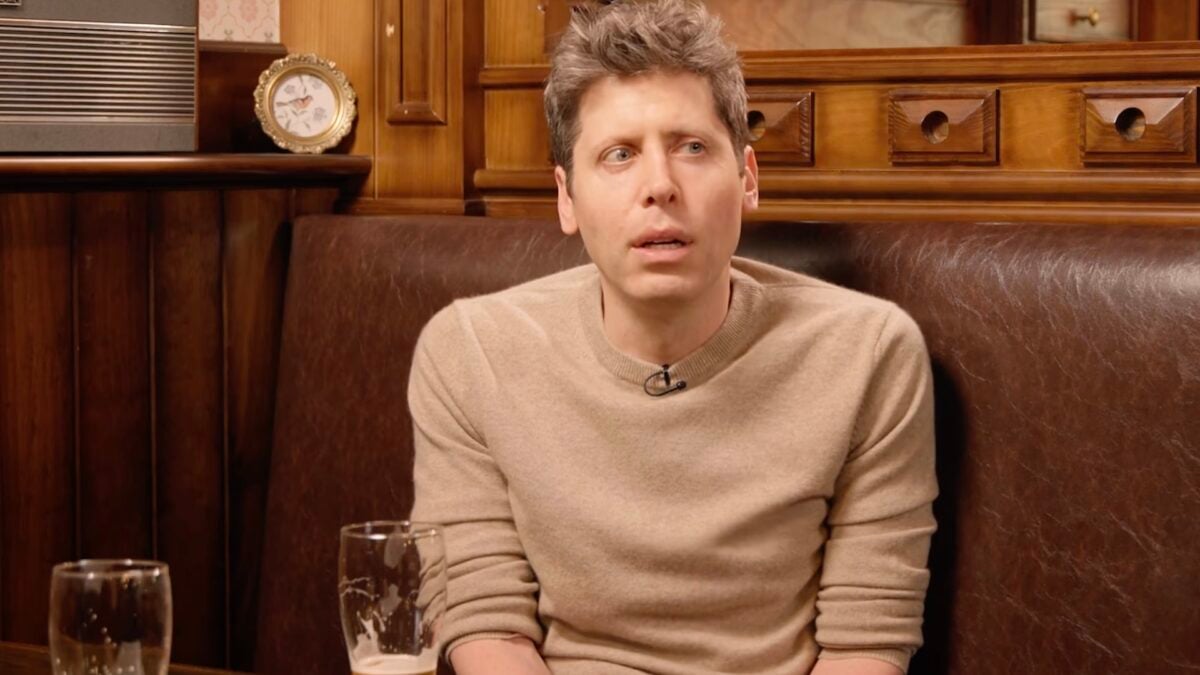
During a recent episode of the podcast Cheeky Pint, hosted by Stripe cofounder John Collison, Altman relaxed in a pub booth, enjoying a pint of IPA and Guinness. He reflected on the numerous professionals whose careers are being significantly affected by AI’s evolution.
This disruption has been particularly pronounced in the mathematics community, following OpenAI’s controversial release of an AI-driven solution to the Navier-Stokes problem, a dilemma that has troubled mathematicians for many years. Some in the field accused OpenAI of plagiarism in their approach. Earlier this month, the company further stirred the pot by publishing solutions to nearly 400 additional longstanding mathematical issues.
Just as future chess players will look back at Deep Blue’s triumph over Garry Kasparov, mathematicians may view OpenAI’s series of proofs from late 2026 as a pivotal moment that irrevocably changed their discipline through the integration of AI.
In a lighthearted yet revealing moment during his podcast appearance, Altman mentioned—“I’m actually probably not supposed to say this, but I will since we’re drinking”—that one of the models OpenAI utilized for tackling complex technical challenges was humorously referred to by employees as “Model Name-Hold My Beer.”
“We collectively experienced researchers overcoming their toughest academic challenges; the model was systematically resolving them, one after the other,” Altman shared. “It was remarkable to witness, spanning many different fields.” He noted that this included “many of those problems that we published,” likely referring to the hundreds of math solutions released earlier in the month. OpenAI did not provide clarification when asked for more details.
Observing Model Name-Hold My Beer was reportedly both thrilling and unsettling for Altman. “I was awake for two nights in a row, simply too excited to sleep,” Altman recounted. “While I was incredibly enthusiastic and pleased, I also felt a profound sense of sadness and nostalgia, anticipating the end of an era.”
A curious exchange unfolded as Altman grappled with the profound impact of AI on people’s lives, while Collison reassured him that such technological shifts are inevitable and should not weigh on his conscience.
Altman: “I agree this is the right thing for the world, and I recognize that it reflects the nature of reality, something beyond anyone’s control. I do feel real—”
Collison: “It’s a sense of wistfulness and nostalgia you can feel.”
Altman: “It’s more profound than nostalgia.”
Collison: “Wistfulness.”
Altman: “Indeed.”
This dialogue illustrates a shared belief between the two men that the proliferation of AI and its subsequent disruptions are an unavoidable progression in both technological and human evolution. the impact on lives, communities, and ecosystems becomes secondary to the conviction that the innovations they are creating will enhance life for everyone in the future. This mindset is a driving force behind the relentless advancement of AI technology.
Earlier in the discussion, Altman acknowledged, “I don’t think we”—referring to OpenAI—“have effectively communicated to people why we believe the potential downsides of this technology are worth the risks.” This insight may highlight a significant area for improvement in how AI advancements are conveyed to the public.


 Daniel Mercer

 Ethan Carter