 Tessa Everly

Meta has introduced a new feature that allows advertisers to create exclusion-only audiences for Meta ad sets, providing an additional layer of control over ad targeting in the platform.
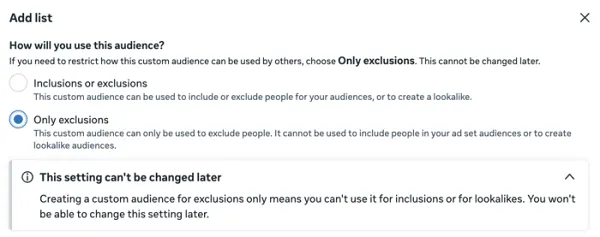
According to Meta: “An exclusion-only custom audience is a type of custom audience list specifically designed to exclude individuals from your ad audience. Unlike traditional custom audiences, exclusion-only custom audiences cannot be utilized to include anyone in your audience.”
What are the reasons advertisers might choose to exclude certain individuals from their ads?
Meta explained that exclusion-only audiences serve to ensure that individuals who have opted out of a company’s products or services will no longer receive those advertisements, thereby minimizing unnecessary advertising expenditure. This feature also applies to individuals whom a business is legally obligated not to target.
Meta added that this option acts as a permanent safeguard against unintentional inclusion when using custom audiences.
Essentially, it expands the custom targeting options available, allowing businesses to protect themselves from accidental ad exposure through other mechanisms.
“As an advertiser, you can utilize a standard custom audience to both include and exclude individuals from your ad audience,” Meta stated. “Conversely, with an exclusion-only custom audience, you can solely exclude individuals. This type of audience cannot be used to include people, nor can it be converted into a regular custom audience once created.”
Alongside Meta’s insights on the potential applications of this feature, Facebook ads specialist Jon Loomer recommended that this option is particularly useful for excluding employees, preventing the costs associated with ads that deliver no value.
Other applications may exist, though most can likely be managed through existing custom audience exclusion methods.


 Cameron Steel