 Ethan Carter


When the world first encountered the collaboration between video game developer CD Projekt RED and the acclaimed anime studio Trigger, in the form of the Netflix series, Cyberpunk: Edgerunners, initial expectations were modest. Many anticipated a mediocre anime tie-in, overshadowed by a game struggling for positive attention. the ten-episode series defied all predictions, becoming the standout anime of 2023 and reigniting interest in a beleaguered game just before its major updates.
Now, anticipation is at an all-time high for the sequel, Cyberpunk: Edgerunners 2, as fans hope it can replicate the success of its predecessor or risk falling short of its own ambitions.
While the new series may not reach the emotional depths of David Martinez’s tragic arc from the first season, Cyberpunk: Edgerunners 2 expands the narrative canvas of Night City. Over ten episodes, the sequel ignites the city once again, delivering a story that feels notably more ambitious, impactful, and aspirational compared to its forerunner.
Cyberpunk: Edgerunners 2, crafted by returning writer Bartosz Sztybor and directed by Kai Ikarashi, quickly establishes that the former protagonist, David Martinez, is no longer part of the narrative. Instead, the creators introduce a compelling twist: the story revolves around four protagonists who, while leading their own journeys, also serve as antagonists in each other’s narratives.
Introducing: Roman Carax (EN: Valeria Rodriguez, JP: Momoka Terasawa), a young film enthusiast capturing LiveLeak-style footage with his 35mm camera for quick cash; D (EN: Nazeeh Tarsha, JP: Kouki Uchiyama), a nomad with a shadowy past on a quest for vengeance; Weak Kingsley (EN: Clancy Brown, JP: Kentaro Tone), a faded cyberpunk icon searching for renewed purpose; and Talia (EN: Kimoy Lee, JP: Akari Kitou), a woman who has more chrome than flesh, entangled with the wrong crowd.
Upon its arrival, Edgerunners 2 faced significant expectations. The first season is often regarded as one of Trigger’s finest works, as it presented a more restrained approach compared to their typical flamboyance, which often sees their rebellious heroes shooting into the stars. Edgerunners told a gripping story that fans desired from the games. Stybor’s comparison of the first season to a Michael Bay spectacle and the second season to a Martin Scorsese film during the Edgerunners 2 Anime Expo premiere piqued my interest. Though both seasons share a stylish, minimalist opening sequence—season two features Franz Ferdinand’s “This Fire” instead of The Cure’s “10:15 Saturday Night”—that’s where the similarities end.
To begin with, labeling the four characters as a crew akin to David’s chooms mischaracterizes their dynamic. Throughout much of the season, they operate in pairs, their paths intertwining and colliding as they pursue their own shifting ambitions. Tensions escalate further when a mysterious digital artifact is introduced, a potent element that complicates their interactions. Packed within this shard lies a grant that offers immense power, but with dire consequences. True to its roots, Edgerunners is filled with intense violence, slick action scenes, and writing that aims to resonate as profoundly as its cybernetic protagonists. While Edgerunners 2 might not reach the same extraordinary highs as its predecessor, it still successfully adheres to genre conventions in a largely satisfying manner.
In the realm of video games, the term vertical slice refers to a polished, playable segment that showcases a game’s core elements—gameplay, art, and animation—essentially serving as a proof of quality. While Cyberpunk: Edgerunners beautifully encapsulated the romanticized film-noir essence of being an “edgerunner” through its naive protagonist, Cyberpunk: Edgerunners 2 adopts a different rhythm. The sequel acts as a love letter to cinematic classics like Pulp Fiction, Léon: The Professional, and City of God. Simultaneously, Trigger maintains its signature style while nodding to the futuristic aesthetics of genre-defining films such as Blade Runner and Akira. Instead of merely recycling narrative tropes, Edgerunners 2 crafts a story that is expansive, subversive, and emotionally resonant, embodying a vertical slice of what both the anime and the games can offer. this ambition sometimes proves to be a double-edged sword.
Narratively, Edgerunners 2 occupies a unique space that bridges its predecessor and its video game origins. As a follow-up to the first season and a precursor to the game, its storyline stitches together significant plotlines. Yet, the series remains independent enough to stand on its own merits. The familiar Cyberpunk elements are present: corporate secrets, intense gang shootouts, and deep familial conflicts. rather than pursuing a far-fetched dream, Edgerunners 2 questions whether the relentless pursuit of survival is truly worth the cost.
Each character seems to draw from the diverse backgrounds of CD Projekt Red and Trigger’s player character narratives in Cyberpunk 2077. While the game offers distinct paths for corpo, nomad, and street kid characters, they eventually converge into a similar storyline. This aspect is a notable weakness in the game. In contrast, the quartet in Edgerunners 2 authentically intertwines their narratives, exploring how their journeys impact each other in a caustic manner. This concept is intriguing, enhanced by the fact that Roman, Talia, Weak, and D face a long journey ahead as they evaluate how much they are willing to risk in a city that always seems to win.
Interestingly, the show’s exploration of this theme extends beyond personal struggles, engaging the inhabitants of Night City, who possess greater agency in the narrative than in its first season and arguably in the games. From the malestrom gang members to corporate elites and everyday citizens striving to survive, everyone reacts to and influences the ensemble. At times, the city becomes a force larger than the four protagonists, transforming them into mere bystanders as Night City spirals into chaos and retribution.
The vocal performances in Edgerunners 2 excel in guiding their characters through the myriad challenges they face. While Weak takes a backseat to the main cast, Brown’s portrayal makes him a standout character of the season. His role as the emotional core ensures that every scene featuring Weak elevates the performances of his co-stars.
Visually, Edgerunners 2 is breathtaking. Each frame boasts a raw, unrefined aesthetic that aligns perfectly with its narrative’s blend of cinematic flair and unsettling realism. No two scenes are identical; colors may fade during action sequences, leaving characters outlined in vivid sketches. Roman’s camcorder footage captures the stark realities and fleeting joys of life in Night City.
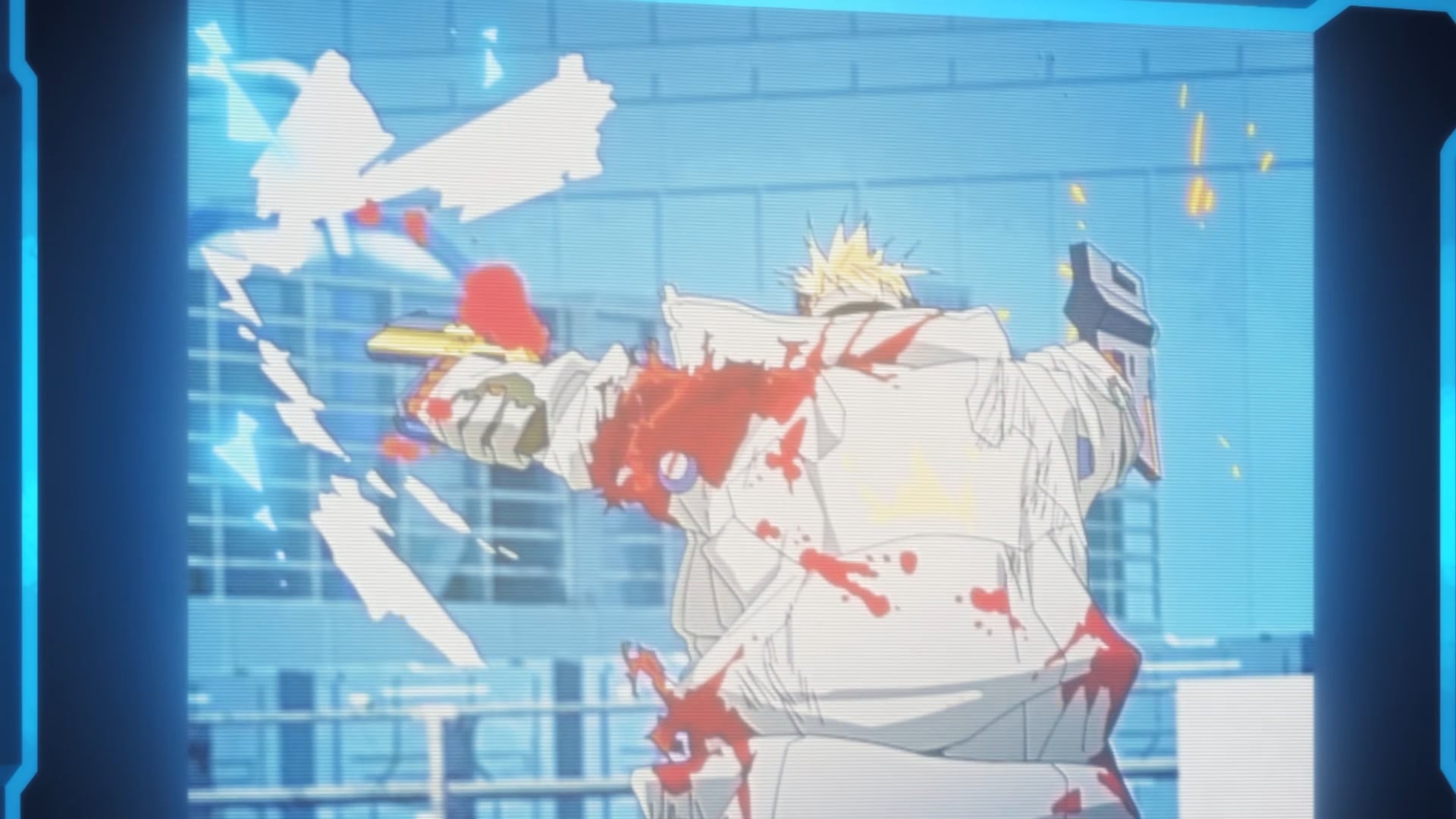
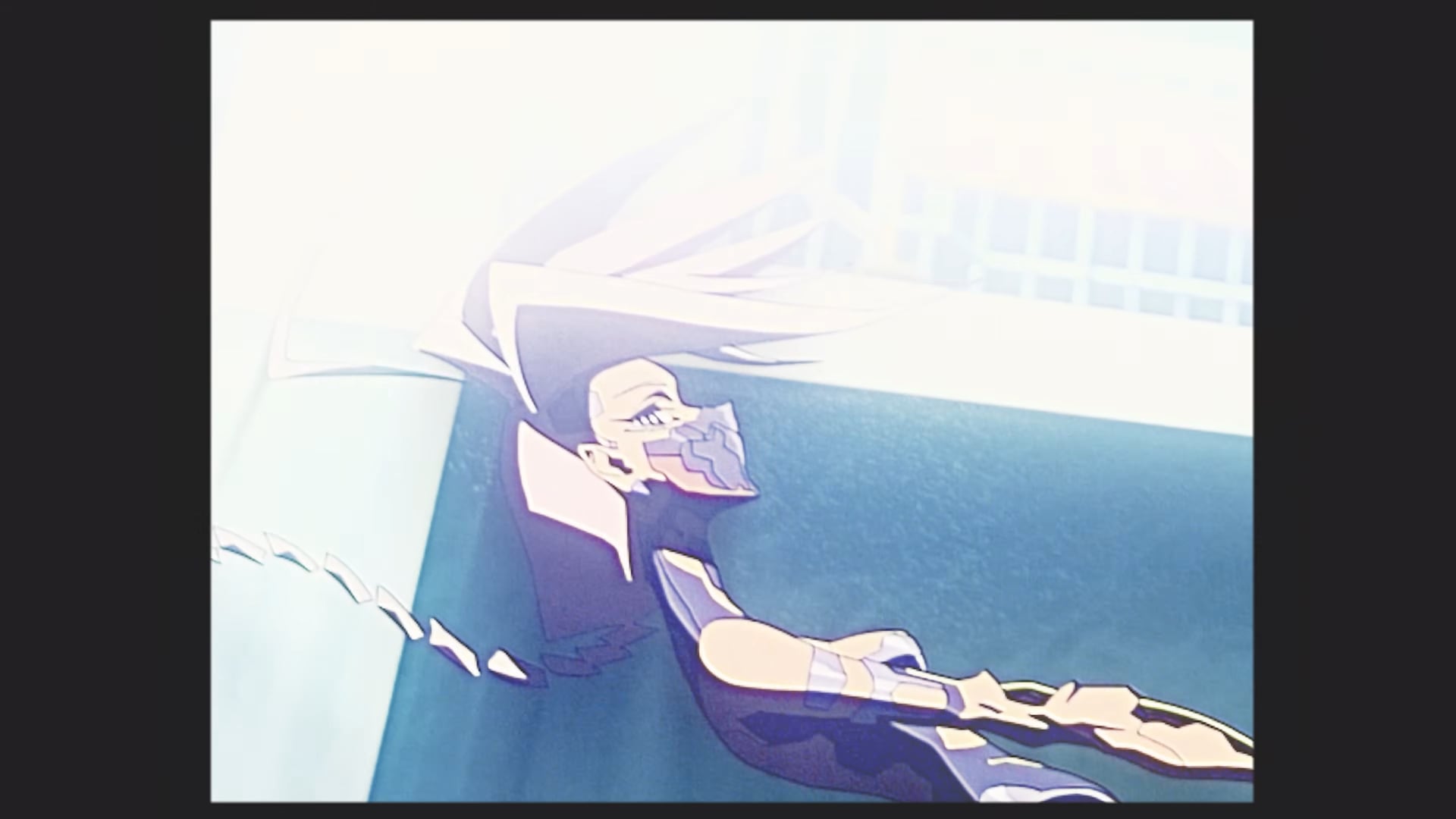
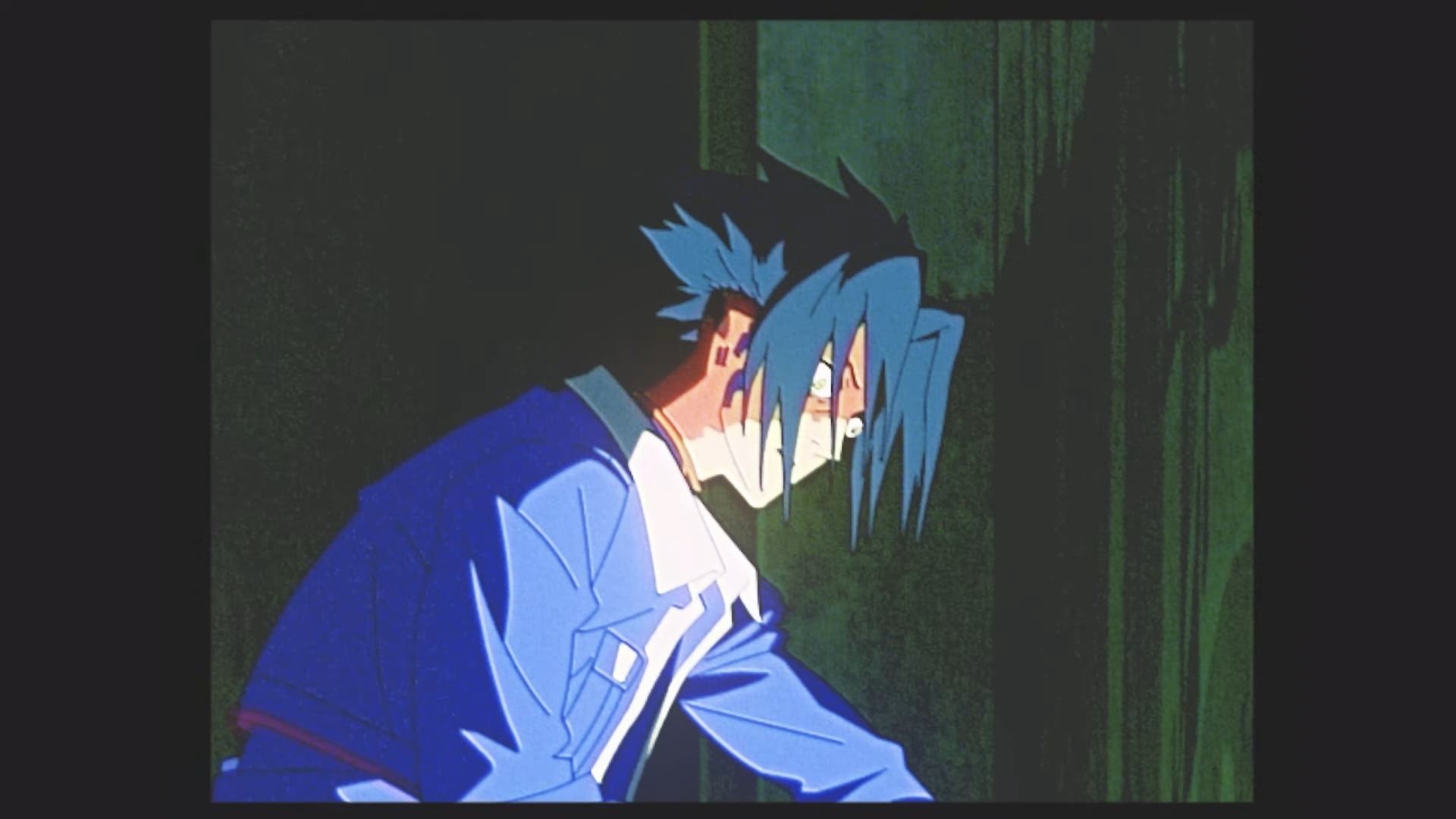
The show sometimes feels stretched thin, juggling multiple storylines. Unlike the first season’s deep dive into David’s hero’s journey, Edgerunners 2 shifts its focus to the citizens of Night City, portraying them as active participants in the chaos instigated by its protagonists and the megacorps controlling them. One challenge of maintaining so many interconnected narratives is the occasional reliance on montages and time jumps. While stylish, these choices can disrupt the pacing, making the season’s latter half feel chaotic and unfocused. The character resolutions, while not abrupt, often lack sufficient time for audiences to grasp the characters’ motivations and decisions when chaos ensues.
The hopeful conclusion of Edgerunners 2 resonated with me, even if it arrives in a somewhat contrived manner. A significant factor is the noticeable lack of ensemble cohesion compared to the first season. The four protagonists’ story arcs, while interconnected, rarely intersect in a memorable way. Their interactions are sufficient to keep the plot advancing but do not coalesce into a unified narrative that justifies their collective presence, resulting in a softer emotional impact than the singular, focused journey that defined the first season.
Often, they appear as characters who would benefit more from leading their own series rather than sharing space in one that struggles to unify their narratives. This leads to a maximalist approach with too many conflicting ideas among four characters whose combined stories lack depth outside of their occasional roles as allies or rivals.
As both a sequel and a video game adaptation, CD Projekt RED and Trigger’s follow-up avoids being simply derivative or a cash grab riding on its name. the ambitious storytelling of Cyberpunk: Edgerunners 2 ultimately falls short of the heights achieved by its predecessor. If the emotional impact of Cyberpunk: Edgerunners left a lasting impression, Cyberpunk: Edgerunners 2 may only leave a bruise that fades from memory once the credits roll.
All ten episodes of Cyberpunk: Edgerunners 2 will be available on Netflix starting October 20.
Want more io9 news? Check out the best movies and TV shows to stream this month and discover all the upcoming sci-fi, fantasy, and horror books you should keep an eye on.


 Daniel Mercer

 David Bridges