

 David Bridges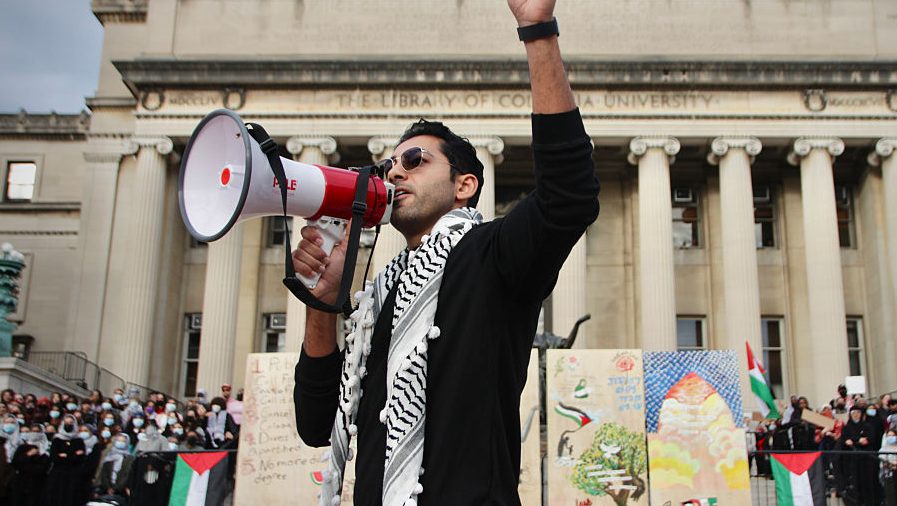

Donald Trump’s administration has implemented a stringent approach to immigration policies since he assumed office in January. The increase in deportation cases has raised significant concern, notably impacting individuals such as Palestinian Columbia University student Mohsen Mahdawi. Mahdawi has been in the custody of Immigration and Customs Enforcement (ICE) in Vermont since April 14, 2025. However, a recent judicial ruling mandating his release has propelled Mahdawi’s circumstances into the national spotlight, highlighting the complexities and implications of current immigration practices.
Following the judge’s directive for Mahdawi’s release, Department of Homeland Security Assistant Secretary Tricia McLaughlin responded with a statement underscoring the gravity of the situation. She asserted, “It is a privilege to be granted a visa or green card to live and study in the United States of America. When you advocate for violence, glorify and support terrorists that relish the killing of Americans, and harass Jews, that privilege should be revoked, and you should not be in this country.” This statement signals the administration’s stance on individuals perceived to jeopardize national security.
McLaughlin’s remarks appear to target Mahdawi’s involvement with a pro-Palestinian student organization at Columbia University, where he has been vocal about the Israeli-Palestinian conflict and has criticized Israel’s military actions in Gaza. These affiliations have contributed to the contentious nature of his immigration status, revealing the intersection between advocacy and legal consequences in today’s political climate.
Upon securing his release on bail on April 30, 2025, just two weeks post his detention, Mahdawi expressed a defiant message directed at the Trump administration: “I am saying it clear and loud to President Trump and his Cabinet: I am not afraid of you.” His declaration serves as a testament to his resilience and commitment to his beliefs, signaling a broader resistance against perceived injustices faced by individuals in vulnerable positions.
Below, discover more details about the life and background of Mohsen Mahdawi, an individual whose story encapsulates the current challenges in the intersection of immigration and activism.
Explore Mohsen Mahdawi’s Origins in a Refugee Camp
Mohsen Mahdawi, now 34 years old, was born in a refugee camp situated in the Israeli-occupied West Bank. His early life in this challenging environment has profoundly shaped his perspectives and aspirations. In 2014, driven by the pursuit of better opportunities, he relocated to the United States, where he aimed to further his education and contribute positively to society, embodying the resilience of those who seek refuge from conflict.
Understanding Mohsen Mahdawi’s Decade-Long Residency in Vermont
After his arrival in the U.S., Mahdawi successfully established himself as a legal resident, residing in Hartford, Vermont for a decade. His long-standing commitment to living in Vermont highlights his integration into the community and his pursuit of educational and professional goals. This stability has allowed him to engage with local issues, fostering a deep connection with the state that has become his home.
Mohsen Mahdawi’s Role in Establishing Columbia’s Palestinian Student Union
Mahdawi is notably recognized for co-founding the Palestinian Student Union at Columbia University alongside another permanent Palestinian U.S. resident, Mahmoud Khalil, who has also faced similar detainment issues. This organization serves as a platform for students to voice their concerns and advocate for Palestinian rights, reflecting the growing activism among students of diverse backgrounds on college campuses across the United States.
Anticipating Mohsen Mahdawi’s Graduation in 2025
As he approaches the culmination of his academic journey, Mahdawi is on track to graduate from Columbia University in May 2025. Following his undergraduate studies, he plans to embark on a master’s degree program at the same institution, demonstrating his commitment to higher education and his desire to continue contributing to scholarly discourse on critical global issues.


 Maya Kensington
 Clara Hastings




