 Daniel Mercer

On Thursday, shocking incidents occurred as sexually explicit videos were broadcasted on digital LED billboards across Egypt, Malaysia, Brazil, and reportedly in Iraq and China. A group on Telegram took responsibility for this operation, asserting that it was so straightforward that “anyone with two brain cells” could have executed it.
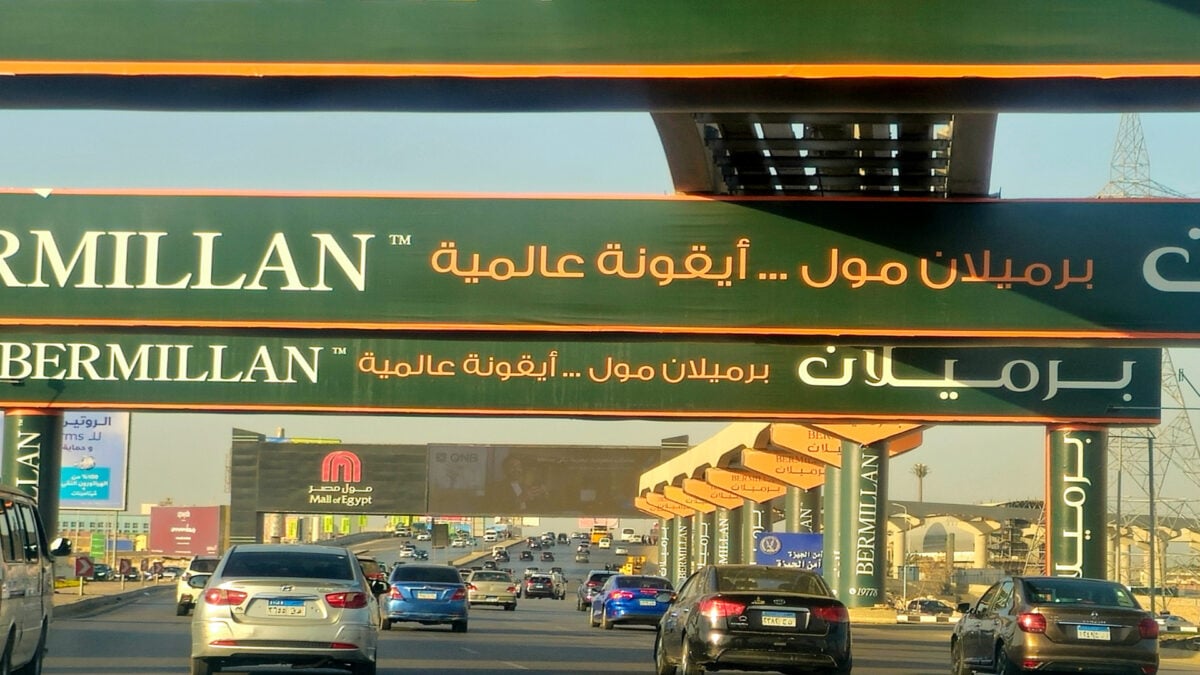
The most notable incident took place on a prominent digital billboard along the busy 26th of July Axis in Giza, a major highway linking Cairo with its western suburbs. Drivers halted their vehicles to capture footage as the screen displayed pornographic videos accompanied by the message “Leaked by: Ch, 19ylegal never and nivex” along with the Telegram username @LeakersGov, according to CNN.
A massive digital billboard on one of Cairo’s busiest highways was hacked to display pornographic footage, shocking drivers and prompting motorists to stop and record the scene.
According to CNN, the incident took place on Egypt’s 26th of July Axis, with the hackers displaying… pic.twitter.com/YFGp8H8rJB
— ILTV Israel News (@ILTVNews) November 1, 2026
According to Egypt’s Interior Ministry, the hacked screen belonged to Al Arabia United, a local advertising firm that partnered with an unnamed international company. This company experienced a cyberattack that resulted in unauthorized footage being broadcast “in several other countries, simultaneously.” The ministry indicated that legal actions had been initiated and that the international company had suspended its broadcasts. Al Arabia United reported that it detected unauthorized access to one of its screens, shut it down as a precaution, and is actively investigating the incident with authorities.
The Cairo Report identified Al Arabia United as an Egyptian-Saudi joint venture formed in 2022 by United Media Services, the media division of Egypt’s General Intelligence Service, which oversees more than 40 companies, and Saudi-listed Arabian Contracting Services Co. This venture operates approximately 1,926 billboards, including 239 digital displays, in Cairo, Giza, Alexandria, and the North Coast.
In Malaysia, the Kluang Municipal Council confirmed that several public LED screens in Kluang, Johor, were compromised to show explicit content. In response, the council disabled all affected screens. Local media outlet The Star reported that police launched an investigation following a complaint from a 42-year-old man who had received screenshots and videos via WhatsApp.
In Campo Maior, Piauí, Brazil, an LED panel located on an avenue near the BR-343 showcased pornographic material. A video circulating on social media captured a naked man seated nearby, with a bystander commenting (translated from Portuguese), “What kind of mess is this? Live. And there’s still another good-looking naked guy here. Man, this business is really all screwed up.” The company Ferreira & Ferreira Publicidade e Comunicação confirmed the cyberattack, promptly shut down the equipment, filed a police report, and issued an apology to the public, according to Brazilian media outlet G1.
The group behind the cyberattack also claimed to have accessed systems in Iraq and China, but independent verification of those claims is less robust compared to the confirmed incidents in other countries.
What Methods Were Used to Execute the Hack?
The group operating the Telegram channel Leakers$ informed The Cairo Report that they exploited a vulnerability in the software responsible for transmitting content to LED displays instead of targeting individual billboards. A representative stated that participants using aliases such as Never, 19ylegal, CH, and Nivex identified thousands of exposed systems through an automated random scan that lasted approximately two hours. They claimed the systems were accessible via web pages and interfaces lacking basic security measures.
“It was a genuine vulnerability in the software governing the transmission of content to LED displays,” said the representative. “After exploiting it, we gained access to display systems in multiple countries, not just Egypt, but also Malaysia, Brazil, China, and others.”
The group emphasized that “the operation wasn’t as complex as many might believe” and criticized companies for investing millions in infrastructure while leaving LED screens and advertising networks vulnerable to basic internet threats.
On Friday, the Leakers$ Telegram channel posted, “Egypt remains under a dictatorship. The government maintains its power through repression, while the country struggles to progress. Years pass, but nothing changes, and people’s lives do not improve.”
The channel clarified that it is not seeking donations or ransoms and is not acting as a ransomware group. Instead, they aim to expose vulnerabilities to demonstrate that “anyone can take control of screens across your country in real time.” The group argued that mainstream media often exaggerates such operations as sophisticated or state-sponsored when, in reality, the underlying infrastructure is poorly secured.
Are Digital Billboard Hacks Becoming More Common?
This incident is not the first of its kind. Previous digital billboard hacks include a 2022 occurrence in Brisbane, Australia, where a screen displayed pornography for several minutes before being shut down, and a 2016 event in Jakarta, Indonesia, where a man was arrested for broadcasting Japanese porn on a hacked billboard as a prank. In August 2023, authorities in Iraq shut down electronic advertising screens throughout Baghdad after a hacker displayed explicit content on a screen in Uqba bin Nafeh Square; a technician was subsequently arrested, revealing he acted due to a financial dispute with the operating company.
In 2019, security researcher Drew Green gained access to an internet-connected digital signage system after discovering that it still used a default administrator password on its web interface. He then exploited additional flaws that could have allowed arbitrary content to be displayed. Repeated issues with default password usage have surfaced in various digital billboard security breaches. The Out of Home Advertising Association of America even cautioned in their 2024 Digital Billboard Security Guidelines against relying on default passwords from display manufacturers.