David Bridges

Meta has unveiled a comprehensive suite of cutting-edge AI-driven tools designed specifically for advertisers to enhance the effectiveness of their marketing campaigns. By leveraging insights derived from overall ad performance metrics on the platform, these tools aim to boost user engagement and ultimately drive more conversions for businesses.
According to Meta’s official statement:
“To support business growth profitably, we are continuously investing in advanced AI models like Andromeda that analyzes millions of ads to identify the optimal message for each individual at the right moment, ensuring efficient utilization of advertising budgets. Additionally, we are introducing new tools and placements that work in tandem with the AI-powered Advantage+ sales campaigns to maximize campaign performance, enhancing our ad systems to drive sales both online and in physical stores.”
The pivotal aspect of these updates is the implementation of Meta’s Andromeda system, which evaluates ad performance across Facebook, Instagram, and soon Threads, to empower Meta’s ad delivery server. This system enhances its capability to predict which ads are likely to resonate most with individual users. This advancement signifies a more intelligent ad targeting process, allowing Meta to display ads to users who are most likely to engage, thereby improving campaign performance through sophisticated AI targeting.
Furthermore, advertisers now have a wider array of options to explore in this evolving landscape.
Initially, Meta is broadening the reach of its Advantage+ Catalog ads to include partnership promotions, providing an innovative avenue to connect with audiences through collaborations with influencers.
Meta first launched the Advantage+ catalog ads in March, and is now enhancing their functionality through these collaborative initiatives.
In a similar vein, Meta is introducing a new feature that allows Advantage+ ads to showcase additional products from a brand’s catalog when promoting a preferred selection. This method enhances product visibility and encourages cross-selling.
“With this feature, a fashion brand can highlight jackets from their spring collection while allowing our system to suggest a dress that may also interest the shopper. Initial tests have shown that advertisers experienced a 14% increase in Return on Ad Spend (ROAS) when utilizing this optimization, on average.”
Moreover, Meta is experimenting with a Google-style AI model for clothing advertisements, which will visually demonstrate how different apparel looks on various AI-generated avatars of different body types.
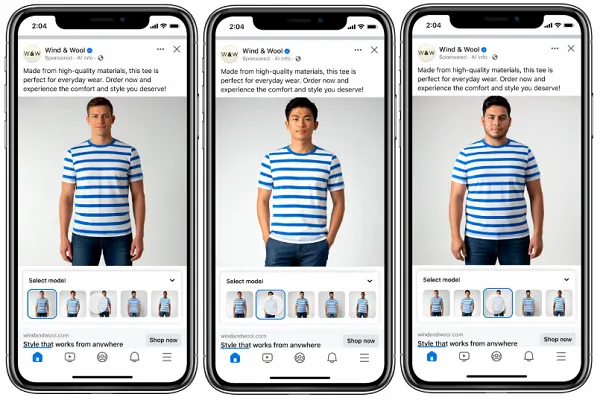
This innovation aims to provide consumers with more context before making a purchase decision by illustrating how each item is likely to fit their body shape.
As a point of reference, Google Shopping has offered similar capabilities since 2023, recently expanding the variety of styles and sizes available.
Additionally, Meta is streamlining the checkout process for its Advantage+ Shop Ads, enabling advertisers to collect user contact information and other relevant details during the shopping sequence.
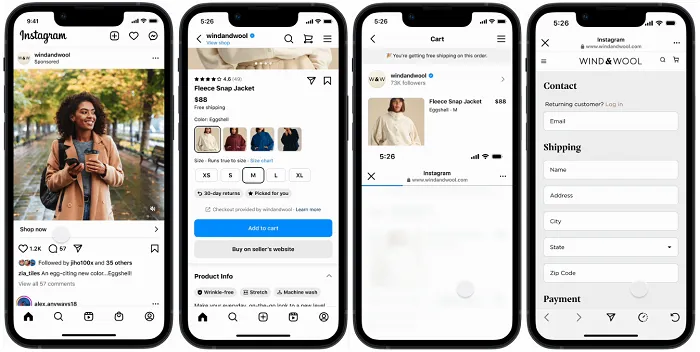
The revised process will guide interested viewers directly to the advertiser’s website to finalize their purchase after they have built their shopping cart within a Facebook Shop. This update will give brands greater control over the sales process and enhance the overall shopping experience for consumers.
Meta has indicated that it will begin testing this new feature in Australia and Taiwan soon.
The company is also exploring AI text generation capabilities for catalog ads, alongside an array of AI image generation tools, including background editing features to enhance promotional creativity.
In addition to these AI advancements, Meta is also testing to broaden access to its location-based ad extensions, which showcase local retailers that have the advertised item available in stock.
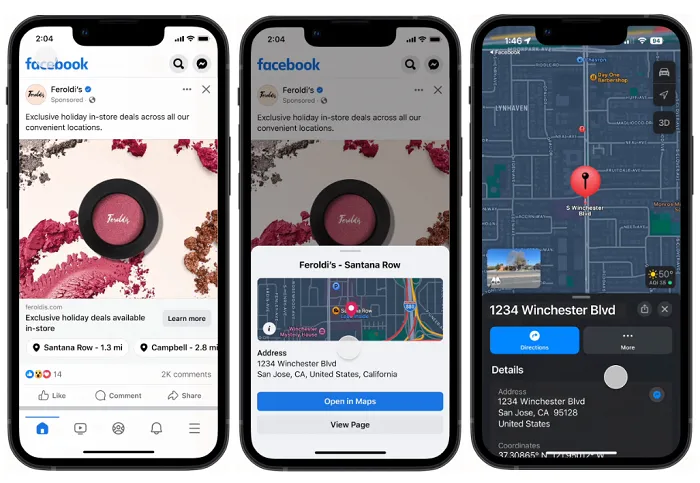
As illustrated in this example, Meta’s “omnichannel ads”, first tested with select partners last fall, emphasize nearby store locations and include links to maps for guiding potential shoppers to their preferred retailers.
These ads also feature relevant discount codes, and Meta reports that they have been generating substantial value for their testing partners:
“Advertisers utilizing omnichannel ads have seen a 15% reduction in media omnichannel Cost Per Acquisition (CPA) and a 12% increase in media Return on Ad Spend (ROAS) compared to their traditional campaign strategies. With this feature set to become globally accessible this summer, advertisers can refine their omnichannel tactics in anticipation of the holiday season.”
In addition, Meta plans to introduce ads within Facebook notifications:
“This spring, we will initiate testing for ads within notifications on Facebook. This new advertising placement will offer brands a fresh opportunity to engage users and stimulate discovery and reconsideration for their products.”
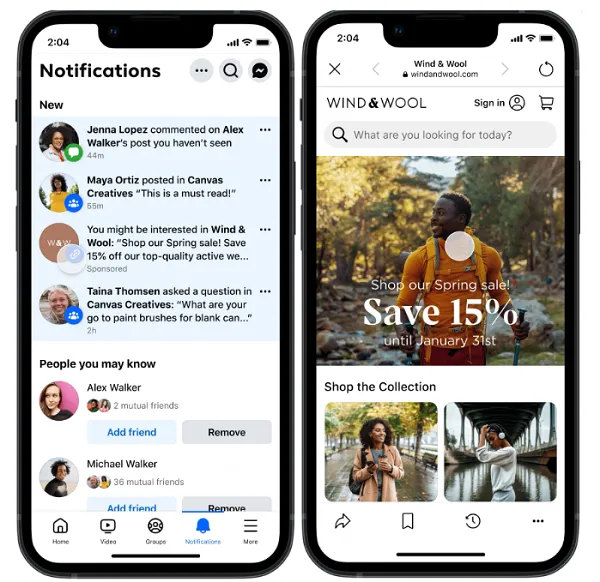
This marks the inaugural instance of Meta displaying ads within its notification stream, which may elicit mixed reactions from users when they tap on a notification, only to encounter an advertisement instead.
However, these notifications will not be indiscriminately targeted; they will only be shown to individuals who have previously interacted with an ad or expressed interest in the brand’s content.
This approach could mitigate some of the frustration. Nevertheless, it remains to be seen how popular this new ad format will be among Facebook users.
Additionally, Meta will enable advertisers to request user email addresses to redeem promotional codes from promotion ads.
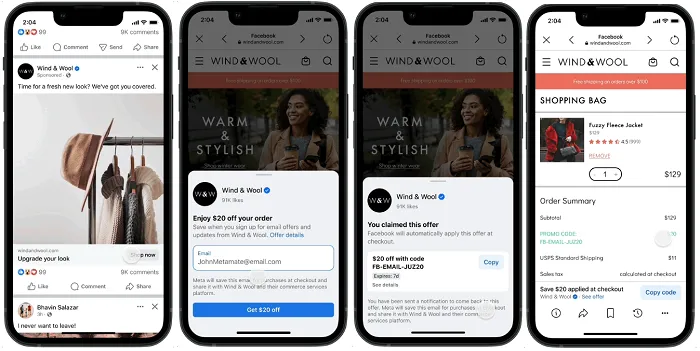
Consequently, if you wish to avail yourself of an advertised discount, you will need to essentially subscribe to the brand’s email list, akin to in-store strategies aimed at increasing contact list subscriptions.
This approach mirrors the recent enhancements made to the Advantage+ shopping ads, providing additional avenues for brands to collect direct contact information and cultivate their own customer database, rather than depending solely on Facebook connections.
In many instances, online retailers already implement similar strategies by utilizing the contact information provided during orders to automatically enroll customers in future email campaigns. This new feature merely streamlines that process, leveraging the data you’ve shared on your Facebook profile to facilitate this connection.
If executed effectively, this could yield significant advantages for brands.
Lastly, Meta is set to enable site links within Instagram promotions.
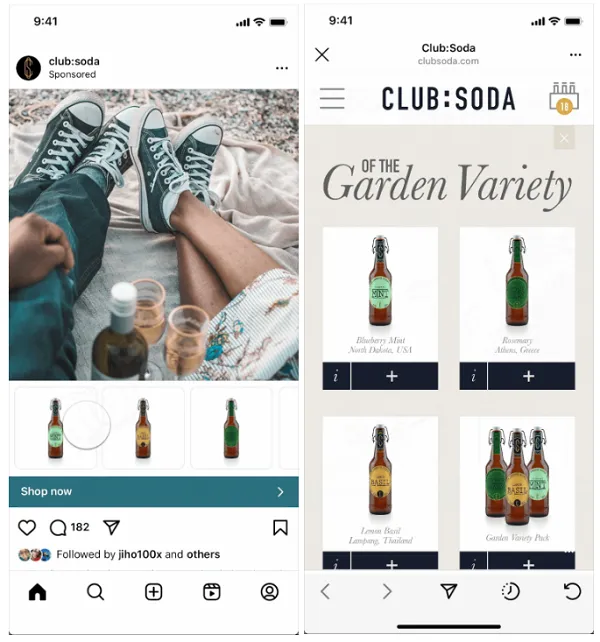
“Site links allow marketers to feature multiple landing pages in a single image or video ad, facilitating easier navigation to the content that interests users most. By incorporating site links into their ads, marketers have reported a 4.5% reduction in Cost Per Acquisition (CPA) on Facebook Feed and a 3% increase in click-through rates.”
This addition could prove invaluable for your Instagram promotions, offering direct pathways to specific products directly within the feed.
These updates are practical enhancements that will undoubtedly boost the effectiveness and value of your Facebook and Instagram ads, especially considering the impressive results many brands have experienced with Meta’s AI targeting capabilities.
Regardless, it’s essential to consider the additional dimensions of your promotional strategies.
For more detailed insights into Meta’s latest advertising updates, you can read further here.



 Maya Kensington
 Cameron Steel