 David Bridges


YouTube is enhancing its tools to assist creators in managing claims involving artificial intelligence-generated likenesses of individuals featured in their videos. The platform has introduced an upgraded system that notifies creators about AI likeness claims related to their content. YouTube has streamlined the response process for disputing these claims, making it easier for creators to protect their work.
The platform made its likeness detection feature available to all users aged 18 and older in May. This system allows users to upload their images for YouTube to scan and identify potential appearances in new video uploads.
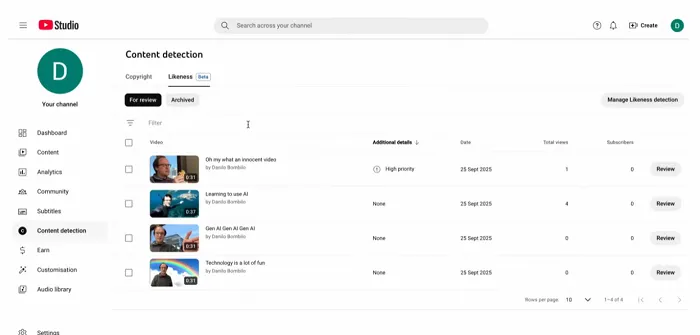
This feature empowers users to address potential misuse of their likeness. it also introduces additional responsibilities for creators, which may influence their performance and revenue potential.
This aspect is central to the current update.
YouTube is revamping its copyright menu on the video details page, now labeling it “Claims.”
YouTube elaborated: “If you encounter a video restriction, whether stemming from a Content ID copyright claim or a privacy-based AI likeness claim, it will now be consolidated under the ‘Claims’ tab. Our objective is to clarify the reasons behind any notices applied to your video and to provide a clear pathway for addressing them.”
This update equips creators with another method to monitor potential issues related to their content. It also offers YouTube an extra mechanism to enforce AI likeness detection.
YouTube is revising its dispute process for users seeking to have a video removed due to copyright or AI likeness reasons. This change will offer creators a more efficient way to contest requests they believe are unwarranted.
To facilitate this, YouTube is introducing four categories of responses for creators to address unjust claims:
- Explicit Consent: Creators must demonstrate they possess verified permission from individuals to utilize their voice and/or visual likeness.
- Parody, Satire, or Public Interest: Creators may employ AI likenesses in specific instances where the depiction is used “transformatively” for comedic, critical, or newsworthy purposes.
- Content Not Altered or Made with AI: Creators can contest claims that assert their content is AI-generated.
- Claimed Content Doesn’t Appear: Lastly, creators can outright reject the basis of such claims.
These response options should simplify the process for creators to deliver precise replies. any claims falling outside these categories may still lead to video restrictions.
YouTube clarified that likeness claims do not result in copyright strikes or violations of Community Guidelines.
“While a valid claim may restrict a video or prevent it from being publicly accessible, it will not adversely affect your channel’s overall performance, health, or capabilities,” YouTube stated.
This assurance should alleviate concerns among creators who worry that AI likeness claims could be misused to impose restrictions on their YouTube accounts.

 Sophie Langley

 Mason Thompson