David Bridges

In a surprising move, President Joe Biden has announced a significant and controversial decision just two months before the end of his presidency: he has granted a pardon to his son, Hunter Biden. This decision has sparked a heated debate across the political spectrum, raising questions about the implications of such a pardon and the motivations behind it.
Minutes ago, the 46th President of the United States publicly shared his decision, emphasizing his longstanding support for his son throughout the ongoing legal battles. In a public statement, Biden expressed his frustration over what he perceives as selective and unfair prosecution against Hunter, highlighting the challenges their family has faced amidst political scrutiny.
Biden further elaborated that individuals facing similar charges—such as lying on federal forms and tax evasion due to substance abuse—often receive non-criminal resolutions. He pointed out that Hunter’s situation is an anomaly, suggesting that political motives have influenced the legal processes against him and that his son has not been treated equitably compared to others.
President Biden argued that the charges against Hunter emerged primarily as a result of Republican congressional members using them as a political tool to undermine him. He also mentioned that a plea agreement related to tax evasion fell apart in 2023, attributing this breakdown to political pressure exerted by his opponents in Congress, who sought to capitalize on the situation for their gain.
Joe Biden conveyed his belief in the integrity of the legal system; however, he expressed deep concerns about the politicization of the legal proceedings against his son. He firmly stated that he will not passively observe as his son faces severe consequences, such as imprisonment, due to what he perceives as politically motivated actions against him.
It is worth noting that Biden’s justification for his actions mirrors sentiments expressed by former President Donald Trump following his own conviction on multiple counts of falsifying business records earlier this year. This parallel raises intriguing questions about the intersection of personal and political justice in today’s landscape.
In closing, President Biden articulated a heartfelt message, stating, “I hope Americans will understand why a father and a President would come to this decision.” This statement underscores the complex interplay between familial loyalty and public duty, inviting the nation to reflect on the broader implications of his decision.
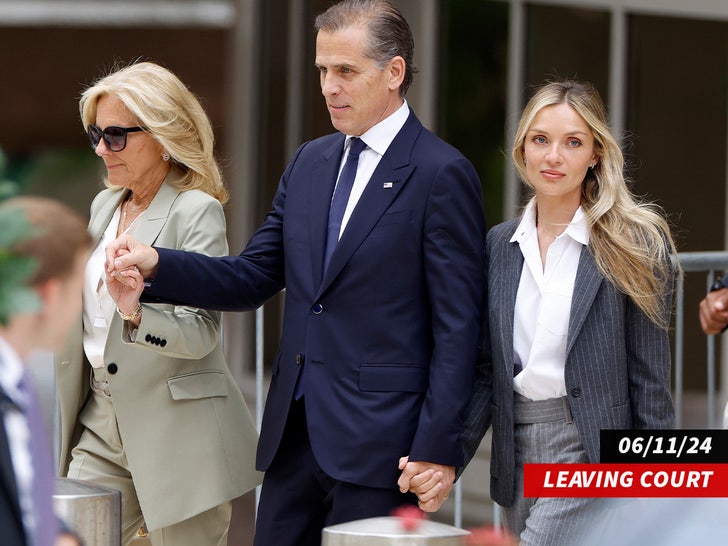
Recently, Hunter Biden was convicted on three felony counts related to providing false information on a federal firearms application, a situation that stemmed from his struggles with substance abuse. The gravity of these charges meant that he was facing a potential sentence of 25 years in prison, highlighting the serious nature of his legal troubles.
In a subsequent development, just three months later, Hunter Biden reached a plea agreement, admitting guilt to nine federal charges related to failure to pay approximately $1.4 million in taxes over the period from 2016 to 2019. This plea not only underscores the serious financial implications of his actions but also adds further complexity to his legal saga.
Ultimately, a significant factor influencing Joe Biden’s decision to pardon his son is the impending conclusion of his presidency. With no future elections on the horizon, this decision may be seen as a move that won’t adversely affect his political career, allowing him to act on behalf of his family without the burden of electoral consequences.
[ad_2]


 Clara Hastings