David Bridges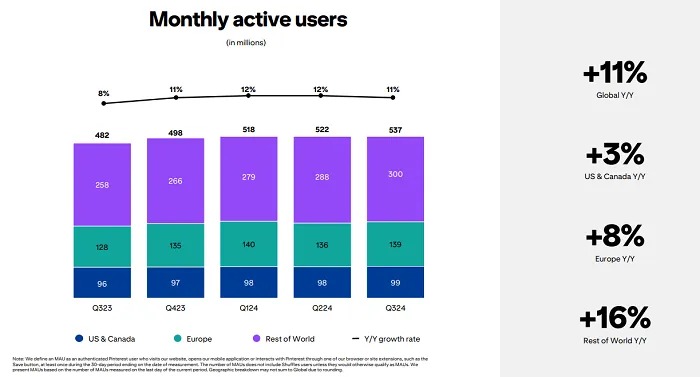

Pinterest has recently released its performance metrics, showcasing a remarkable surge in revenue and achieving a new all-time high in user engagement.
This positions the platform ideally for the upcoming holiday shopping season, which is expected to drive even more traffic and sales.
During the third quarter, Pinterest added an impressive 15 million new users, bringing its total to a staggering 537 million monthly active users (MAU).
This marks a significant acceleration in growth compared to the previous quarter, where Pinterest only added 4 million active users.
While 4 million new users is still a substantial addition, it pales in comparison to the 15 million added this quarter, highlighting a more robust growth trajectory for the platform.
Achieving a new peak in user engagement is also pivotal for Pinterest’s long-term growth narrative, especially after facing some challenges that temporarily hindered its progress.
Back in 2020, during the COVID lockdowns, many consumers turned to online shopping, which led to a notable spike in Pinterest’s usage. Analysts speculated that this shift would lead to lasting changes in shopping behaviors. However, as physical stores reopened, many users reverted to their traditional shopping habits, resulting in a decline in Pinterest’s user engagement.
After a period of recovery, Pinterest has now not only regained but has significantly surpassed those COVID-era engagement levels, establishing a more resilient foundation for sustainable growth.
Nevertheless, a notable concern remains that Pinterest’s growth in the U.S. and EU, its primary revenue-generating markets, has stagnated.
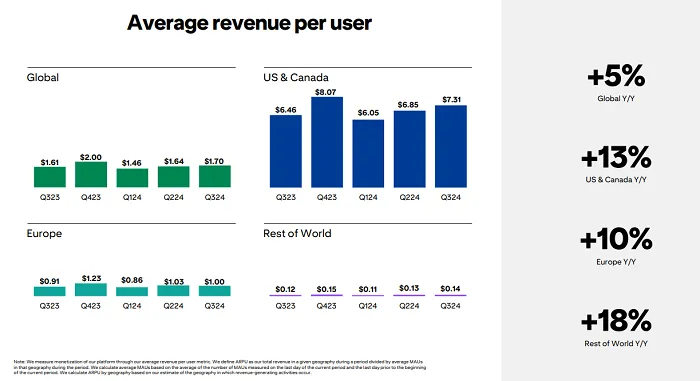
As illustrated in these charts, Pinterest generates a substantial portion of its revenue from users in the U.S. and EU. Therefore, the stagnation in audience growth in these regions could significantly affect its advertising revenue potential. The platform continues to expand its advertising efforts in other markets, which may yield future benefits, yet the lack of growth in these critical areas is a pressing issue.
Many social media platforms are experiencing saturation in Western markets, which makes this situation somewhat predictable. However, it intensifies the pressure on Pinterest to innovate its advertising strategies and explore alternative options to leverage its existing opportunities. This approach runs the risk of alienating users if not handled delicately, prompting a more prudent strategy focused on expanding ad capabilities in other markets, even though establishing a successful ad business is challenging, as reflected in Pinterest’s lower EU average revenue per user (ARPU) compared to the U.S.
On the financial front, Pinterest reported a revenue of $898 million for the quarter, demonstrating an impressive 18% growth year-over-year.
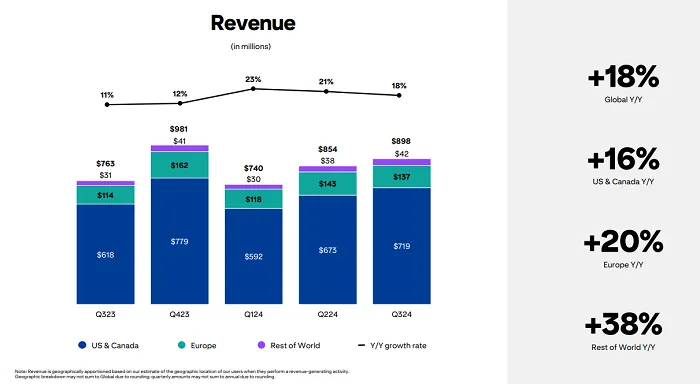
This positive outcome is encouraging, especially with the fourth quarter approaching, which historically sees increased sales. Given last year’s performance, Pinterest appears poised for a strong finish to 2024. The platform’s emphasis on enhancing shopping options and refining its digital matching and try-on features resonates well with an expanding user base, suggesting that ongoing enhancements could position Pinterest as a preferred shopping destination for many.
Additionally, Pinterest has made significant strides this year by rolling out its AI-driven “Body Type Filters”, enabling users to find products that more accurately reflect their unique body types.

Moreover, Pinterest has integrated more AI capabilities into its ad creation tools, assisting marketers in harnessing key usage trends and enhancing their content presentation.
While these advancements are valuable, they do come with associated costs.
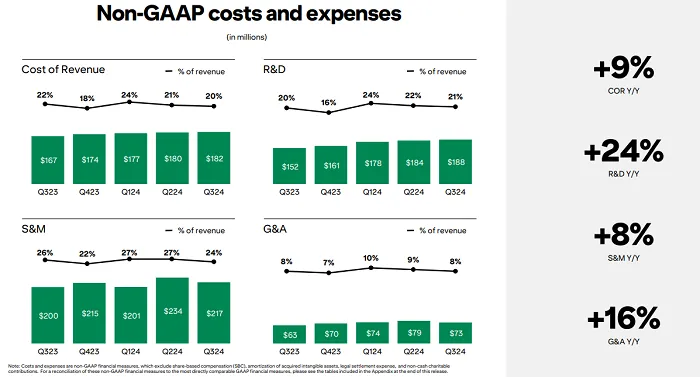
As shown in these charts, Pinterest’s research and development expenditures have surged by nearly 25% this year, with expectations for these costs to rise further as the year progresses.
This trend is logical, as other major platforms are investing heavily in AI development. While Pinterest may not possess the same financial resources, it must adapt to evolving trends and offer enhanced options to optimize the shopping experience within the app.
The core appeal of Pinterest lies in its ability to provide users with a platform to save items and receive personalized recommendations based on their unique style preferences. For brands, Pinterest offers a more comprehensive product display and shopping experience than many standalone online stores. The more effectively Pinterest can enhance this experience, the better positioned it will be to retain its status as a vital shopping hub, fostering increased user activity and engagement.
Overall, the outlook for Pinterest appears promising, with ongoing improvements in performance metrics and steadily rising user engagement. Leveraging advertising opportunities in non-U.S. markets will bolster its overall market presence, while the user experience remains a priority. Pinterest is clearly on the right path, staying true to its foundational goals rather than simply chasing fleeting social media trends.



 Cameron Steel
 Mason Thompson