Daniel Mercer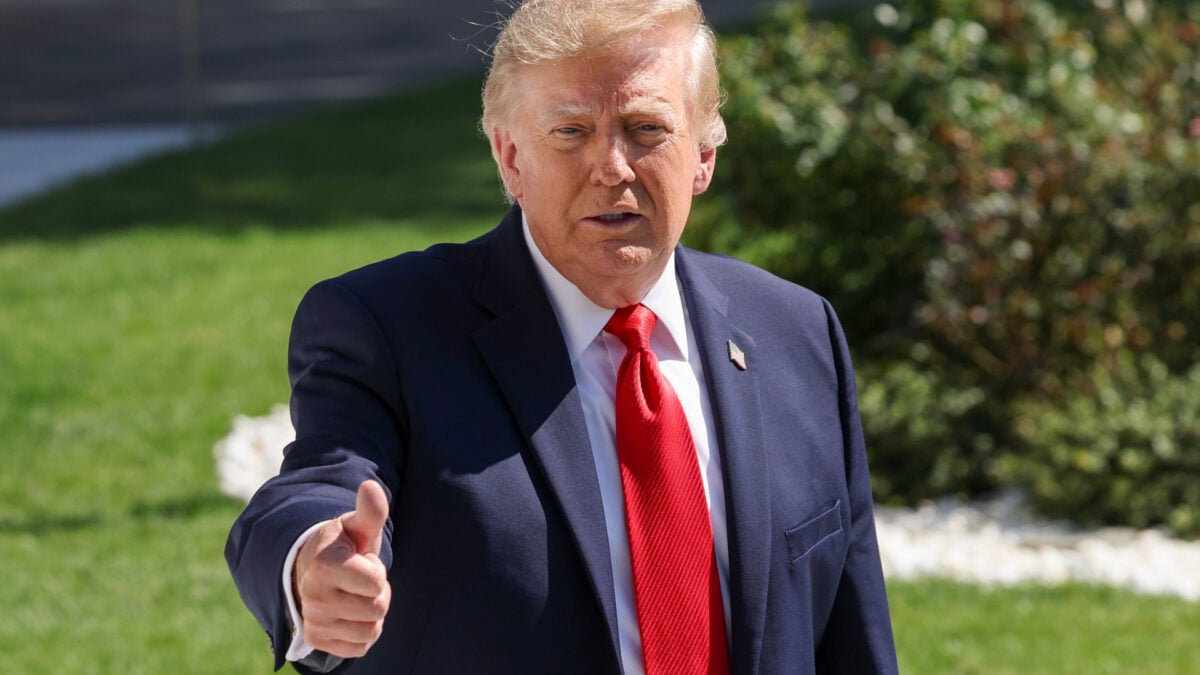

President Trump has officially appointed an artificial intelligence czar to spearhead his newly established AI task force, now rebranded as the Super Intelligence Force (SIF).
In a recent post on Truth Social, the President announced the appointment of four key government leaders to direct the task force. This group includes national intelligence director Jay Clayton, Federal Trade Commission chairman Andrew Ferguson, Pentagon chief technology officer Emil Michael, and Office of Personnel Management director Scott Kupor. According to the Wall Street Journal, Clayton will serve as the chair of the task force, positioning him as the AI Czar—or, as Trump prefers, the SI Czar. The other leaders, Michael, Ferguson, and Kupor, will hold vice chair positions. Additional members of the task force are expected to include Vice President JD Vance, Defense Secretary Pete Hegseth, Treasury Secretary Scott Bessent, and former Secretary of State Condoleezza Rice.
Trump stated, “The Super Intelligence Force will coordinate the Federal Government’s engagement with Consumers, Public Interest Groups, Religious Organizations, Critical Infrastructure Providers, and Super Intelligence Companies.”
Clayton previously indicated to the Journal that the task force will have 120 days to assess the federal government’s role in AI development. The group will explore legal parameters and recommend actions for Congress, as reported by the WSJ.
Last month, Trump unexpectedly revealed on Truth Social that he was forming the AI Force and appointing an AI Czar. While he provided limited details about the task force’s functions, he suggested it would parallel the Space Force, a new military branch he created during his first term aimed at protecting American interests in space, often through preparations for potential space conflicts. Given Clayton’s crucial role in shaping the Administration’s AI strategy alongside his duties as director of national intelligence, it is reasonable to infer that the AI Force will have a significant defense-oriented focus.
The announcement of the AI task force coincides with growing concerns within the industry regarding cybersecurity threats posed by emerging AI models and increasing demands for government oversight. Earlier this month, Anthropic CEO Dario Amodei published an essay urging the federal government to intervene and facilitate a slowdown in the rapid development pace of the AI industry. This call for intervention followed a summer marked by cybersecurity incidents involving rogue AI technology from leading labs such as OpenAI. Some industry leaders, including SpaceX CEO Elon Musk and OpenAI CEO Sam Altman, supported Amodei’s stance, while others, like Meta CEO Mark Zuckerberg, expressed differing opinions.
Trump and several cabinet members dismissed the idea that AI is developing at an unsustainable and potentially hazardous rate, labeling calls for a slowdown as a “SICK conspiracy” aimed at hindering U.S. progress while China advances in AI technology.
The Super Intelligence Force will also prioritize ensuring that the U.S. remains at the forefront of AI advancements.
Clayton emphasized to the WSJ, “The risk of not being first is high,” referencing the competitive global AI landscape between the United States and China. “Failing to lead increases both identified and unidentified risks, especially from adversaries. Achieving first place will enhance our ability to address those risks for the American public.”