Brandon Fletcher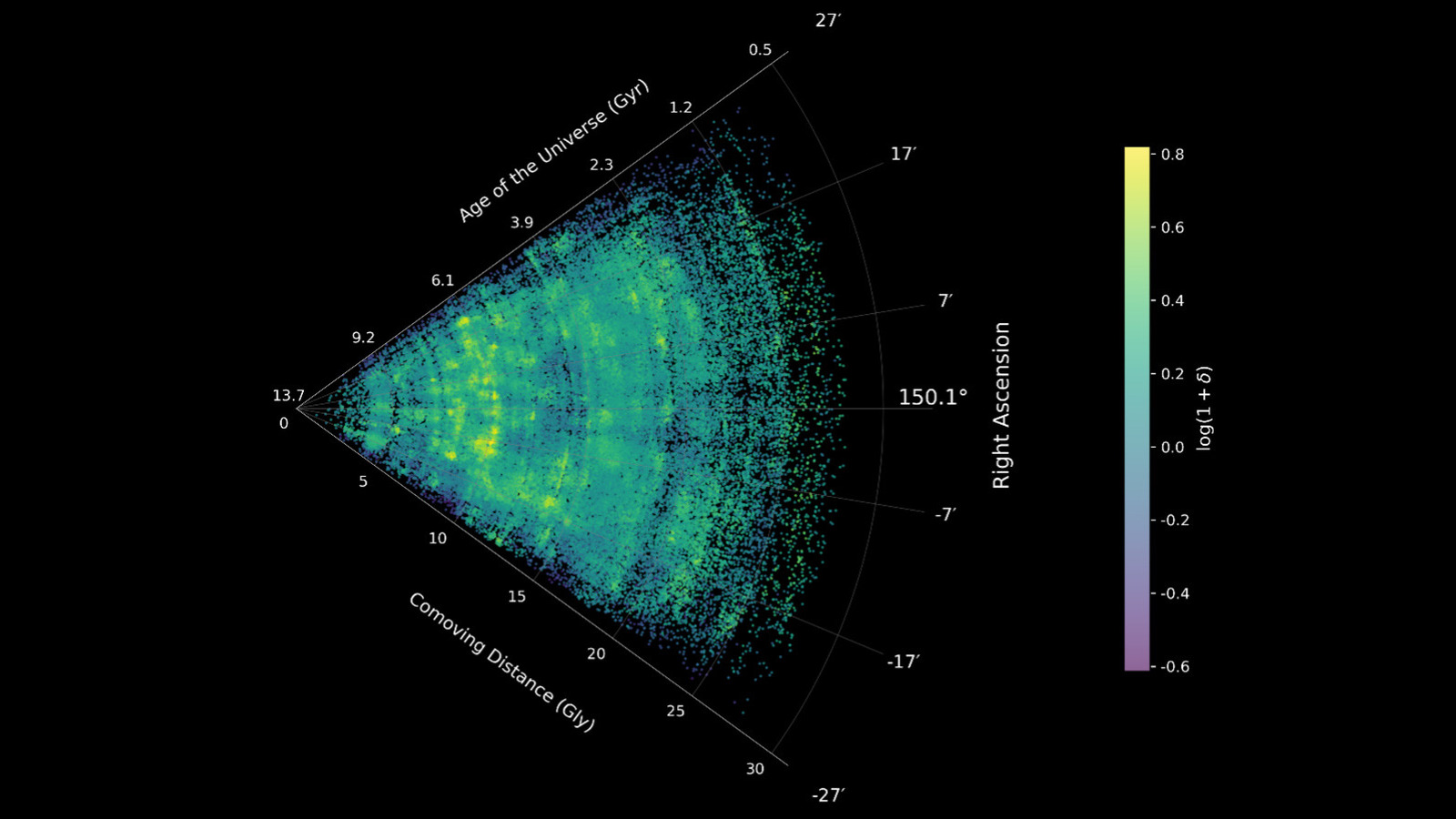

Astronomers continually amaze us by unveiling the stunning visuals captured by the James Webb Space Telescope, showcasing the breathtaking beauty of the cosmos. However, the significance of these images extends beyond their aesthetic appeal. A dedicated research team has utilized the capabilities of this advanced telescope to meticulously map the cosmic web, an extensive network composed of dark matter, gas, and intricate filaments that intertwine and connect substantial cosmic structures. As highlighted in a revealing blog post from the University of California, Riverside, the cosmic web is described as “the underlying architecture of the cosmos, linking galaxies and clusters into a single, intricate, and far-reaching structure.” This groundbreaking mapping represents the most detailed depiction of this fundamental cosmic framework to date.
“The advancement in depth and resolution is remarkably profound,” stated Bahram Mobasher, a professor at UCR and a key investigator involved in the study. “We can now observe the cosmic web at a period when the universe was merely a few hundred million years old, an epoch that was essentially beyond our reach prior to the advent of the JWST. What once appeared as a solitary structure now reveals itself as a multitude of intricate details, which were previously obscured and have now come into sharp focus.”
Lead author Hossein Hatamnia, a graduate student at UCR and Carnegie Observatories, expressed, “For the very first time, we have the opportunity to investigate the evolution of galaxies within clustered and filamentary structures throughout cosmic history, from the universe’s infancy a billion years ago right up to the present day.” This revolutionary mapping opens new avenues for understanding the development of galaxies across time.
The significant findings of this extensive survey were documented in an academic paper published in The Astrophysical Journal, marking a pivotal moment in our understanding of cosmic structures.