 Brandon Fletcher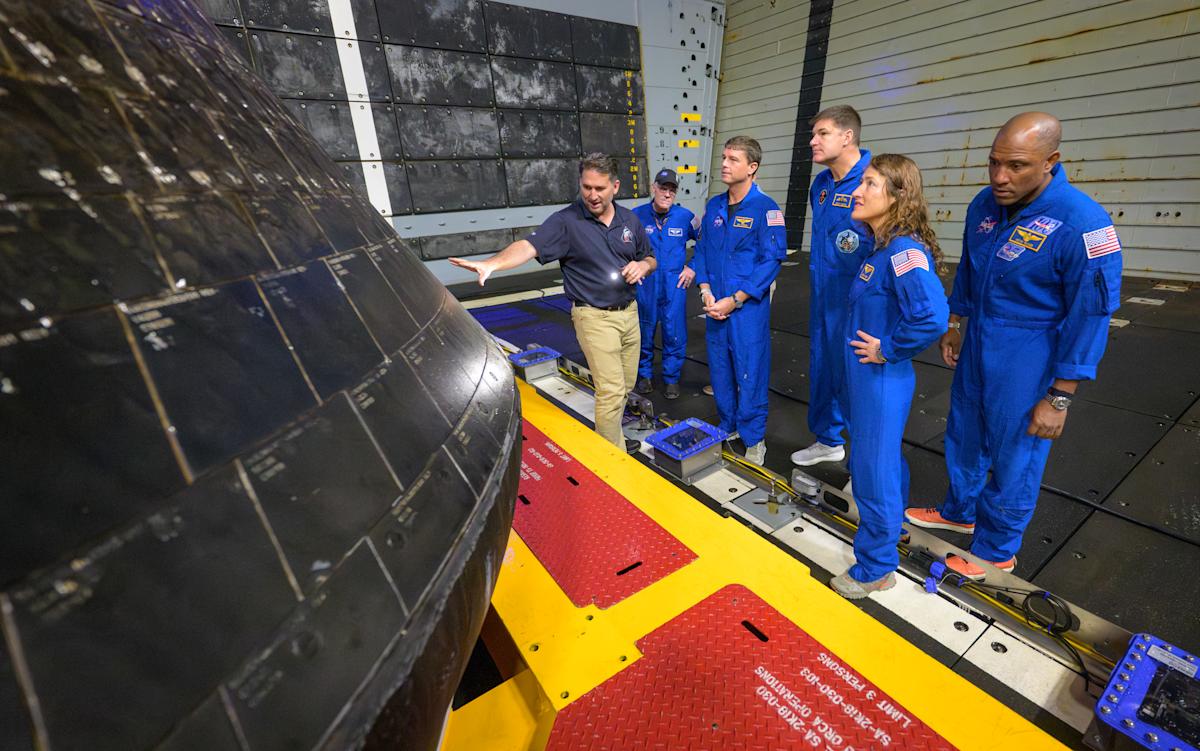

With the successful completion of Artemis II, NASA has embarked on an extensive analysis of the performance of various systems that collaborated to ensure the safe return of four astronauts from their historic journey to the moon. This mission not only represented a significant advancement in human space exploration, taking participants farther than ever before, but it also served as a vital test for upcoming crewed missions slated for launch in 2027 and 2028. The latter date is particularly ambitious as it aims for a successful lunar landing of astronauts. Preliminary reports indicate that both the Orion spacecraft and the SLS rocket performed admirably throughout the mission.
According to NASA’s initial evaluations, the crew capsule exhibited excellent performance, particularly noting that its heat shield “performed as expected, with no unusual conditions identified.” Impressively, it showed less char loss compared to the uncrewed Artemis I test. Following splashdown, Navy divers captured stunning photographs of the heat shield submerged underwater, showcasing its condition post-mission. The splashdown was executed flawlessly, with Orion landing a mere 2.9 miles from its designated target, and its entry interface velocity was remarkably close to predictions, deviating by just one mile per hour.
US Navy
Feedback from NASA confirms that the SLS rocket met its performance expectations as well. Though additional tests are still pending, the agency highlighted that at the time of main engine cutoff, the core stage’s RS-25 liquid engines had propelled the spacecraft at an astonishing speed of over 18,000 miles per hour. This achievement allowed the rocket to successfully reach its intended orbital insertion velocity and execute a precise landing at the designated location.
However, challenges did arise, particularly concerning the toilet system. Shortly after the launch, astronauts experienced issues with the urine vent line. Mission specialist Christina Koch effectively troubleshot the problem with assistance from the ground crew. To ensure that future missions can avoid similar issues, NASA has assembled teams to thoroughly investigate the hardware and data, aiming to pinpoint what went wrong and devise strategies for prevention.
Experience the Stunning Earthset from Lunar Orbit
The astronauts aboard Artemis II have been actively sharing captivating insights from their extraordinary journey around the moon. Recently, mission commander Reid Wiseman posted a breathtaking video capturing the moment the Earth sets behind the moon, an awe-inspiring view not witnessed by humans in over 50 years since the last Apollo mission. For those interested in exploring this unique phenomenon further, detailed information can be found here.
Despite only spending ten days in space, the astronauts experienced significant physiological changes, leading to a period of adjustment upon returning to Earth. Astronaut Koch recently shared a video depicting her attempts to perform a tandem walk exercise with her eyes closed, taken shortly after her return. She explained the challenges faced by the vestibular system in microgravity, which impacts how the brain interprets movement. “When people live in microgravity, the systems in our body that have evolved to tell our brains how we’re moving, the vestibular organs, don’t work correctly,” she detailed in her caption. This highlights how returning to gravity forces astronauts to rely heavily on visual cues for orientation.
Explore More Insights Before You Leave


 Daniel Mercer
 Ethan Carter