David Bridges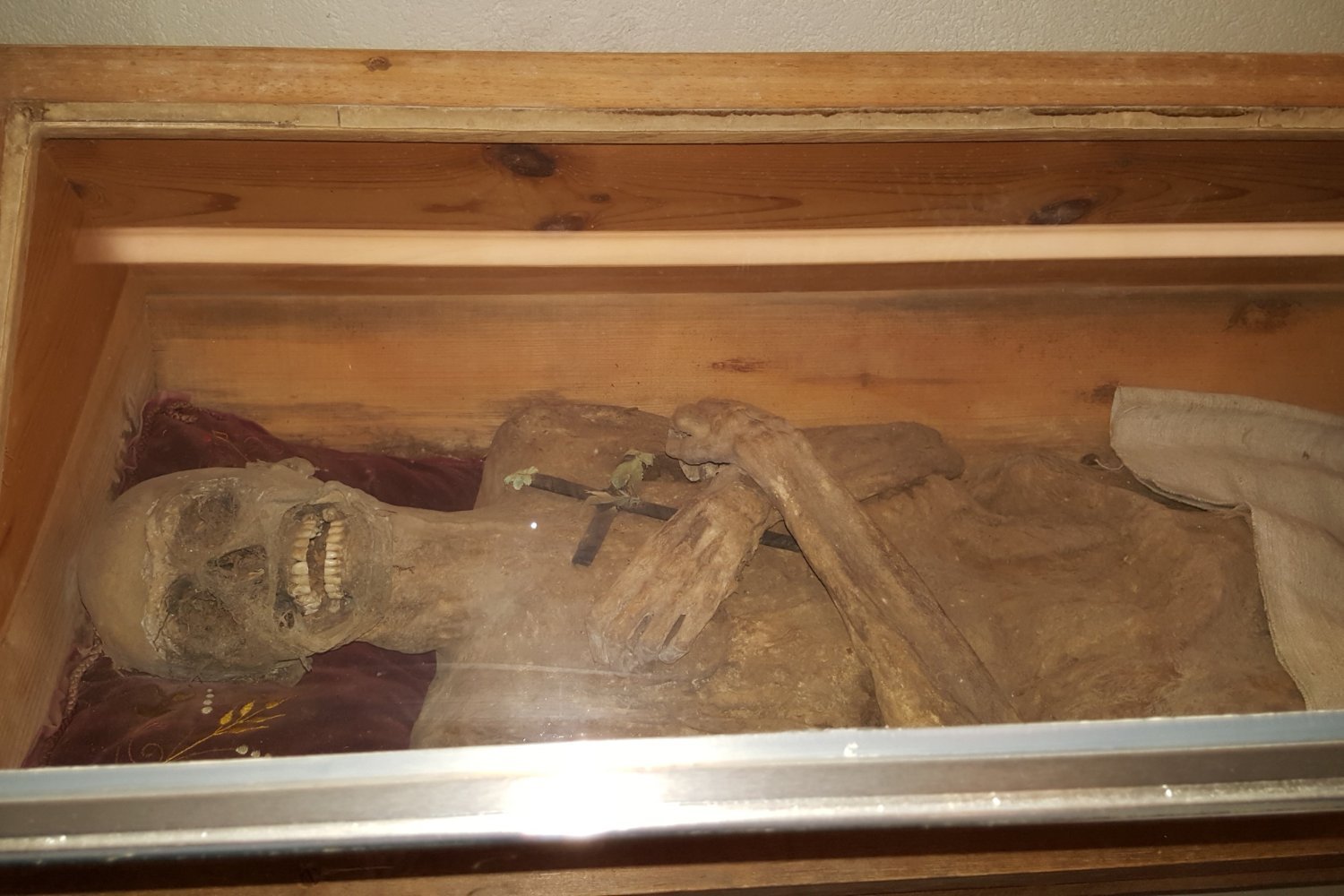

When the term mummy is mentioned, many people immediately envision the rich history of ancient Egypt. However, it is important to recognize that various cultures across the globe practiced different forms of embalming for their deceased, and recent research has uncovered a particularly surprising case that expands our understanding of these practices.
In a groundbreaking study published in the journal Frontiers in Medicine, researchers examined a remarkably preserved 18th-century mummy discovered in a small village in Austria. This individual represents the first documented example of an unfamiliar—and rather peculiar—embalming technique, which involved inserting various materials into the individual’s rear end. Astonishingly, this method proved effective, allowing researchers to investigate the enigmatic mummification process centuries later.
“The exceptionally well-preserved mummy located in the church crypt of St Thomas am Blasenstein is the remains of local parish vicar Franz Xaver Sidler von Rosenegg, who passed away in 1746,” explained Andreas Nerlich, a pathologist from Ludwig-Maximilians-Universität and the lead author of the study. “Our research revealed that the remarkable state of preservation resulted from an unconventional embalming method, which involved packing the abdomen through the rectal canal with materials such as wood chips, twigs, and fabric, along with the application of zinc chloride for internal drying purposes.”
Although the head and lower extremities of the mummy were in poor condition, the vicar’s upper body remained completely intact. To gain insights into the mummy and confirm the identity of the individual, the research team performed radiocarbon dating—a reliable method for dating organic materials—along with CT scans (a sophisticated imaging technique) and an autopsy. Within the abdomen and pelvic region, they discovered various materials including linen, flax, and hemp fabrics, alongside a bead, fragments of branches, and wood chips from fir and spruce trees.
“Evidently, the wood chips, twigs, and dry fabric absorbed much of the fluid present in the abdominal cavity,” Nerlich elucidated. The statement further noted that these materials were readily available in that region of Austria. Additionally, the researchers identified traces of zinc chloride within the mummy, known for its drying properties.
In contrast to the extensively studied mummification practices of ancient Egypt—where priests systematically removed and treated certain organs—this method of inserting materials into the body through the rectum represents a previously undocumented approach to embalming. “This form of preservation may have been more widespread than previously recognized, particularly in cases where ongoing postmortem decay processes might have obscured the manipulations,” Nerlich remarked.
The research team determined that Sidler von Rosenegg likely died between the ages of 35 and 45, within the timeframe of 1734 to 1780, which aligns with existing historical records regarding the vicar’s life. Their analyses also suggested that, aside from experiencing potential food shortages due to the War of Austrian Succession, Sidler von Rosenegg enjoyed a relatively comfortable life. His skeletal remains showed no significant signs of stress, and his diet appeared balanced, consisting of grains, animal products, and possibly fish. However, he was a long-term smoker, and researchers propose that he may have suffered from lung tuberculosis during his later years.
This study ultimately highlights the vast knowledge we still have to uncover regarding how historical cultures treated their deceased, even those from as recent as 18th-century Austria.


 Daniel Mercer
 Ethan Carter