 David Bridges


LinkedIn has experienced a modest uptick in European Union users during the latter half of last year. However, this period also saw a concerning rise in the number of scam accounts and fake profiles reported by users within the app, as highlighted in its most recent EU disclosure report.
In compliance with the EU Digital Services Act (DSA), all designated large online platforms, including LinkedIn, are mandated to provide detailed insights into their user base and content moderation efforts in the region every six months. This regulation aims to enhance transparency and user safety online.
Earlier this week, LinkedIn released its latest report, which offers valuable insights into its general usage trends and enforcement actions. These findings provide a more comprehensive perspective than LinkedIn’s own limited performance metrics, enabling stakeholders to better understand the platform’s dynamics.
To dive into the specifics of user engagement, LinkedIn reported that in the second half of 2024, it had a remarkable 52 million logged-in monthly active users and an additional 142 million visits from logged-out users. This data underscores the platform’s ongoing popularity and relevance in the professional networking space.
This figure represents a slight increase from the 51.9 million active users reported in October. Interestingly, LinkedIn had previously noted a 4 million user increase in its last report and a 2.7 million user rise prior to that, indicating a consistent growth trend over time.
While LinkedIn is steadily adding more active users in the region, the rate of growth has slowed during the last six months of the year. This warrants attention as it may signal changes in user engagement or market saturation.
The data presented in these reports is particularly valuable because it provides a clearer picture of LinkedIn’s actual active user counts, contrasting sharply with the total member figures that LinkedIn typically emphasizes. This distinction is crucial for advertisers seeking to understand the platform’s reach and effectiveness.
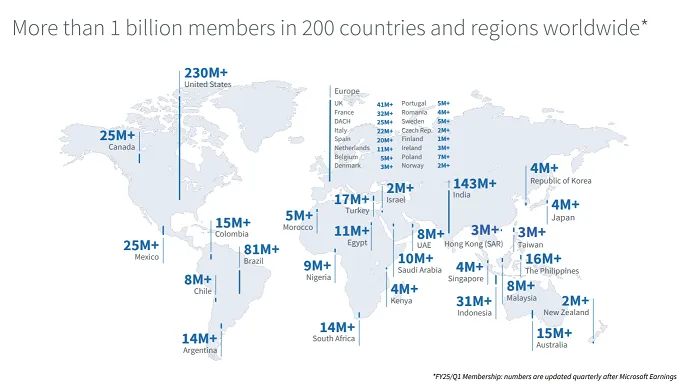
At present, LinkedIn boasts over a billion total members. However, it is essential to differentiate between “members” (the total number of registered users) and “active users,” especially from the perspective of advertisers looking to engage effectively with their audiences.
Therefore, the more critical metric is to ascertain how many of these “members” are genuinely using the platform on a daily or monthly basis. Understanding this ratio is essential for evaluating LinkedIn’s true engagement levels and potential for ad effectiveness.
While LinkedIn does not disclose specific active user numbers for all regions, we can infer from its reported EU member count of 184 million and the 52 million active users disclosed under DSA obligations that only about 28% of LinkedIn’s audience in Europe qualifies as “active users.”
If this pattern holds true across other global regions, LinkedIn’s actual monthly active user count may be closer to 280 million, rather than the headline figure of one billion. This discrepancy highlights the importance of understanding user engagement metrics beyond mere registration numbers.
It is possible that the U.S. market experiences higher engagement, potentially pushing the total MAU to approximately 300 million. In comparison, LinkedIn’s engaged audience is more analogous to that of Reddit (189 million MAU) than to larger platforms such as Instagram (1 billion), X (570 million), or Pinterest (553 million).
These insights are important to consider when evaluating LinkedIn’s market position and engagement rates.
With regards to the prevalence of spam and fake accounts, LinkedIn has also reported a notable increase since its last report, including an 11,000 rise in spam reports from users and a 13,000 uptick in reported fake profiles.

Despite these increases, there hasn’t been a significant rise in enforcement actions related to these issues, indicating that the overall impact of these reports has been relatively minor. Nevertheless, the heightened scrutiny on LinkedIn is likely to lead to increased spam activity, marking it as an important trend to monitor in future assessments.
Interestingly, LinkedIn also observed a decrease in spam reports that were generated through its automated detection and enforcement processes during this timeframe, suggesting improvements in its spam management strategies.
The insights provided in LinkedIn’s DSA disclosures reveal significant information about the platform’s growth and activity levels, along with critical distinctions between actual user engagement and total sign-ups. This understanding can aid in making more informed decisions regarding your LinkedIn outreach and marketing strategies.
For further details, you can read LinkedIn’s latest DSA disclosure report here.




 Troy Sanders