David Bridges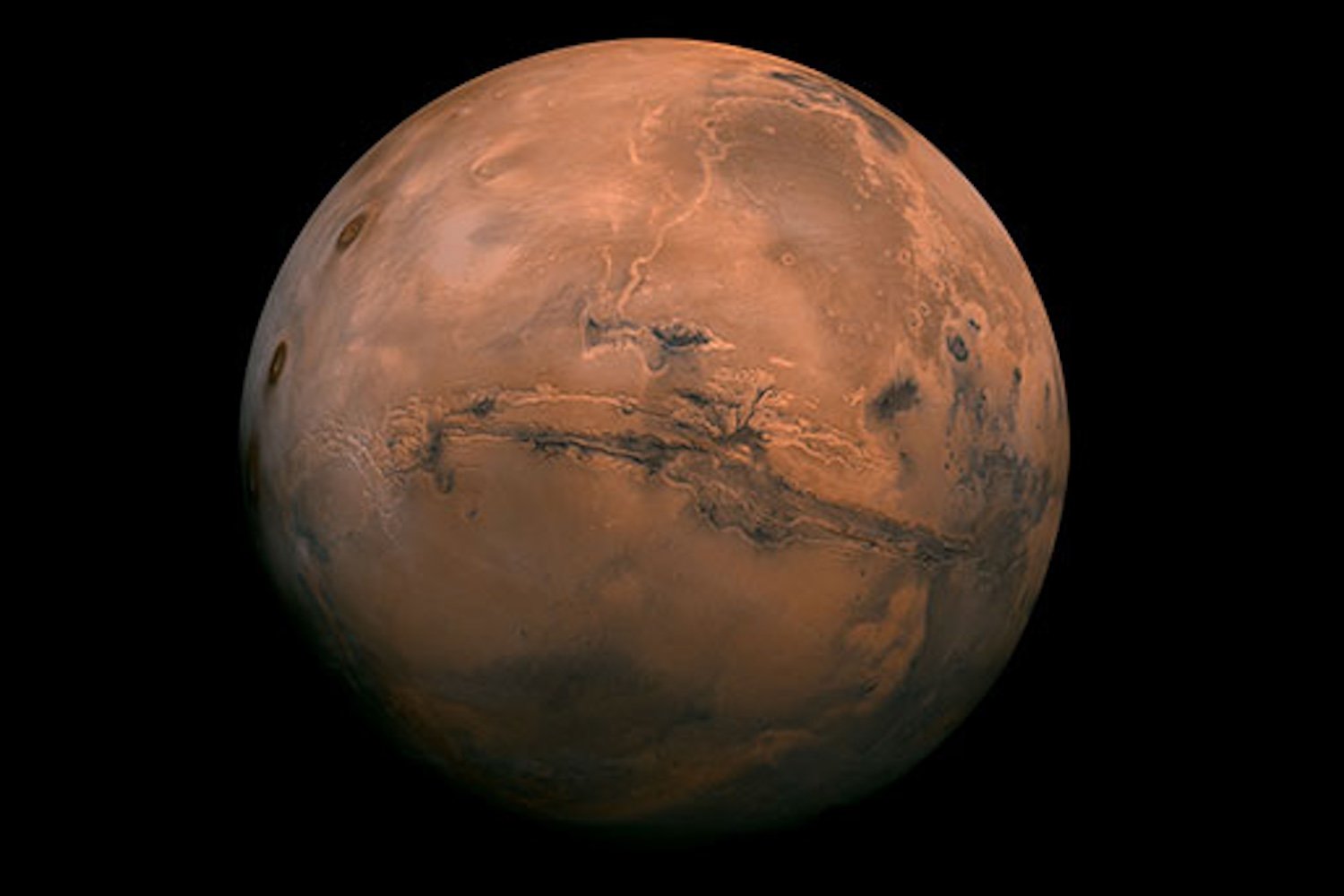
Unveiling the Secrets of Mars: Understanding Its Distinct Red Coloration
The fourth planet from the Sun, Mars, is renowned for its striking rusty red appearance, but recent scientific insights suggest that our understanding of this phenomenon has evolved significantly. The vibrant red color is primarily attributed to iron minerals present in the dust of Mars. However, a collaborative research effort between scientists from the European Space Agency (ESA) and NASA indicates that Mars may have undergone its rusting process earlier in its geological history than previously believed, coinciding with a time when liquid water was abundant on the planet’s surface.

Traditionally, it was assumed that the iron oxide coating Mars was predominantly hematite, formed through atmospheric interactions when the planet was dry. This long-held belief is now being challenged by new findings that suggest a different origin for Mars’ characteristic redness. The research points to a more complex formation process involving ferrihydrite, a type of iron oxide that retains its water signature long after the liquid water that facilitated its creation has evaporated. This remarkable discovery was made possible by detecting ferrihydrite’s signatures within the reddish dust that blankets the Martian landscape.
In a groundbreaking study published in Nature Communications, scientists embarked on a mission to replicate Martian dust in a controlled laboratory environment, striving to create samples that accurately reflect the dust observed by spacecraft. This innovative approach allowed researchers to explore the mineral composition of Mars with unprecedented detail.
Adomas Valantinas, a researcher at Brown University and the lead author of the study, explained, “We were trying to create a replica Martian dust in the laboratory using various iron oxide types. Our experiments revealed that a combination of ferrihydrite and basalt, a volcanic rock, most closely resembles the minerals detected by spacecraft on Mars.” Valantinas emphasized the transformation in our understanding of the Martian landscape, stating, “Mars is still the Red Planet. It’s just that our understanding of why Mars is red has been transformed.”
While earlier studies hinted at the presence of ferrihydrite in Martian dust, this research uniquely integrated laboratory experiments with data from ongoing missions to validate this hypothesis. By grinding the iron to match the size of Martian dust particles, the team employed the same analytical techniques used by orbiting spacecraft to examine their lab-created dust samples.
Looking ahead, Colin Wilson, ESA’s Trace Gas Orbiter (TGO) and Mars Express project scientist, expressed enthusiasm for future missions like the ESA’s Rosalind Franklin rover and the NASA-ESA Mars Sample Return initiative. “These upcoming missions will allow us to delve deeper into what contributes to Mars’ reddish hue,” Wilson stated. “The samples collected by NASA’s Perseverance rover, which are currently awaiting return to Earth, include dust. Once we analyze these invaluable samples in the lab, we will gain critical insights into the ferrihydrite content and its implications for understanding Mars’ water history and the potential for life on the planet.”
Although it may take time to fully comprehend the intricate composition of Mars, ongoing scientific observations from orbit and meticulous laboratory analyses on Earth are steadily bringing us closer to uncovering the planet’s true nature.



 Daniel Mercer
 Brandon Fletcher