David Bridges

Retail outlets may face challenges with the latest updates from Google.
Today, Google has unveiled exciting new features for Google Shopping, aimed at enhancing the holiday shopping experience. These updates include refreshed product listings that will appear in Google Lens searches, allowing users to access comparative pricing for items they physically search for in stores. This innovation significantly improves the shopping experience by leveraging technology to streamline price comparisons.
In the illustrated sequence, users can simply take a photograph of a product, and Google will instantly provide comparative prices from nearby retailers. This feature also highlights similar products and offers availability notes, making it an essential tool for savvy shoppers looking to make informed decisions while they shop in physical stores.
According to Google:
“This groundbreaking update is made feasible by significant advancements in our AI image recognition technology. It utilizes the Shopping Graph, which encompasses over 45 billion product listings, combined with real-time inventory data from various retailers and our Gemini models. This development provides shoppers with an innovative approach to in-store shopping. Notably, 72% of Americans report using their smartphones while shopping in physical locations, and over half have left stores without making a purchase due to uncertainty. This feature equips shoppers with essential information and confidence to finalize their purchases on the spot.”
Google positions this advancement as a boon for retailers, asserting that it will help drive increased purchasing activity. However, it also simplifies the process for consumers to find better deals at competing stores, enabling them to make purchases on the same day. This dual benefit can potentially lead to a more competitive retail environment.
While online shopping has long provided the ability to compare prices, this new feature extends that capability to in-store purchases. This enhancement could significantly benefit shoppers who prefer the tactile experience of shopping in physical locations while still wanting to ensure they get the best price available.
With Google Lens now facilitating an impressive 20 billion visual searches monthly, a substantial number of consumers are likely to take advantage of this new price comparison and product discovery feature. This could reshape how shoppers approach their in-store experiences, making it easier than ever to find great deals.
In conjunction with these updates, Google is also streamlining the process of locating products through Google Maps. This enhancement will allow users to easily find in-stock items at nearby stores, further improving the shopping journey.
“Just enter a search term for an item, such as a festive sweater, to discover nearby stores that have it in stock and browse their inventory options,” “You can search for a wide range of products, including home goods, electronics, clothing, and even grocery items, making it easy to find exactly what you need while out shopping.”
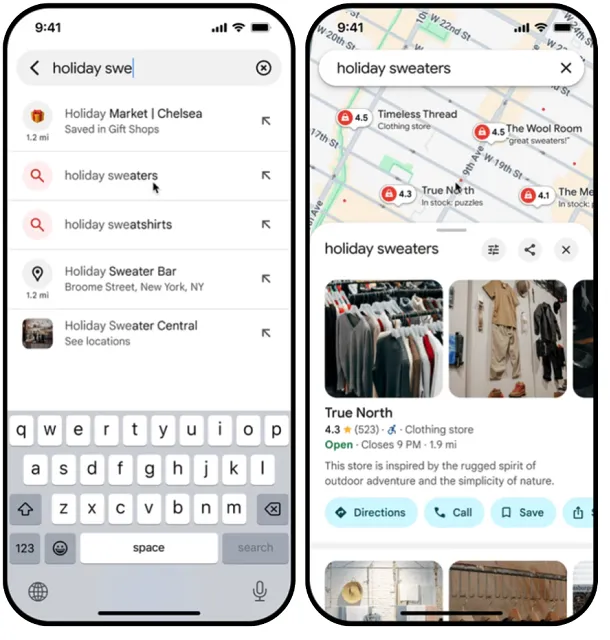
If you’re eager to avoid waiting for deliveries or simply want to explore your local shopping options, you can now effortlessly browse items available in nearby stores. This feature significantly enhances the in-store shopping experience, allowing you to make quick and informed purchasing decisions.
Lastly, Google is expanding payment options via Google Pay, enabling shoppers to utilize services like Afterpay and Klarna, alongside existing payment partnerships. Furthermore, Google is incorporating Discover into its virtual card options, providing users with more secure payment methods through Google Pay.
These updates are quite beneficial, reflecting the evolving landscape of in-person shopping and acknowledging the consumer preference for immediate product availability. Despite the advancements in online shopping, the allure of physical stores remains strong.
In summary, Google is committed to driving both in-store sales and enhancing its online shopping capabilities. This dual approach ensures that consumers have a seamless shopping experience, whether they prefer the convenience of online shopping or the tangible benefits of shopping in-store.


 Maya Kensington
 Troy Sanders