Daniel Mercer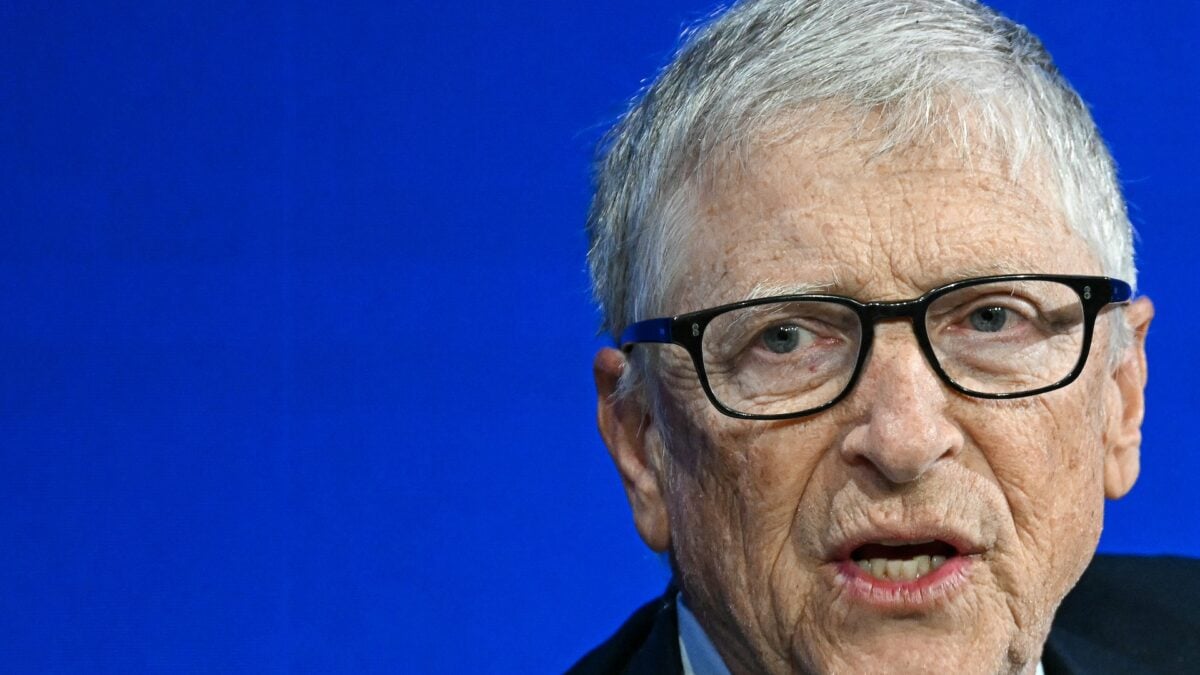

Bill Gates, the co-founder of Microsoft, is expressing his concerns regarding AI regulations and wishes to communicate directly with President Donald Trump.
During an appearance on NBC’s Meet the Press on Sunday, Gates stated, “You need law enforcement and politicians involved in discussions about what effective safeguards and monitoring should look like. This is essential.”
He emphasized, “Self-regulation alone is insufficient,” adding, “This is not a hoax in any way.”
In recent years, Gates has shifted from being a strong advocate for AI to highlighting its potential dangers. He published a significant essay in August 2026, warning that immediate action is crucial to avert what he termed the “most turbulent times in human history.” His successor at Microsoft, CEO Satya Nadella, has prioritized a partnership with OpenAI, advocating for AI companies to take responsibility for their own risks. Recently, OpenAI CEO Sam Altman announced a halt to advanced development after its models were associated with multiple security incidents.
In the interview, Gates cautioned that “AI possesses the capability to instigate events that could lead to a billion deaths,” although he refrained from endorsing the extreme narratives of an AI uprising often propagated by some leading figures in the field.
Instead, he described AI as a tool that can empower malicious individuals: “While achieving 100% safety is challenging, there has never been a weapon as effective as the collaboration of ill-intentioned people utilizing the latest AI technologies.”
Despite growing evidence that current AI models and their creators can inflict significant harm—such as through cyberattacks or exacerbating mental health crises—there is still no solid proof that dire scenarios, like AI-induced pandemics, are feasible. Juan Andrés Guerrero-Saade, a member of the OpenAI Frontier Risk Council and cybersecurity researcher at SentinelOne, recently remarked to ABC that exaggerated scenarios about an AI apocalypse cater to a “naive style of thinking” prevalent among those working at leading AI labs.
Gates has also recently been in the news due to his past associations with the late Jeffrey Epstein, a convicted sex trafficker. In 2022, Gates’s ex-wife, Melinda French Gates, publicly stated that his connections to Epstein were a significant factor in their divorce in 2021. Earlier this year, she expressed on an NPR podcast that Gates’ ties to Epstein caused her “unbelievable sadness.” Reports indicate that Warren Buffett, a billionaire and long-time friend of Gates, has ceased contact with him as of this spring.
In the NBC interview, Gates expressed a desire to personally meet with Trump, another individual linked to Epstein, to persuade him to reconsider his stance on AI regulation.
What makes Gates a suitable messenger to Trump? He noted, “I hope that my lifelong work in this field and my concerns about its unique nature will contribute to what [Trump] is hearing from various sources.”
Interestingly, Gates had met with Trump in August 2025 to dissuade him from continuing to cut U.S. government funding for critical global health programs. Following that meeting, he told Politico, “In my discussions with President Trump, it was clear he cares about these issues and is looking for a reasonable level of spending to avoid significant increases for the U.S.”
Unfortunately, those efforts have not yielded results. The Trump administration has persisted in pursuing and implementing substantial cuts to foreign aid while attempting to redirect billions in global health funding to other priorities, such as terminating USAID contracts during the recent government shutdown. In August, the Washington Post reported that the administration had secretly negotiated to continue reducing tens of billions of dollars in health funding through 2030, including funds already approved by Congress.
Clearly, some crucial lessons remain unlearned.


 Brandon Fletcher