 Brandon Fletcher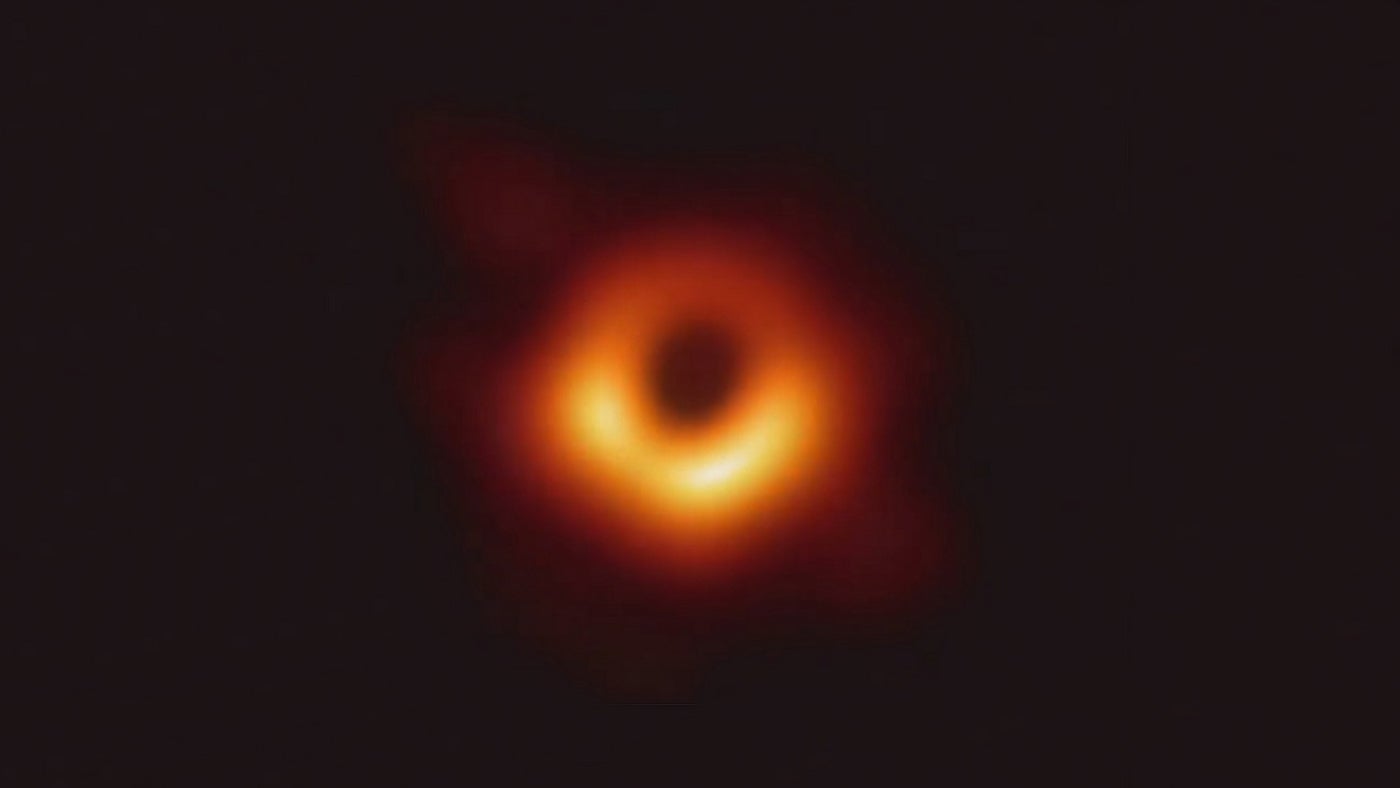

During its exploration of the universe’s origins, the James Webb Space Telescope made a groundbreaking discovery—unexpected supermassive black holes at the centers of ancient galaxies, potentially altering our understanding of cosmic evolution.
For years, astronomers believed that galaxies formed first, with central black holes emerging later from the collapse of massive stars. recent findings from Webb suggest a different narrative, showing that supermassive black holes can evolve independently, without a galaxy to sustain them.
The observations made by Webb may resolve a long-standing cosmic conundrum, indicating that these ancient black holes could grow to their immense sizes without the need for substantial amounts of gas and dust surrounding them.
Roberto Maiolino, a researcher at the University of Cambridge and co-author of two studies published in Nature and the Monthly Notices of the Royal Astronomical Society, remarked on this significant finding in a NASA statement. “It’s a paradigm shift, a total revisiting of the classical scenarios of how black holes form and grow.”
Exploring Cosmic History
One of the earliest faint flecks of infrared light detected by Webb is known as Abell2744-QSO1 (QSO1), which dates back to approximately 700 million years after the Big Bang, just 5% of the universe’s current age. Gravitational lensing by the galaxy cluster Abell 2744 enhances its visibility, making it an exceptional target for study as it appears magnified and imaged three times.
Initial examinations of QSO1 indicated that it might be a supermassive black hole with a mass around 40 million times that of the Sun, enveloped by a glowing cloud of hydrogen and helium gas. the certainty of the black hole’s mass remained uncertain.
“Prior to this, all measurements of black hole masses in the early universe have been indirect, relying on assumptions based on our understanding of black holes in the contemporary universe. We were unsure if those assumptions applied to the distant universe,” explained Francesco D’Eugenio, a researcher at the University of Cambridge and co-author of the studies.
Determining the Mass of the Black Hole
To accurately determine the black hole’s mass, the research team analyzed the gravitational effects it had on the surrounding gas and mapped the distribution of various elements within that gas. Utilizing Webb’s Near Infrared Spectrograph (NIRSpec), the scientists discovered that the gas orbits a central point similarly to how planets in our solar system revolve around the Sun. This behavior is referred to as Keplerian motion.
“This finding is crucial as it indicates that the majority of QSO1’s mass is concentrated in the black hole at its center,” stated Ignas Juodžbalis, a graduate student at Cambridge University and lead author of one of the studies. “If the mass were more evenly distributed, as would be the case if there were numerous stars, the gas would not exhibit such perfect Keplerian rotation.”
Given that Keplerian motion follows gravitational laws, the team used the velocity measurements of the surrounding gas to directly calculate the black hole’s mass. “This is an extraordinary result,” said Maiolino. “It marks the first direct measurement of a black hole’s mass within the first billion years after the Big Bang, aligning with previous estimates.”
These results revealed that the black hole is not only supermassive, with a mass of 50 million times that of the Sun, but it also constitutes about two-thirds of QSO1’s overall mass. Typically, supermassive black holes represent only a minor fraction of their host galaxies’ total mass. This discovery indicates a relationship between the supermassive black hole and its galaxy that is thousands of times greater than that observed in nearby galaxies.
The findings imply that this black hole was born massive, rather than forming through the collapse of a star and drawing in gas to achieve its great size. the chemical composition of QSO1 suggests it is primarily composed of hydrogen and helium, containing very few heavier elements like oxygen, which are typically present in star-rich galaxies.
“It appears that we have identified a black hole that lacks a significant host galaxy and has existed prior to stellar processes,” Juodžbalis remarked. “This is thrilling because it provides evidence for primordial black holes or direct collapse black holes, which have been theorized but not yet confirmed.”


 Daniel Mercer