 Brandon Fletcher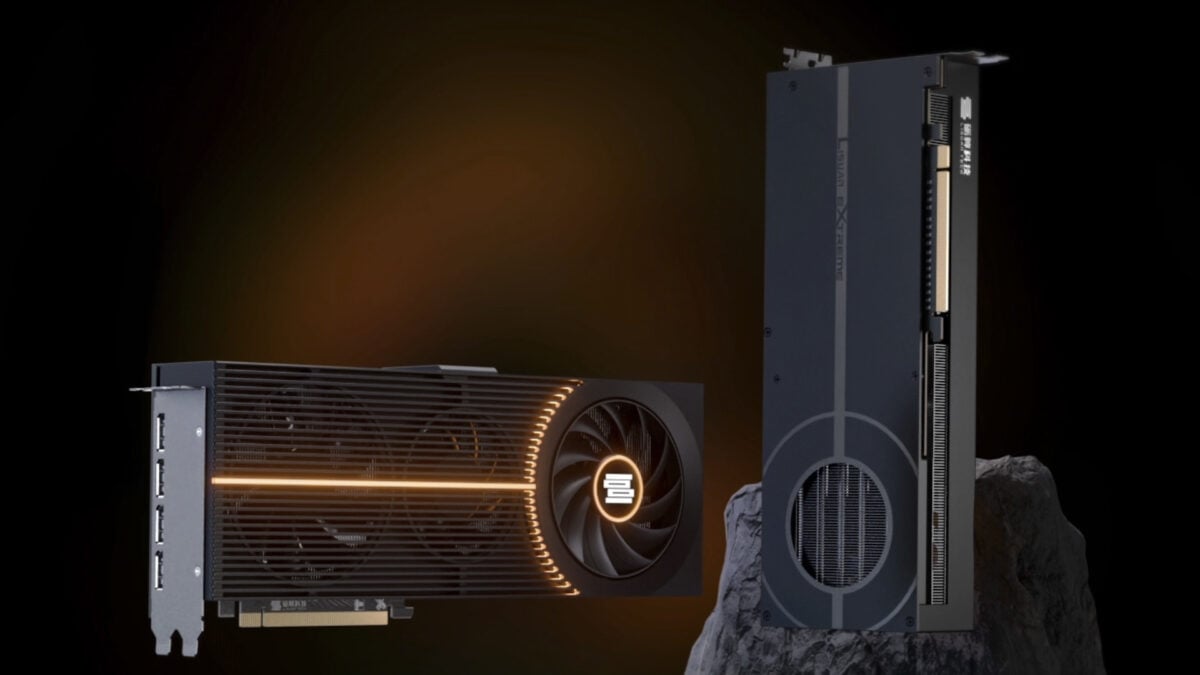

The debut of China’s first fully domestically produced graphics card is unlikely to challenge Nvidia or AMD in the immediate future. this development may not need to. As GPU and memory prices continue to escalate, Chinese manufacturers must demonstrate their ability to fill the void left by companies that have largely shifted their focus away from consumer PCs.
Lisuan Tech, a Chinese technology firm, has launched its inaugural GPU, the Lisuan LX 7G100, which is developed entirely without reliance on Nvidia or AMD’s GPU microarchitecture. The company announced on Chinese social media that they have sold out their initial stock of 30,000 units. Reviewers began integrating this GPU into their PC setups last week to assess its performance capabilities, and the results are now available.
Priced at approximately $500 in Chinese yuan, the LX 7G100 competes with entry-level to midrange GPUs such as the Nvidia GeForce RTX 5060 Ti and the AMD Radeon RX 9060 XT. This GPU is equipped with 12GB of VRAM, although this specification does not guarantee superior performance when competing cards with only 8GB of VRAM are outperforming it by significant margins.
YouTuber Chaowanke, highlighted by VideoCardz, provided benchmark comparisons between the Lisuan LX 7G100 and other prominent GPUs within the same category. In tests such as 3DMark’s “Fire Strike,” the LX 7G100 achieved scores that were comparable to or just below those of the Nvidia RTX 3060, which is now six years old. The RTX 4060 reportedly outperforms the Lisuan GPU by 25%. In benchmarks like 3DMark’s “Time Spy,” Intel’s budget Arc B580 achieves scores that are 44% higher. In gaming scenarios, the average frame rates for Cyberpunk 2077 at 1080p on Medium graphics settings with FSR 3 upscaling and frame generation enabled were only around 88 fps, while an RTX 4060 can reach 232 fps on average.
The emergence of these new GPUs coincides with increasing tensions between Chinese manufacturers and Nvidia, alongside a notable gap in the market caused by Nvidia’s problematic history with graphics card pricing. What makes the LX 7G100 noteworthy, despite its underwhelming performance, is its comprehensive compatibility with Windows and DirectX 12, as well as the latest Vulkan, OpenCL, and OpenGL gaming APIs. The GPU market has primarily been under the control of Nvidia, with AMD holding a smaller share, and Intel claiming an even more modest presence.
PC builders are increasingly seeking a company that can offer even a glimmer of hope for reasonably priced PC components. Currently, the RAM and SSD markets are dominated by South Korean semiconductor giants Samsung and SK Hynix, as well as U.S.-based Micron. Each of these companies has shifted their focus to producing the high-bandwidth memory (HBM) necessary for AI data centers and hyperscaler projects.
Recently, Chinese memory manufacturer CXMT collaborated with major component producer Corsair to develop 16GB modules of Corsair Vengeance DDR5 RAM. A user with these new RAM sticks identified CXMT as the manufacturer using CPU-Z software. Gizmodo has reached out to Corsair for confirmation regarding whether they are incorporating more RAM produced by CXMT or if consumers might anticipate lower prices in the future. We will update this article as soon as we receive a response.
At this stage, any advancement that could help alleviate the burden of soaring memory and component prices is welcome.


 Daniel Mercer