Daniel Mercer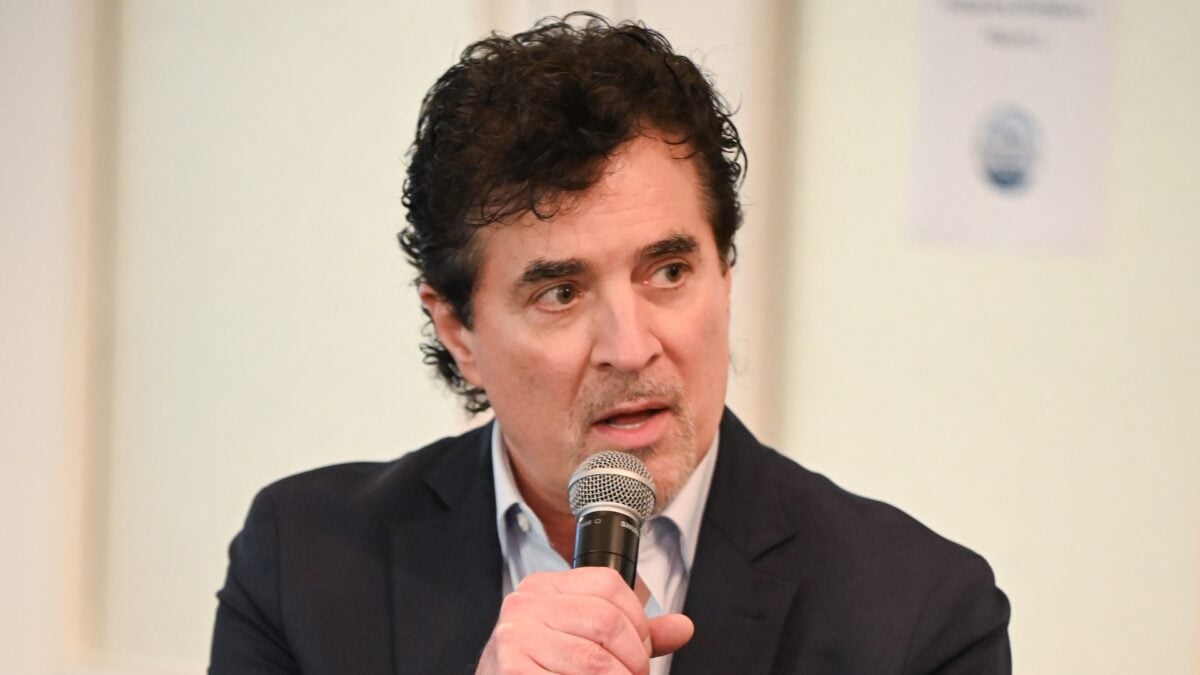

Having amassed significant wealth over the past few decades, I have observed that many young people view artificial intelligence as a source of challenges. To the graduating class of 2026, let me share an important lesson about facing challenges: throughout my journey to build my fortune, I encountered numerous obstacles. When faced with adversity, I transformed those challenges into opportunities. I believe it is your responsibility to embrace artificial intelligence, an unstoppable force, with an optimistic outlook, just as I do. Best of luck to you, class of 2026!
This sentiment encapsulates what many commencement speakers might say about AI today. If you’re given the privilege of addressing a graduating class, feel free to reference my words instead of delivering a speech yourself. Speaking on this topic might not garner the warmest reception.
This was evident when real estate executive Gloria Caulfield addressed graduates at the University of Central Florida, and it happened again with former Google CEO Eric Schmidt at the University of Arizona.
In a similar vein, the internet has unearthed an early instance of this AI-critique backlash, which gained traction the day after Caulfield’s address, quickly going viral.
The speaker in question was Scott Borchetta, a record executive with a net worth of $450 million who founded the Big Machine Label Group. He was previously involved in a notable dispute with Taylor Swift over her master recordings. Recently, Middle Tennessee State University honored him by naming its media college after him following his $15 million donation. He also delivered this year’s commencement address:
While it’s challenging to dismiss the entire speech, Borchetta describes the current era as “arguably the most exciting and challenging time ever” for the media landscape. It’s true, this moment is exciting in many ways. He emphasizes that “there’s a lot more to this world than mad wealth and political power,” which is hard to disagree with.
Importantly, he does not present AI as an unequivocal benefit. Early in his address, he clearly identifies it as “our biggest challenge today,” and in that moment, the audience is with him.
The issue arises when Borchetta parallels AI with a significant hurdle he and Big Machine encountered: monetizing streaming when it first disrupted the music industry. He explains how he took it upon himself to alert the record industry about the impending doom posed by Spotify to physical music sales and turned the “tool” of streaming into a competitive advantage. His efforts seemingly helped him and his artists find a profitable balance within the new paradigm.
That’s commendable. while it’s true that Spotify helped record labels recover from a decline caused by piracy, it also reportedly did so at the expense of artists’ financial stability. A 2021 report from The New York Times highlighted that Spotify’s goal of assisting a million artists in making a living was not met; instead, the streaming model predominantly benefited labels and wealthier artists. At that time, only 13,000 out of seven million artists on Spotify earned $50,000 or more in royalties, representing just a fraction of a percent.
In Borchetta’s narrative, he positions himself as the protagonist. When the audience realizes he is equating his story with AI—essentially urging them to adopt AI as he did with streaming, and to use it to gain an advantage before they are at a disadvantage—they react negatively. The booing and shouts are faintly heard in the video, but Borchetta responds as if confronting a rebellious crew:
“AI is rewriting production as we sit here (booing). I know it. Deal with it. Like I said, it’s a tool. (Angry jeering) Hey, like I said, you can, you can hear me now, or you can pay me later. Hey, then do something about it, ‘kay? It’s a tool. Make it work for you.”
He also likens AI to a genie, stating, “It ain’t goin’ back in the bottle.”
The remark, “you can hear me now, or you can pay me later,” is delivered with a forced smile, which gives Borchetta an air of someone perched atop a mound of triumph, taunting the audience. His challenge to “do something about it” feels particularly pointed.
On his terms, Borchetta is correct. The current economic framework disproportionately favors those who are aggressive, and it pays little heed to claims of injustice. In this system, the spoils go to the victors, and few can argue that Borchetta is indeed a victor.
A recent report from the New York Fed sheds light on the harsh reality behind Borchetta’s assertions. As a CEO, he reflects a broader trend: many CEOs admit they are opting not to hire younger workers, favoring older employees instead. Survey data reveals that those with a forward-looking mindset envision smaller teams. 90% of them are integrating AI into their operations in some capacity.
While Borchetta’s candor is commendable, one must question when it became acceptable for commencement speakers to inform new entrants into the workforce that their share of opportunities is diminishing; that he possesses what they seek, and that they must essentially wrest it from him. Who feels inspired to celebrate their graduation after such a message?



 Brandon Fletcher