 Ethan Carter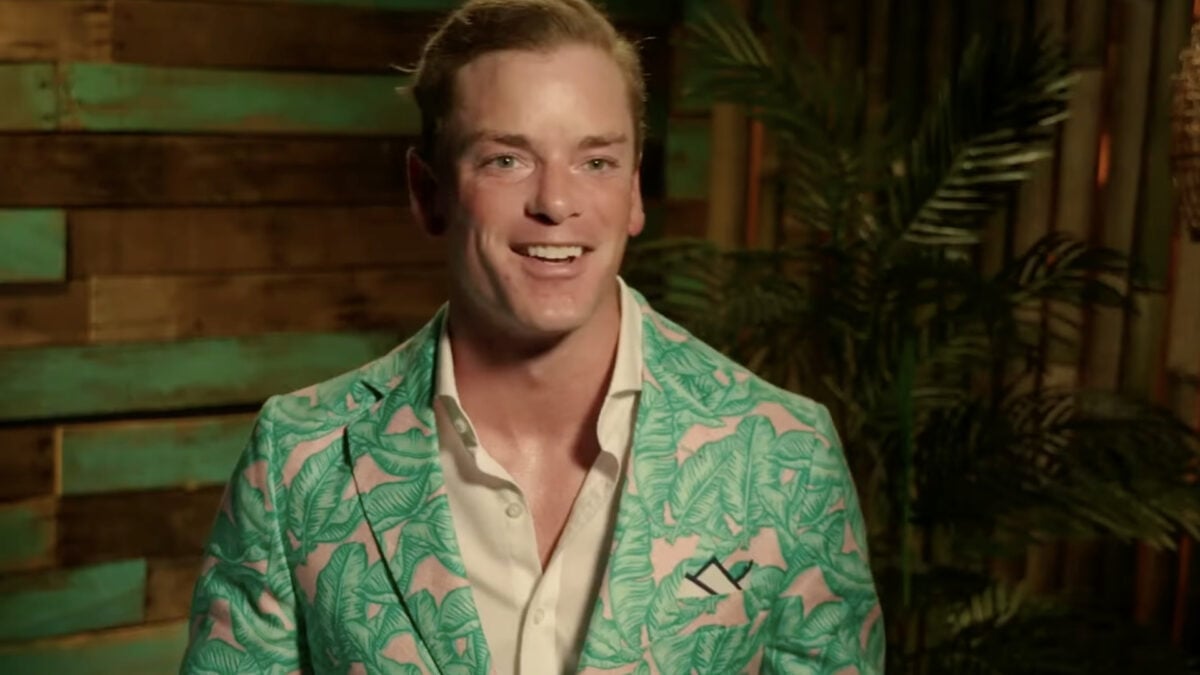

The prediction market platform Kalshi has recently implemented strict actions against three individuals who are either current or former candidates for national office, following allegations of insider trading, as reported by the New York Times. Among those implicated is Matt Klein, a Democrat from Minnesota running for Congress, and Ezekiel Enriquez, a Republican from Texas who previously campaigned for a congressional seat.
Additionally, there is Mark Moran, whose unique speech style has garnered considerable attention this primary season, along with his overall persona:
Moran, an independent candidate from Virginia running for the Senate, was initially in the race as a Democrat. He reportedly placed a bet on himself on the Kalshi platform, which he does not deny, claiming he wagered $100.
Moreover, he has a background as a participant on the reality dating show FBoy Island.
According to Bobby DeNault, head of enforcement at Kalshi, these candidates breached new regulations prohibiting such actions. In Moran’s “Notice of Disciplinary Action,” the violation is clearly articulated in straightforward language:
“If a Trader is a decision maker, either directly or indirectly, or has any influence, directly or indirectly, no matter the scale and importance of the influence, on the outcome of the Underlying (event) of any Contract, that Trader is prohibited from attempting to enter into any trade, either directly or indirectly, on the market in such Contracts.”
Moran reportedly cooperated during the investigation and admitted that his trades were inappropriate and violated the rules of the Kalshi exchange. However, he “repeatedly refused to resolve this matter via settlement and stopped responding to further correspondence,” resulting in a fine of $6,229.30—the highest penalty among the three candidates.
Moran conveyed to the Times that the enforcement team requested a public acknowledgment from him, which he interpreted as an obligation to participate in Kalshi’s promotional efforts.
What did Moran claim about his intentions behind the bet? He asserted to the Times that his goal was to bring public attention to the prediction market and its potential dangers to democracy by getting caught.
He elaborated further in his interview, stating, “It’s almost so ridiculous that it was this easy to bring this attention.” Who could dispute that?
As of this moment, he has begun to rapidly share updates on X, reiterating the same narrative he provided to the Times while also claiming credit for achieving significant earned media exposure.
Kalshi accused me today of insider trading on a market that, after my request, their head of politics added me to…after it was public info that I was going to run…
*all screenshots in the video for reporters*
For $100 I got the NYT, WSJ, Washington Post, AP, Bloomberg,… https://t.co/9o6wgwSOFA pic.twitter.com/GTIsCmBX0u
— Mark Moran for U.S. Senate (@itsmarkmoran) April 23, 2026
Kalshi is currently grappling with approximately 20 civil lawsuits and was charged last month in Arizona with alleged violations related to illegal betting and wagering, including one case termed “election wagering.” Mike Selig, the chairman of the U.S. Commodity Futures Trading Commission, expressed skepticism about the necessity of these charges, labeling the situation concerning Kalshi as a “jurisdictional dispute and entirely inappropriate as a criminal prosecution.”


 Daniel Mercer