Brandon Fletcher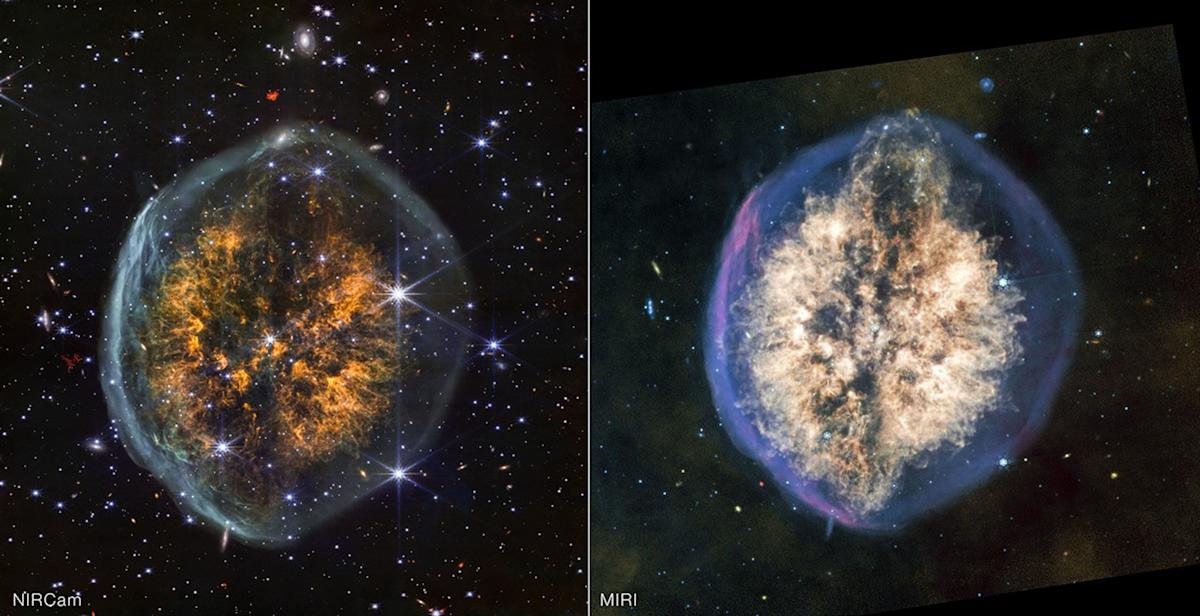
The Exposed Cranium Nebula is an astronomical phenomenon because it showcases the complex evolutionary stages of a star, which matters for space enthusiasts and researchers alike.

At SocialSchmuck, we specialize in social media, entertainment, and technology news, helping curious minds explore the wonders of the universe and stay updated on the latest discoveries.
Our platform monetizes through advertising partnerships and sponsored content, providing users with engaging articles and visuals. This guide covers the fascinating aspects of the Exposed Cranium Nebula, including its formation, the technology used to capture its images, and the significance of its structure.
- Formation of the Exposed Cranium Nebula
- Technology behind the images
- Significance of its unique shape
The Exposed Cranium Nebula, also known as Nebula PMR 1, consists of a cloud of space dust and debris. NASA’s latest images suggest that these visuals may depict a star nearing the end of its life cycle, revealing clues about its brain-like shape.
NASA’s blog post indicates that the nebula has distinct regions that represent different evolutionary phases. It features an outer shell of gas primarily composed of hydrogen, and an inner cloud with a more complex structure containing various gases.
- Outer shell: Hydrogen-rich gas
- Inner cloud: Diverse gas composition
The dark line running vertically through the nebula contributes to its cranial appearance. This feature may result from an outburst or outflow from the central star, typically characterized by twin jets ejecting in opposite directions.
Both the Near-Infrared Camera (NIRCam) and the Mid-Infrared Instrument (MIRI) on the James Webb Space Telescope were instrumental in documenting the Exposed Cranium Nebula. These advanced technologies allow astronomers to capture unprecedented details of celestial phenomena.
| Instrument | Function | Key Feature |
|---|---|---|
| NIRCam | Captures near-infrared images | High-resolution imaging |
| MIRI | Records mid-infrared data | Ability to see cooler objects |
As of 2026, the understanding of nebulae like the Exposed Cranium Nebula continues to evolve. 2026 data shows that these structures are crucial for understanding stellar evolution and the lifecycle of stars.
The significance of the Exposed Cranium Nebula extends beyond its captivating visuals. It provides insights into the processes that govern star formation and the dynamics of interstellar matter.
| Attribute | Details |
|---|---|
| Shape | Brain-like structure |
| Composition | Hydrogen and various gases |
| Evolutionary Stage | Final stages of a star |
For more details and visuals, visit the original source. The images used in this article are sourced from NASA and are included for informational purposes with proper attribution.

 Daniel Mercer