David Bridges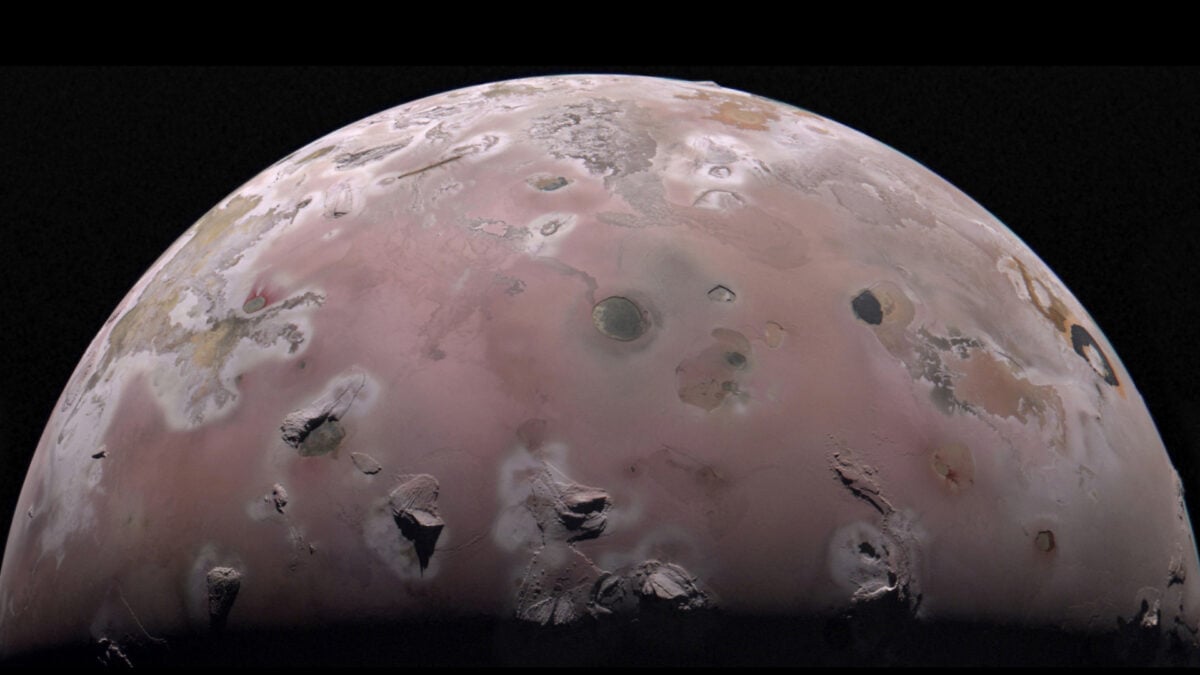
The NASA Juno spacecraft, which was launched in 2011 to explore Jupiter’s origin and evolution, navigates through the solar system’s most extreme planetary radiation fields. In December 2023, when the spacecraft’s JunoCam—a color, visible-light camera—began to experience damaging effects from this intense radiation, the mission team on Earth had to devise a remote solution swiftly to preserve their opportunity to capture images of the remarkable Jovian moon, Io.

Ultimately, a relatively straightforward technique allowed for this long-distance intervention: the process of heating the instrument followed by a gradual cooling phase (presumably, they first attempted the classic “turn it off and on again” approach). This endeavor has yielded valuable insights regarding spacecraft radiation tolerance for mission scientists beyond just the Juno team, as highlighted by a recent statement from the Jet Propulsion Laboratory.
Scientists had previously estimated that JunoCam, with its optical unit situated outside a protective radiation vault, could withstand radiation exposure for the spacecraft’s initial eight orbits around Jupiter. However, it wasn’t until the 47th orbit that scientists began to notice signs of radiation damage.
The mission team detected indications that the radiation had compromised the voltage regulator, a critical component of JunoCam’s power supply. Given the vast distance of hundreds of millions of miles, their options were quite limited. Consequently, they opted to implement a lesser-known technique called annealing, which involves heating a material for a specified duration to minimize its defects before allowing it to cool slowly.
“We understood that annealing can sometimes modify a material like silicon at a microscopic level, but we were uncertain if this method would rectify the damage,” stated Jacob Schaffner, a JunoCam imaging engineer from Malin Space Science Systems, in the statement. “We commanded JunoCam’s single heater to elevate the camera’s temperature to 77 degrees Fahrenheit [25 degrees Celsius]—substantially warmer than the typical operating temperature for JunoCam—and held our breath as we awaited the results.”
Initially, their approach successfully allowed JunoCam to capture clear images for several orbits; however, as the spacecraft continued its journey through Jupiter’s radiation fields, the damage soon became evident again.
“After the 55th orbit, our images were marred by streaks and noise,” described JunoCam instrument lead Michael Ravine, also affiliated with Malin Space Science Systems. “We experimented with various image processing techniques to enhance the quality, but nothing yielded favorable results. With the imminent close encounter with Io approaching in just a few weeks, we were in a critical situation: The only unattempted strategy was to heat JunoCam’s heater to its maximum setting and see if more aggressive annealing could salvage our imaging capabilities.”
At first, the more intense annealing did not appear to yield any visible improvements. However, as the approach to Io drew closer, and with only days remaining, the quality of the images suddenly enhanced significantly. On December 30, 2023, JunoCam successfully captured intricate photographs of Io’s northern polar region, revealing previously undocumented volcanoes. This accomplishment was presented at the Institute of Electrical and Electronics Engineers Nuclear & Space Radiation Effects Conference in Nashville on July 16.
Even though the image corruption resurfaced during its recent 74th orbit, “Juno is imparting valuable lessons on how to design and maintain spacecraft that are resilient to radiation, offering insights that will greatly benefit satellites orbiting Earth,” explained Scott Bolton, Juno’s principal investigator from the Southwest Research Institute. “I anticipate that the knowledge gained from Juno will be relevant to both defense and commercial satellites, as well as future NASA missions.”


 Daniel Mercer
 Brandon Fletcher