David Bridges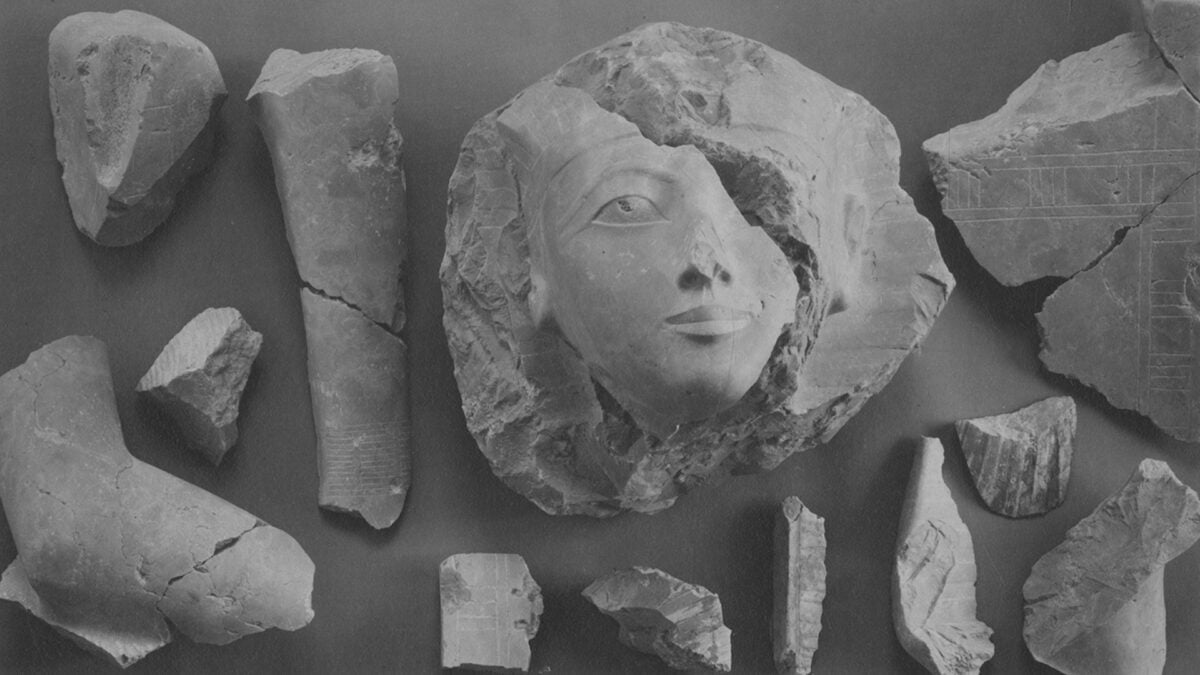

Hatshepsut stands as one of the most illustrious and influential figures in the rich tapestry of ancient Egyptian history. Ascending to power in 1479 BCE, she initially served as the regent for her young nephew, Thutmose III. By 1473 BCE, Hatshepsut asserted her authority by ruling as a pharaoh in her own right, an exceptional feat as one of the few female sovereigns in this ancient civilization. Over three millennia later, archaeologists uncovered thousands of fragments of her statues, leading many scholars to believe that her spiteful successor had ordered their complete destruction. However, recent research reveals a more complex narrative regarding her legacy.
Research conducted by University of Toronto Egyptologist Jun Yi Wong indicates that a significant portion of the damage inflicted on Hatshepsut’s statues resulted from ancient Egyptian “deactivation” rituals, alongside their repurposing as materials for construction. Although Hatshepsut faced considerable political backlash following her demise, Wong’s findings challenge the long-held belief that Thutmose III maliciously sought to eradicate every trace of his former regent. This new perspective encourages a re-evaluation of the motivations behind the destruction of Hatshepsut’s images.
“After her passing, the monuments dedicated to Pharaoh Hatshepsut (who reigned circa 1473–1458 BC) underwent a systematic program of destruction. The most common form this took was the erasure of her name and likeness from temple walls,” Wong articulated in a recent study published in the journal Antiquity, where he serves as the sole author. “This initiative was instigated by Thutmose III, her nephew and successor (reigning solo from 1458–1425 BC), yet the reasons behind this act remain a topic of debate among historians.”
Between 1922 and 1928, a team of archaeologists excavated numerous statues of Hatshepsut near her mortuary temple at Deir el-Bahri, located in Egypt. Due to the deteriorated conditions of these artifacts, Herbert Winlock, an archaeologist from the Metropolitan Museum of Art, who led these excavations, characterized them as “maddening relics of Thutmose’s spite,” as referenced in Wong’s study.
Nevertheless, Wong asserts that “even though the ‘shattered visage’ of Hatshepsut has become a dominant image in public perception, this portrayal does not fully encompass the treatment of her statues.”
Upon analyzing the types of damage documented in previously unpublished field notes, drawings, photographs, and letters from the excavations conducted in the 20th century, the Egyptologist highlights that many statues were actually preserved in relatively good condition, exhibiting intact facial features. The implication is clear: if Thutmose III had been determined to obliterate Hatshepsut’s memory, he likely would have executed a more thorough campaign of destruction.
Moreover, Wong contends that the treatment of some of Hatshepsut’s statues resembles that of statues belonging to other male Egyptian rulers, many of whom did not face any persecution posthumously. Among various forms of specific damage, scattered fragments exhibiting breaks at the neck, knees, and/or ankles are believed to be part of a “deactivation” ritual aimed at neutralizing the inherent power associated with these statues, as noted by Wong.
In essence, the rituals performed were not necessarily hostile in nature. Additionally, some of the damage may have also been exacerbated by the statues being repurposed as building materials during subsequent periods. Nonetheless, this does not entirely dismiss the possibility that certain damages were indeed politically motivated.
“In contrast to the other rulers, Hatshepsut did endure a campaign of persecution, and the broader political ramifications of this cannot be understated,” Wong concluded in a statement for Antiquity. “However, there exists the potential for a more nuanced understanding of Thutmose III’s actions, which might have been influenced more by ritual necessity than by outright hostility.”
Ultimately, the idea that Hatshepsut was treated similarly to other deceased pharaohs following her death, despite facing persecution, accentuates the extraordinary nature of her ascent to the throne as a woman in a male-dominated society.



 Daniel Mercer
 Ethan Carter