David Bridges

Meta is actively developing a revolutionary method to enhance user engagement with its dynamic virtual reality (VR) experiences. Users are now granted the ability to explore a feature called “Avatar Quests” on both Facebook and Instagram, which connects to a variety of immersive VR experiences.
As illustrated in this example shared by app researcher Jonah Manzano, some users now have access to an Avatar Quests tab within their profile settings, which directs them to a comprehensive list of achievements associated with various VR games and worlds accessible through their Meta avatars.

Engaging in popular titles like “Kailju City Showdown” or “Super Rumble Rocket Ruckus,” both immersive VR experiences, will reward players with XP points for their avatars. This innovative approach effectively gamifies the VR experience, aiming to cultivate greater interest and participation among users.
If Meta can motivate users to compete with friends in completing these engaging tasks to accumulate more XP, it will foster increased engagement within the VR community. Additionally, showcasing your achievements to your social connections can further amplify interest and participation in these captivating experiences.
This approach represents a relatively straightforward strategy for Meta to boost interest in its VR experiences. However, as the company gradually transitions towards a more extensive metaverse initiative, this could serve as a significant step in that direction.
Despite Meta shifting its focus towards artificial intelligence (AI) and minimizing mentions of the metaverse in its public relations, following initial criticism of the concept, it remains a vital aspect of their business strategy for the future.
Meta envisions that AI will play a pivotal role in the next phase of VR development by democratizing the creation of virtual reality environments. This means that, in the near future, users will have the ability to create their own immersive VR experiences simply by articulating their ideas verbally.
The company is already making strides in this area, having recently previewed an updated version of the Horizon Worlds editor. This innovative tool can now utilize AI prompts to generate various VR objects, significantly simplifying the creation process.
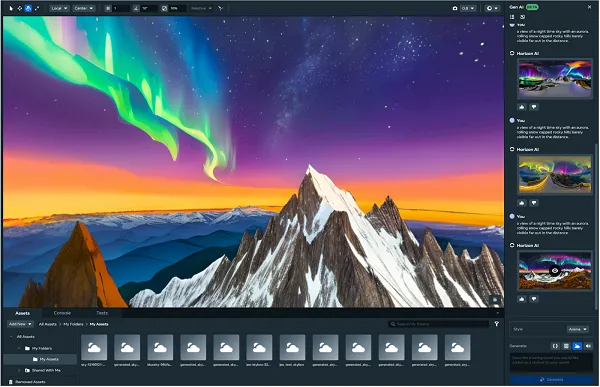
For instance, if you wish to create a stunning craggy mountain range to explore in fully immersive VR, you can now achieve this by simply typing in your vision.
While Meta continues to develop these capabilities, the integration of AI with its metaverse vision is becoming increasingly clear. Once users have the tools to craft remarkable and engaging VR experiences, it will further stimulate broader interest in virtual reality. The forthcoming augmented reality glasses will also enhance this immersive daily experience, helping users adapt to interacting through headset wearables rather than traditional handheld devices.
Everything is interconnected, and it aligns perfectly. Therefore, the more that Meta can cultivate interest in features such as its digital avatars, the more it can enhance anticipation for this exciting new phase.
While avatars might appear to be a minor component in this context, it’s important to recognize how children are already utilizing avatars to engage in the current iterations of metaverse experiences, particularly in gaming universes like Fortnite and Roblox. This observation underscores the rationale behind Meta’s strategy to leverage avatars as a medium to propel its metaverse ambitions.
In summary, this represents yet another incremental advancement towards a more expansive, Meta-created digital universe.


 Troy Sanders