David Bridges

LinkedIn has recently unveiled significant enhancements to its ad targeting and attribution features, aimed at empowering marketers to effectively connect with their desired audiences while demonstrating a clear return on investment (ROI) from their advertising efforts.
Given the platform’s growing popularity, particularly among professional users, these updates could substantially enhance your outreach strategies and help you achieve more successful campaign outcomes.
To begin with, LinkedIn has improved its Conversions API (CAPI), facilitating a seamless data integration process from various CRM systems.
As elaborated by LinkedIn:
“The new capabilities of CAPI allow marketers to securely link their first-party online and offline data, enabling comprehensive insights by tracking conversions across various touchpoints.”
The revamped connection process allows marketers to effortlessly integrate their CRM data from multiple platforms, enhancing the overall efficiency of their advertising campaigns.
This user-friendly, point-and-click interface empowers more marketers to leverage their existing customer data effectively, allowing for more targeted advertising within the app, ultimately driving superior campaign performance.
Indeed, LinkedIn reports that:
“With the Conversions API, marketers have experienced an average increase of 31% in attributed conversions, a 20% reduction in cost per action, and early analytics indicate a 39% decline in the cost per qualified lead.”
The streamlined integration process enables more marketers to harness these advantages without the need for complex coding skills, making the platform more accessible for all.
For an in-depth look at the updated Conversions API, you can explore more here.
Additionally, LinkedIn has launched updates to its Revenue Attribution Report (RAR), now allowing marketers to analyze their CRM data over an extended timeframe of up to 365 days.
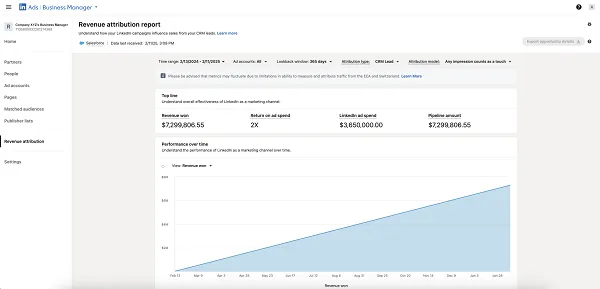
This enhancement provides marketers with more granular insights into how their CRM data contributes to lead generation over time, thereby illustrating opportunities derived from direct data integration.
These updates are invaluable for gaining better oversight and targeting capabilities within your LinkedIn campaigns, significantly aiding in achieving improved results based on the client and prospect data readily available in your systems.
At the same time, LinkedIn’s ad targeting mechanisms are also evolving, with AI-driven audience segmentation playing a pivotal role in enhancing campaign effectiveness.
Together, these advancements provide a multitude of strategies to connect with the right users through your promotional efforts within the app, maximizing your return on advertising spend.


 Clara Hastings